Cyprus Road Markings
Painted lines and symbols on the road surface
23 signs in this category
Road markings are the painted lines, arrows and symbols on Cyprus road surfaces that guide lane discipline, show where you may or may not cross, and reinforce nearby signs.
Study tip: Solid lines generally mean 'do not cross', while broken lines mean 'cross with care'. Yellow lines usually relate to stopping and parking rules.
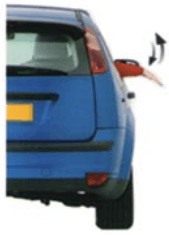
Arm signal: I want to slow down or stop
The arm signal for slowing down or stopping: the arm is held out and moved slowly up and down. Use it when your brake lights alone may not be seen.
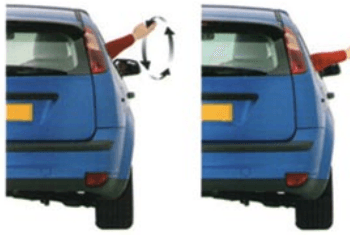
Arm signal: I want to turn left / turn right
The arm signals for an intended left or right turn. Use them when your indicators cannot be seen clearly or have failed.
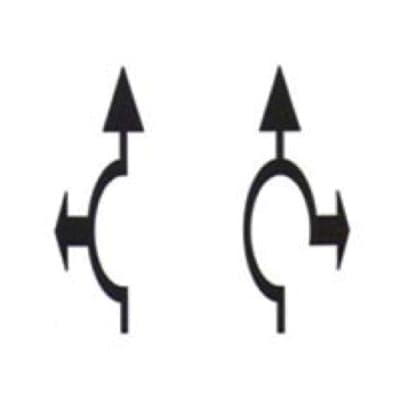
Arrows depicting lane direction on roundabouts
Painted arrows showing which lane leads to which exit on a roundabout. Choose your lane before you reach the give-way line, not on the roundabout itself.
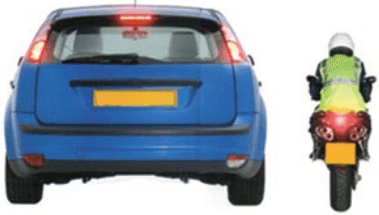
Brake lights: I want to slow down or stop
Brake lights showing that the driver in front is slowing or about to stop. Ease off at once and open up your following distance.
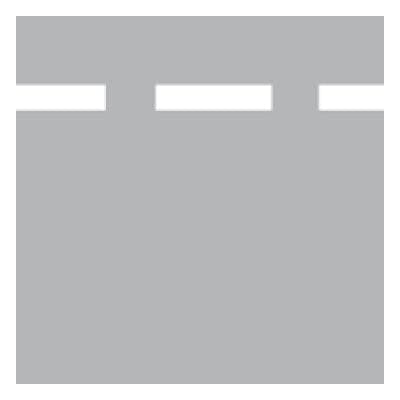
Broken white lines: depicts an exit or bus stop, no parking or stopping
Broken white lines marking an entrance, an exit or a bus stop. Do not park or stop across them, because you would block the vehicles that use them.
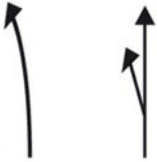
Directions to follow (curved arrows)
Curved arrows painted on the carriageway showing the direction traffic in that lane must take. Get into the correct lane early.
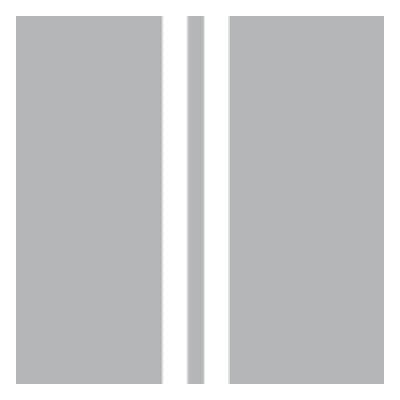
Double white lines: no parking or overtaking
Double white lines along the centre of the road. Where they apply you must not park and must not overtake.
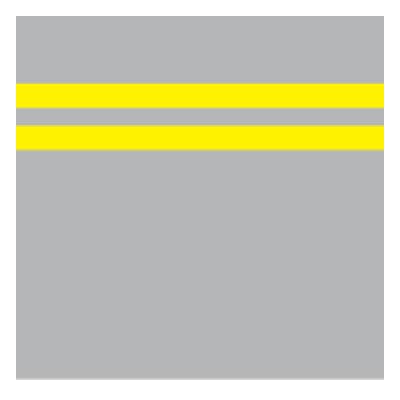
Double yellow lines: side of carriageway, no parking or stopping
Double yellow lines along the edge of the carriageway. No parking and no stopping at any time.
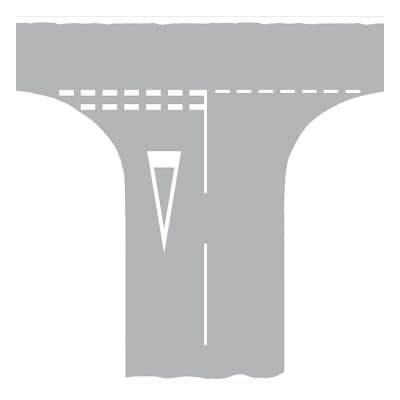
Give way T-junction: give way to traffic on major road
The give-way markings at a T-junction. Slow down and give way to traffic on the major road before you join it.
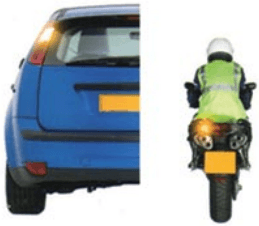
Indicator: I want to turn left
A left indicator showing the driver intends to turn left or pull in. Wait until the turn actually starts before you commit yourself.
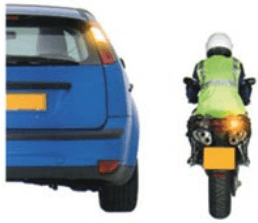
Indicator: I want to turn right
A right indicator showing the driver intends to turn right or pull out. Wait until the turn actually starts before you commit yourself.
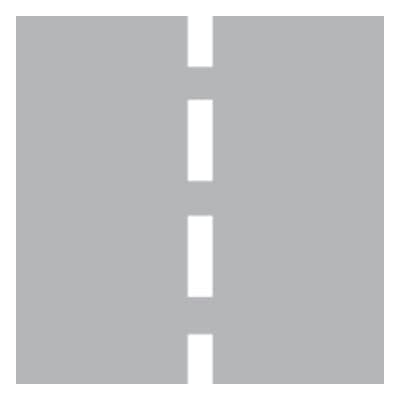
Lane dividers: overtaking is allowed
Lane divider markings on a stretch where overtaking is permitted. Only overtake once you can see the road ahead is clear.

Mini-roundabout (painted disc)
A painted disc marking a mini-roundabout. Treat it exactly like a roundabout, give way to traffic from your immediate right and pass around the disc rather than over it.
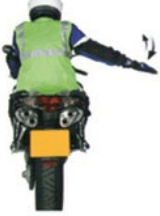
Motorcyclist: I want to slow down or stop
The arm signal a motorcyclist uses to show they are slowing down or stopping. Read it early, because a bike can lose speed very quickly.
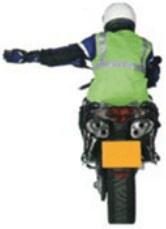
Motorcyclist: I want to turn left
The arm signal a motorcyclist uses to show an intended left turn.
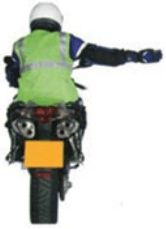
Motorcyclist: I want to turn right
The arm signal a motorcyclist uses to show an intended right turn.
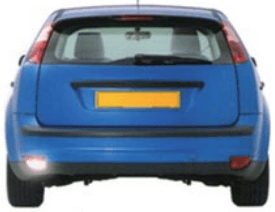
Reversing lights: I want to reverse
White reversing lights showing that the driver is about to reverse. Keep well clear and never wait close behind a reversing vehicle.
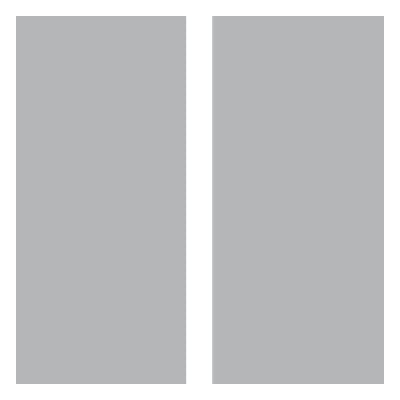
Single white line / double white lines: no parking or overtaking
A single or double white line along the centre of the road where parking and overtaking are both prohibited.
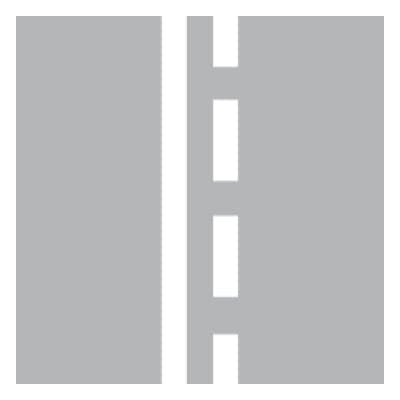
Single white line: rules apply to left, overtaking allowed from right
Where the line nearer to you is broken, the restriction does not apply to your side. You may cross to overtake, provided the road ahead is clear.
Single white line: side of carriageway, no parking
A single white line along the edge of the carriageway marking where parking is not allowed.
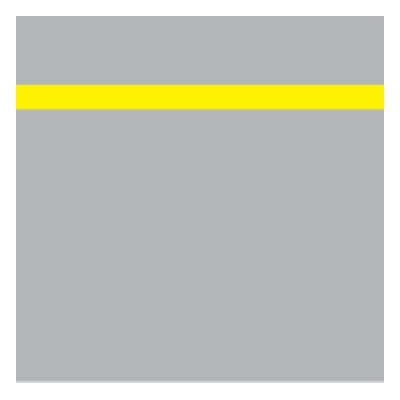
Single yellow line: side of carriageway, no parking
A single yellow line along the edge of the carriageway. Parking is prohibited during the times that apply to it.
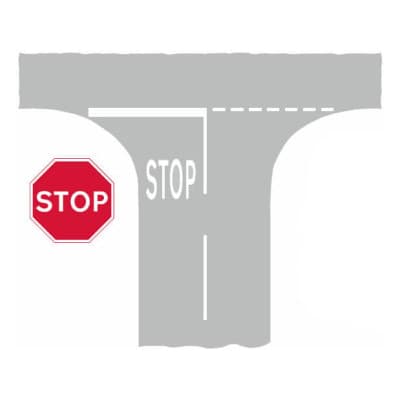
Stop T-junction: stop and give way
The stop markings at a T-junction. You must come to a complete stop at the line and give way before joining the major road.
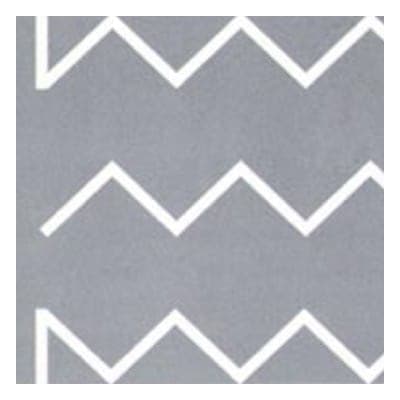
Zigzag lines: no parking, waiting or overtaking
Zigzag lines, normally on the approach to a pedestrian crossing. No parking, no waiting and no overtaking within their length.