Bermuda Warning Signs
Alert drivers to potential hazards ahead
52 signs in this category
Warning signs alert you to hazards or changing conditions ahead on Bermuda roads, such as bends, junctions, pedestrian crossings and slippery surfaces, giving you time to slow down and react safely. They are typically triangular with a red border and a black symbol on a white or yellow background.
Study tip: Focus on the symbol inside the triangle: it tells you exactly what hazard to expect. On the theory test you are often asked to identify the hazard from the symbol alone.
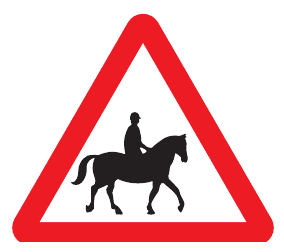
Accompanied horses or ponies
Warning that ridden or accompanied horses or ponies may be on the road ahead. Slow right down, give them plenty of room and avoid sudden noise that could startle them.
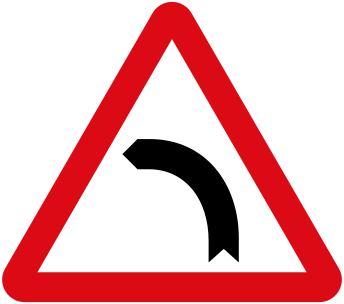
Bend to the left
The road ahead bends to the left. Slow down before the bend and never overtake at a corner or bend.
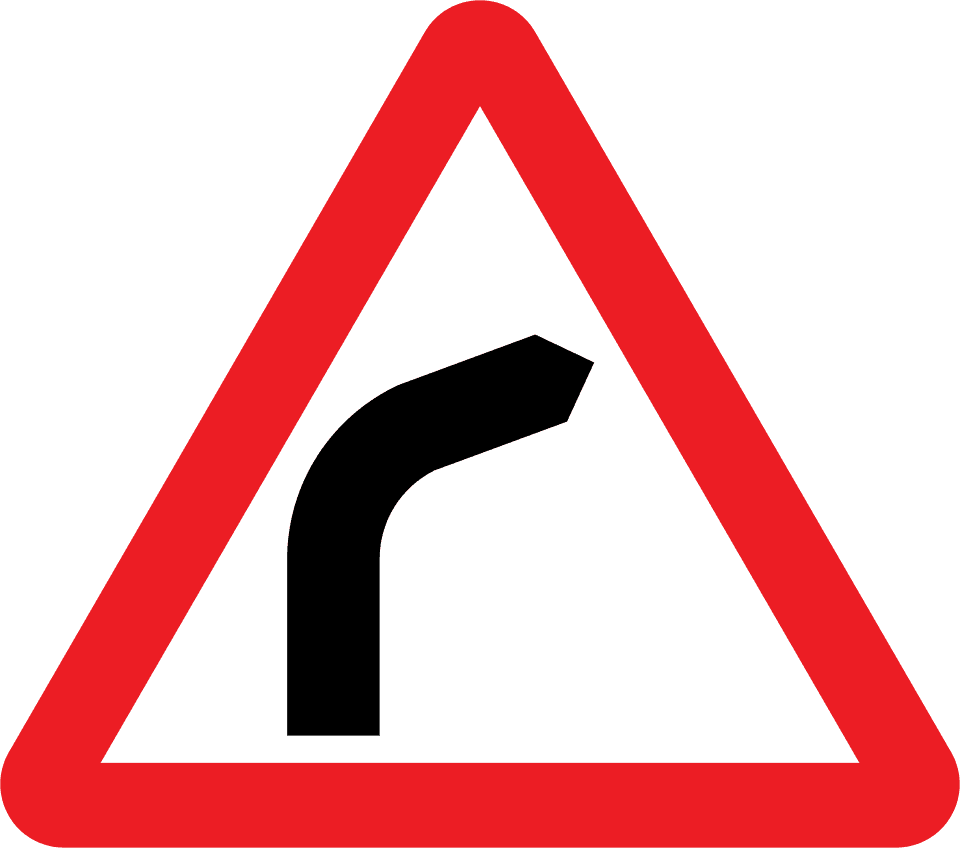
Bend to the right
The road ahead bends to the right. Slow down before the bend and never overtake at a corner or bend.
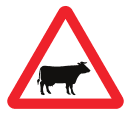
Cattle
Animals may be on the road ahead. Go slow when passing animals, give them a wide berth, and stop with the motor off if signalled to do so.
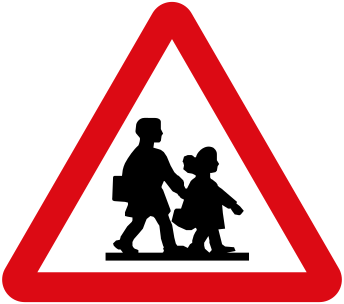
Children
Warns of children likely to be crossing or playing, often near a school. Drive slowly and be ready for children who may run onto the road.
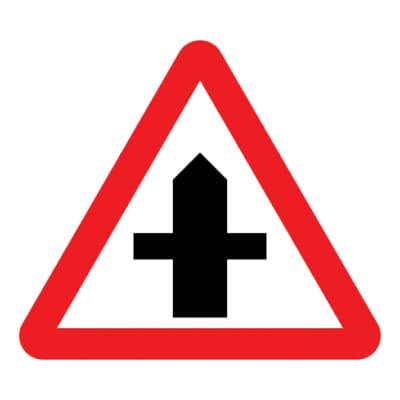
Crossroads
Warns of a crossroads ahead. Go slow and take special care; where there are no stop signs, give way to vehicles entering the intersection from your left.
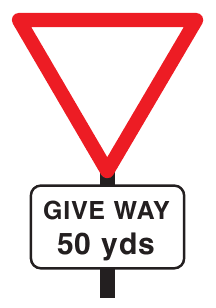
Distance to ‘Give Way’ line ahead
A give-way triangle with a distance plate warning that a Give Way line is ahead (here in 50 yards). Slow down and be ready to give way to traffic on the major road.
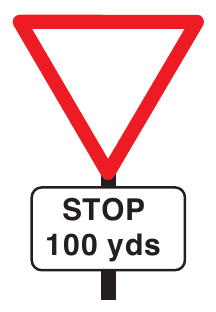
Distance to ‘STOP’ line ahead
A give-way triangle with a distance plate warning that a STOP line is ahead (here in 100 yards). Slow down and be ready to stop at the line.
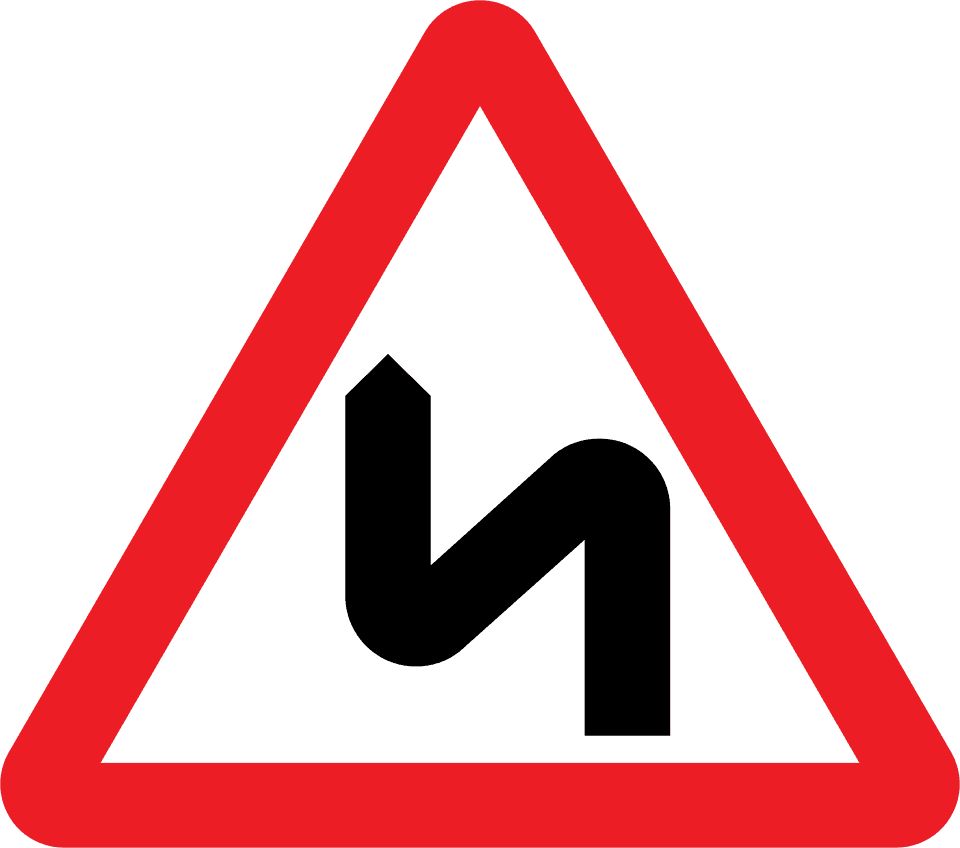
Double bend, first to the left
A double bend ahead, the first turning left. Reduce speed and keep well to your side of the road through both bends.
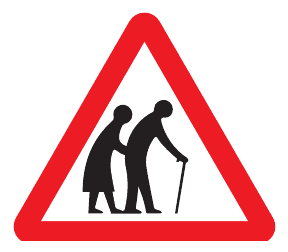
Frail (Elderly) pedestrians ahead
Warning that frail or elderly pedestrians are likely to be crossing or walking in the road ahead. Slow down, be prepared to stop and give them time to cross.
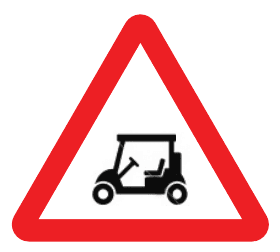
Golf Carts
Warning that golf carts may be crossing or using the road ahead, typically near a golf course. Slow down and be prepared for slow-moving carts.
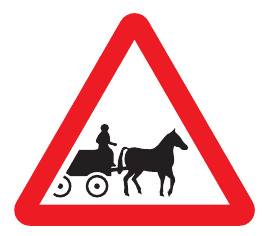
Horse drawn vehicles
Warning that horse-drawn vehicles, such as carriages, may be on the road ahead. Slow down, keep well back and pass wide and slowly only when it is safe.
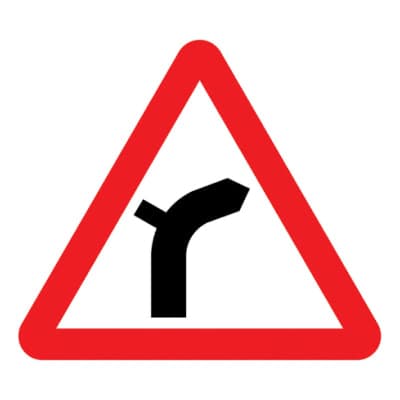
Junction on bend ahead
Warning of a junction on a bend ahead: a side road joins the main road on the bend, where visibility is limited. The broader line shows the priority route; slow down and watch for traffic emerging.
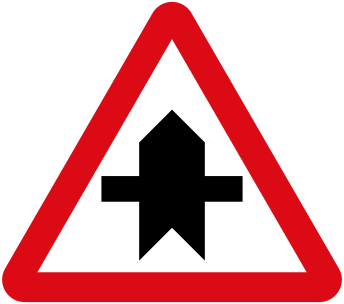
Junction with a minor road
Warns of a junction ahead where a minor road meets your road; the broader line shows the priority through route. Watch for vehicles emerging.
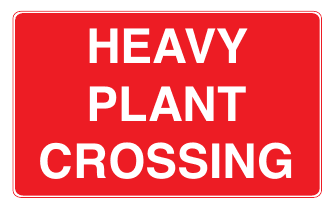
Large vehicles in carriageway
A red worded plate reading HEAVY PLANT CROSSING warning that large, slow construction vehicles may be crossing or in the carriageway ahead. Slow down and be ready to stop.
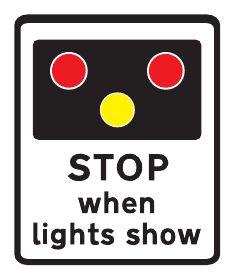
Light signals ahead at fire station or bridge
Warning of light signals ahead at a fire station or bridge: twin red lights with an amber light and the words STOP when lights show. When the lights show, stop and wait until they go out.
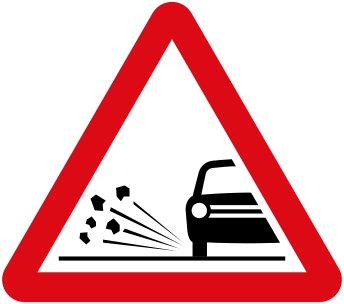
Loose chippings
Loose chippings or a loose surface ahead. Slow down and leave extra room; loose surfaces sharply increase stopping distances.
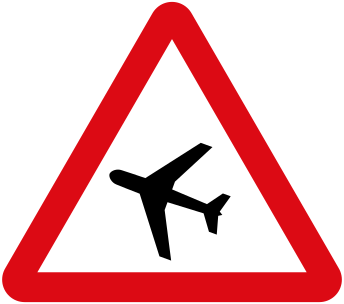
Low-flying aircraft
Low-flying aircraft or sudden aircraft noise ahead, near L.F. Wade International Airport. Do not be startled; keep your attention on the road.
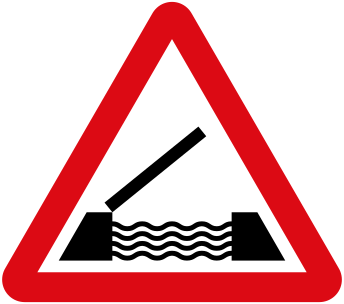
Opening or swing bridge ahead
An opening or swing bridge is ahead. Be ready to stop; when the paired red lights flash you MUST stop and wait for the bridge.
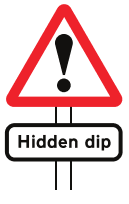
Other danger
Warns of a danger not covered by another sign; a plate below states its nature, such as a hidden dip. Slow down and be ready for the hazard.
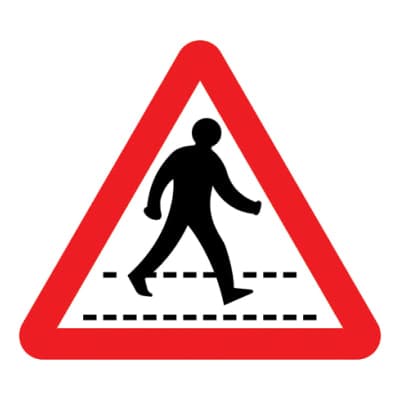
Pedestrian crossing ahead
A pedestrian crossing is ahead. Slow down, be ready to stop and never overtake at a pedestrian crossing.
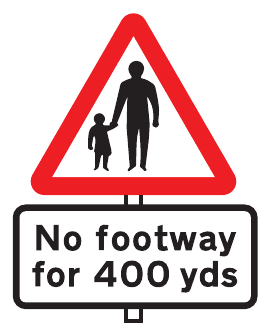
Pedestrians in road ahead
Warning that pedestrians may be walking in the road ahead, usually because there is no footway (the plate here reads 'No footway for 400 yds'). Slow down and give them plenty of room.
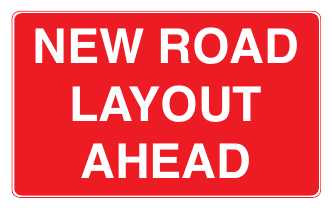
Permanent change in road layout ahead
A red worded plate reading NEW ROAD LAYOUT AHEAD warning of a permanent change in the road layout. Do not rely on your memory of the road: slow down and follow the signs and markings.
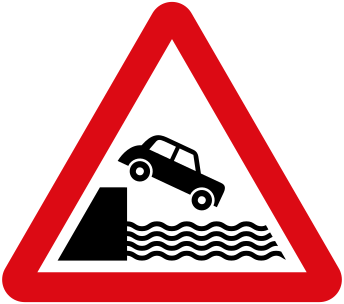
Quayside or canal bank
The road ahead leads to a quayside or open water's edge. Go slow and take special care, particularly when turning or reversing.
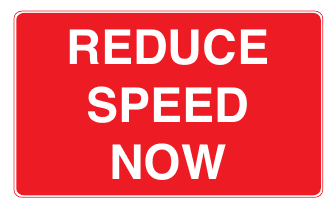
Reduce speed now (plate)
A red worded plate placed below some warning signs telling you to reduce your speed immediately for the hazard the sign describes.
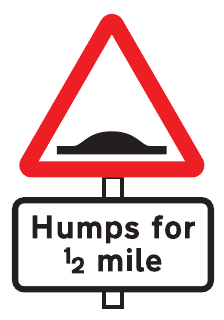
Road humps
Road humps or a hump bridge ahead. Slow right down; do not overtake if you are approaching a speed hump.
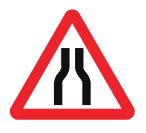
Road narrows on both sides
The carriageway ahead narrows on both sides. Slow down and be ready to give way to oncoming traffic.
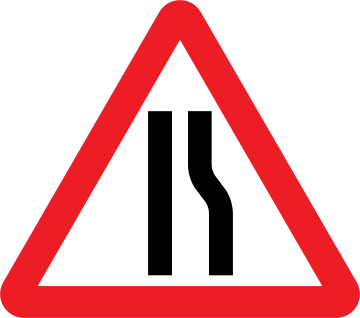
Road narrows on right
Warning that the road narrows from the right-hand side ahead. Keep to the left and reduce speed.
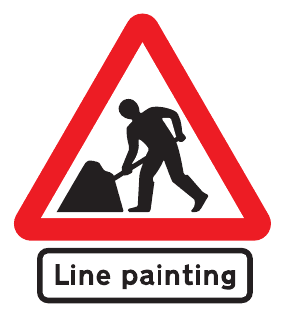
Road works
Road works are ahead. Slow down, obey temporary signs and signals, and watch for workers and plant in the carriageway.
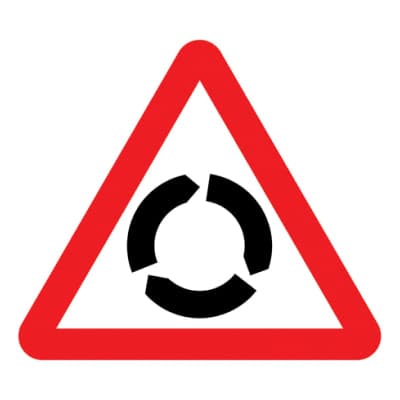
Roundabout ahead
A roundabout is ahead. Approach at a safe speed and give priority to traffic approaching from your right, unless signs or markings direct otherwise.
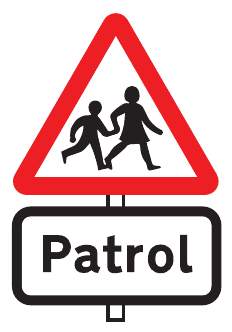
School crossing patrol ahead
Warning of a school crossing patrol ahead: the children sign with a 'Patrol' plate. Slow down and be ready to stop when the patrol signals you to.

Sharp deviation of route to left (or right if chevrons reversed)
Black-and-white chevrons pointing in the direction of a sharp deviation of the route (here to the left; the chevrons are reversed for a deviation to the right). Slow down and follow the chevrons.
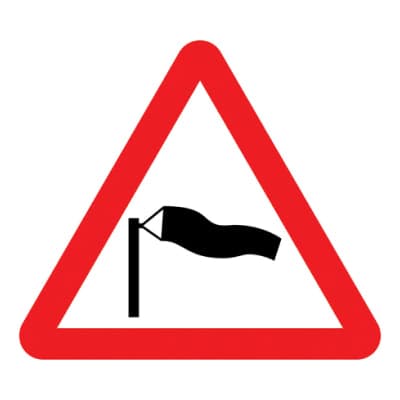
Side winds
Strong side winds are likely ahead, often on exposed causeways and bridges. Keep firm control, especially on a motorcycle or auxiliary cycle.
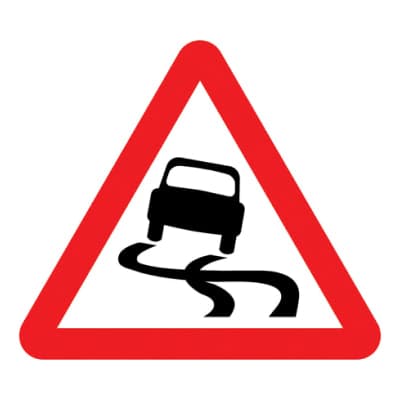
Slippery road
The road surface ahead may be slippery, especially when wet. Slow down and avoid sudden braking, steering or acceleration.
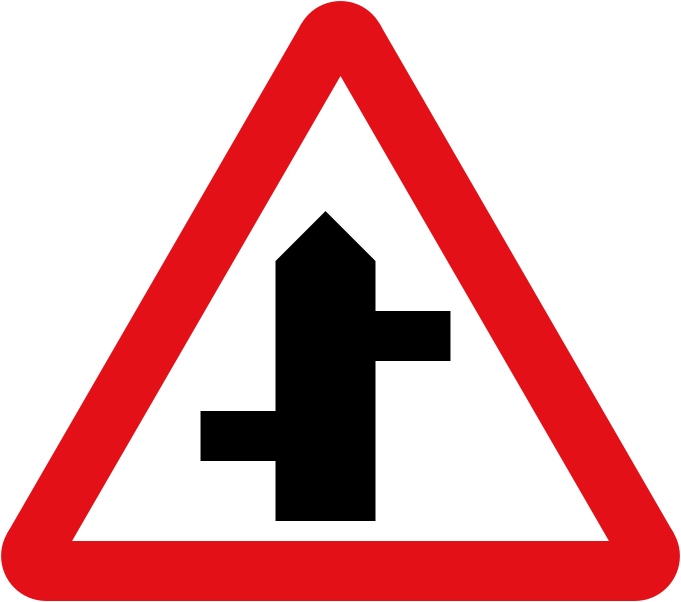
Staggered junction
Warning of a staggered junction ahead: side roads join the main road from the left and from the right at slightly different points rather than directly opposite each other. The broader line shows the priority through route; watch for traffic turning in and out on both sides.
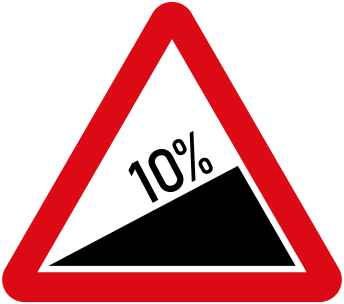
Steep ascent
A steep uphill grade is ahead. Be ready for slow-moving vehicles and do not overtake approaching the brow of a hill.
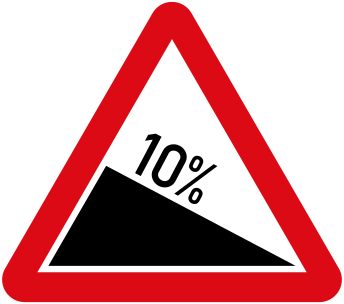
Steep descent
A steep downhill grade is ahead. Engage a lower gear early, brake firmly only on the straight stretches and ease off in the bends.
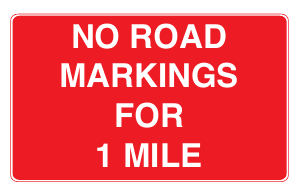
Temporary hazard at road works: no road markings for 1 mile
A red worded plate at road works warning that the road ahead has no lane or centre markings for the distance shown (here 1 mile). Slow down, keep well to the left and judge your road position with extra care.
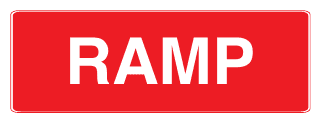
Temporary hazard at road works: ramp
A red worded plate at road works warning of a ramp: an abrupt change in the level of the road surface where a temporary surface meets the old one. Slow down before you reach it.
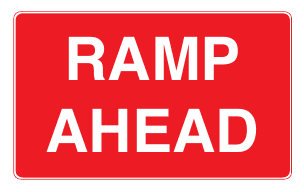
Temporary hazard at road works: ramp ahead
A red worded plate at road works warning that a ramp, an abrupt step in the road surface, lies a short distance ahead. Reduce speed in good time.
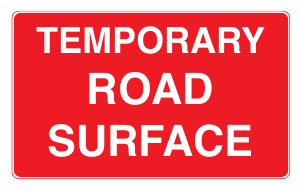
Temporary hazard at road works: temporary road surface
A red worded plate at road works warning that a temporary road surface is in use. Expect an uneven, loose or unmarked surface and reduce speed.
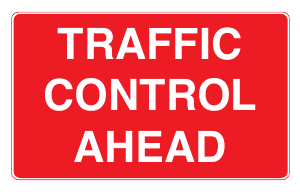
Temporary hazard at road works: traffic control ahead
A red worded plate warning that traffic through the road works ahead is being controlled, for example by temporary lights or a person with a STOP/GO sign. Slow down and be ready to stop.
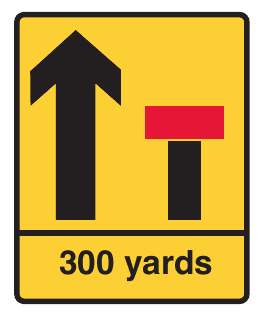
Temporary lane closure (position of arrows lanes open and closed)
A yellow road-works sign showing which lanes are open and closed ahead (here the right-hand lane is closed, marked by a red bar, in 300 yards). Move into an open lane in good time; the position of the arrows and red bars varies with the lanes affected.
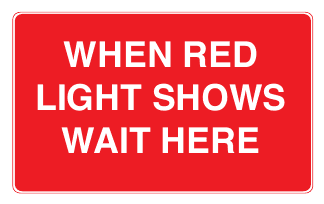
Temporary road works signal: when red light shows wait here
A red worded plate at temporary road-works signals. When the red light shows, stop and wait at this point until the light changes; do not drive past it while the red light is showing.
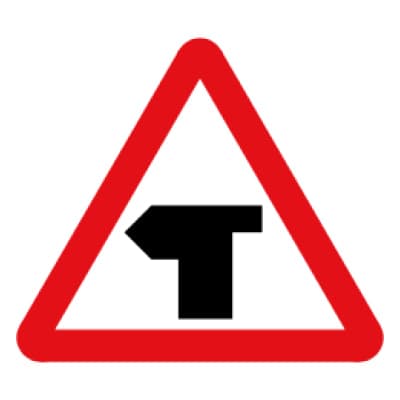
T-junction
Warning of a T-junction ahead. The broader line shows the priority route; slow down and be prepared to give way.
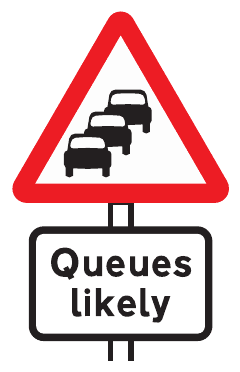
Traffic queues likely ahead
Warning that traffic queues are likely ahead (a triangle showing queued vehicles with a 'Queues likely' plate). Slow down and be ready to stop behind stationary traffic.
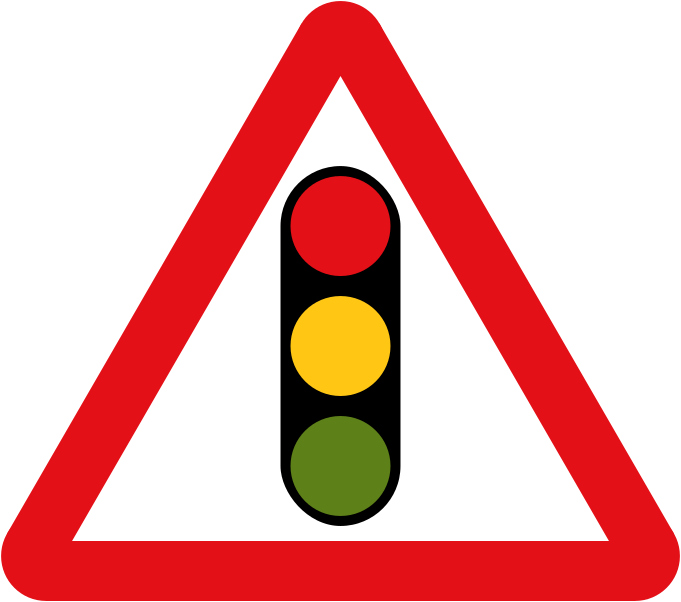
Traffic signals ahead
Traffic lights are ahead. Be ready to stop; remember amber means stop at the line unless it would be unsafe to pull up.
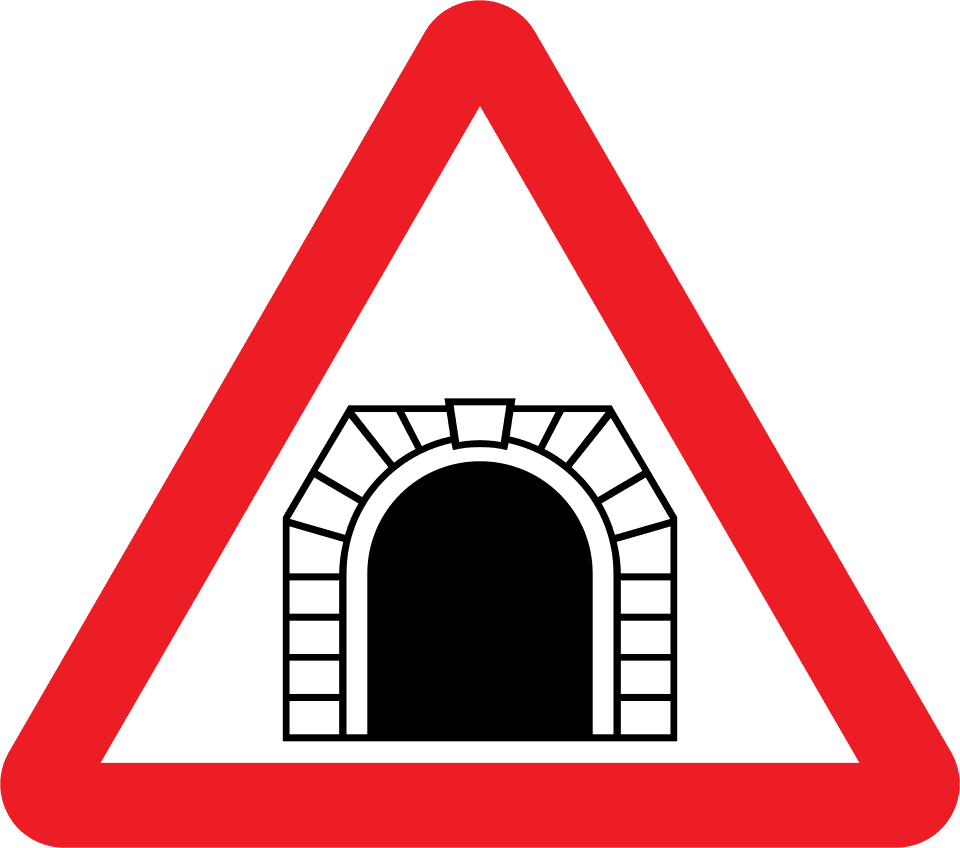
Tunnel ahead
Warning of a tunnel ahead. Slow down and be prepared for reduced light and a narrower road inside.
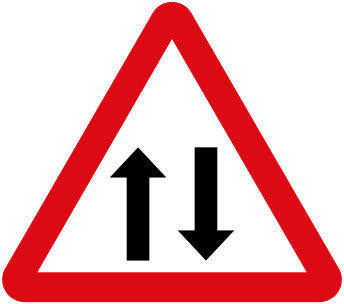
Two-way traffic
Two-way traffic ahead, often after a one-way section. Keep to the left and expect oncoming vehicles.
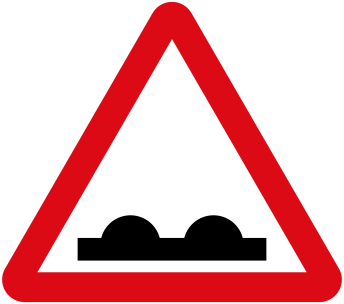
Uneven road
The road surface ahead is uneven. Reduce speed to keep full control of your vehicle or cycle.
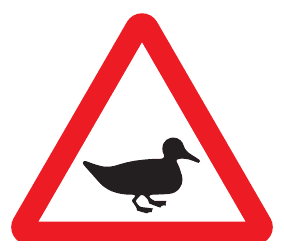
Wild fowl
Warning that wild fowl such as ducks may be on or crossing the road ahead. Slow down and be prepared to stop.
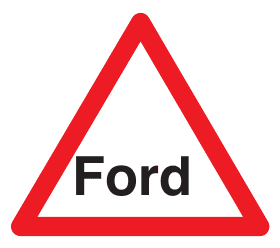
Worded warning sign (Ford)
A worded warning triangle for a ford, where a stream crosses the road. Slow down and cross slowly.