Bermuda Road Markings
Painted lines and symbols on the road surface
24 signs in this category
Road markings are the painted lines, arrows and symbols on Bermuda road surfaces that guide lane discipline, show where you may or may not cross, and reinforce nearby signs.
Study tip: Solid lines generally mean 'do not cross', while broken lines mean 'cross with care'. Yellow lines usually relate to stopping and parking rules.
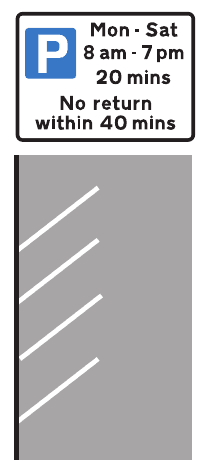
Bikes: waiting limited to times shown
A bay for bikes (motorcycles), shown as a kerbside area marked with white diagonal lines, where waiting is limited to the times, duration and other restrictions shown on the plate (here Mon-Sat 8 am to 7 pm, 20 minutes, no return within 40 minutes). Park only within the marked area.
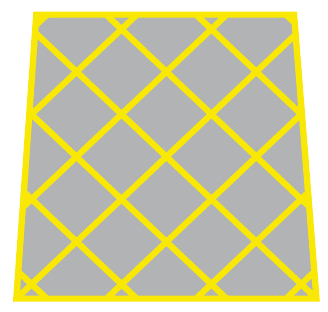
Box junction
Criss-cross yellow lines mark a box junction. You MUST NOT enter the box unless your exit road is clear, except when you want to turn right and are stopped only by oncoming traffic or other vehicles waiting to turn right.
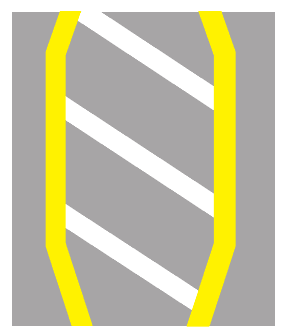
Diagonal hatching
An area of white diagonal stripes bordered by solid yellow lines that separates traffic streams or protects turning traffic. Do not enter the hatched area and do not stop on it.
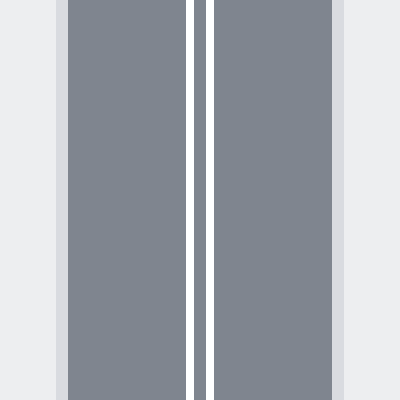
Double solid white lines
You MUST NOT cross or straddle double solid white lines, and you MUST NOT wait or park opposite them.
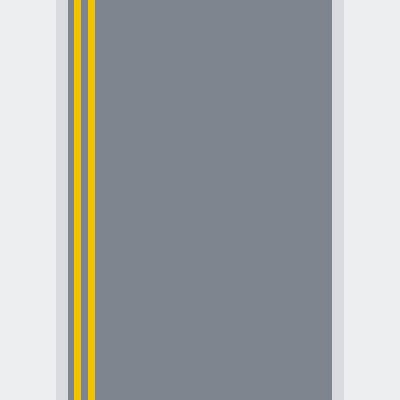
Double yellow edge lines
Double yellow lines along the edge of the road mean no waiting at any time, unless signs indicate seasonal restrictions. You may stop only to load, unload or let passengers board or alight where permitted.
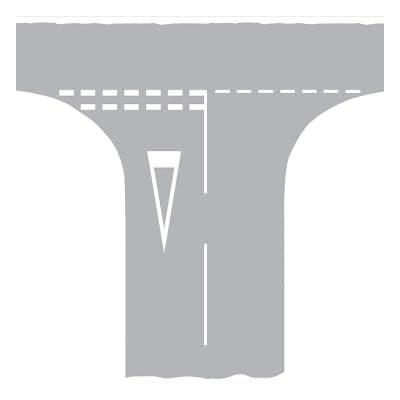
Give way lines: give priority to traffic on major road
A double broken white line across the end of a minor road, usually with a give-way triangle painted before it, means give priority to traffic on the major road. Slow down and give way before crossing or joining the major road.
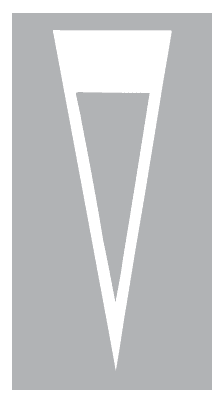
Give way markings
A hollow white triangle painted on the road warns of give-way lines just ahead: give way to traffic on the major road before joining it.
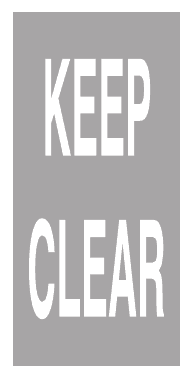
KEEP CLEAR marking
The words KEEP CLEAR painted on the road mean do not stop on that part of the carriageway, even in queuing traffic, so that the entrance or crossing it protects stays clear.
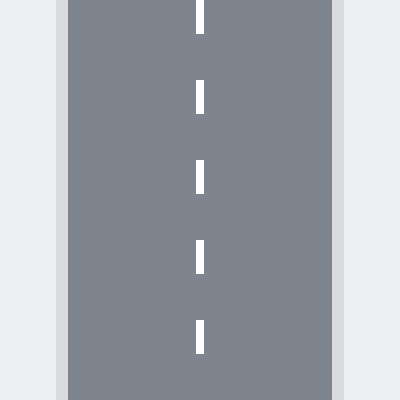
Lane line
Short broken white lines divide a wide carriageway into traffic lanes. Keep between them and change lanes only when it is safe.
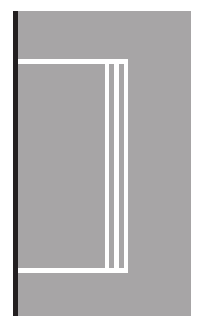
Loading bay
A white bay marked along the kerb reserves that length of road for vehicles loading and unloading. You may not park in it unless you are loading or unloading, and loading bays are restricted to commercial-class vehicles.
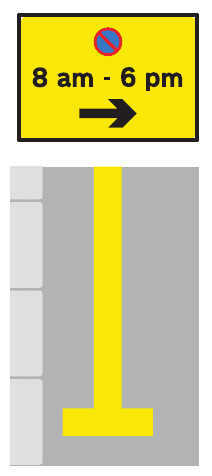
No waiting during times shown on sign
A single yellow line along the edge of the road means no waiting during the times shown on the nearby plate (here 8 am to 6 pm). The line alone is only a guide: check the plate for the exact restriction.
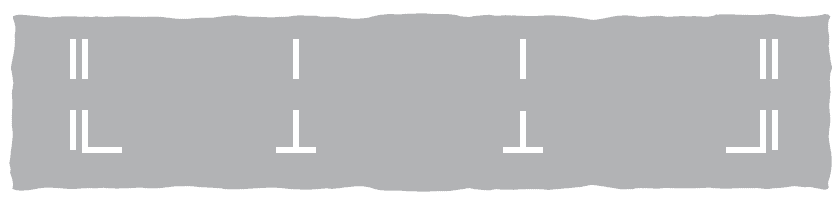
Parking bay marking (roadside)
White bay markings along the roadside show where parking is allowed. Park wholly within the marked bay and obey any plate giving times or conditions.
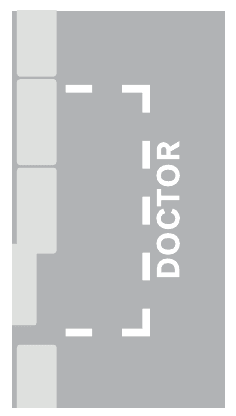
Parking space reserved for vehicles named
A bay marked with the name of the user or vehicle it is reserved for (here DOCTOR). Do not park in a reserved space unless it is reserved for you.

School keep clear zigzag
Yellow zigzag lines with the words SCHOOL KEEP CLEAR mark the entrance to a school. Keep this area clear of stationary vehicles at all times, even when picking up or setting down children.
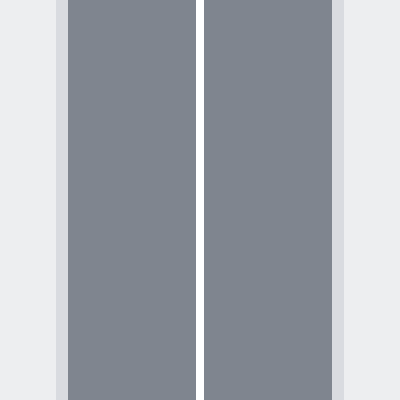
Single white centre line
A single white line marks the centre of a two-lane carriageway. You may cross it to overtake when it is safe, and parking opposite is permitted unless indicated otherwise.
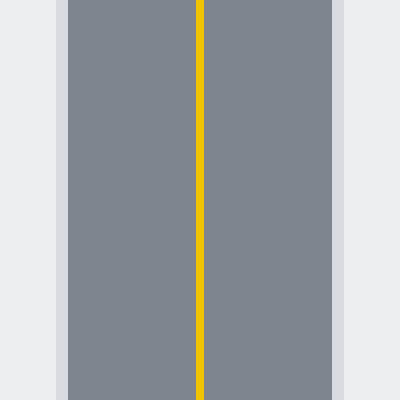
Solid yellow centre line
You SHOULD NOT cross or straddle a yellow centre line unless it is safe and you need to enter adjoining premises or a side road, pass a stationary vehicle, or overtake a pedal cycle, horse or road maintenance vehicle moving at 15 km/h or less. You MUST NOT wait or park opposite it.
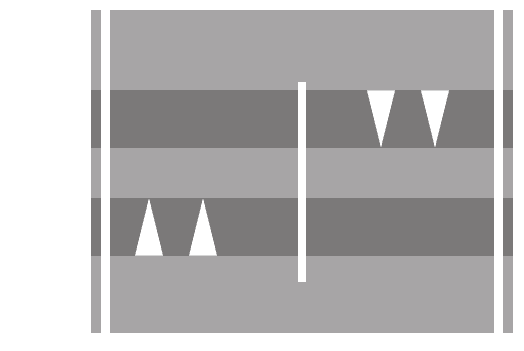
Speed bump markings
Speed bumps are marked on the road with white or yellow triangles and an edge line. Slow right down before you reach them.
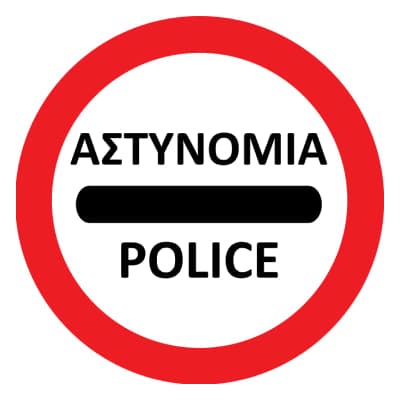
Stop line
A solid white line across your lane at a junction or signal shows where you MUST stop, behind the line, at a STOP sign, red light or police signal.

Stop line at STOP sign
A solid white line across the road at a STOP sign. You must stop at the line, even if the road seems clear, and give way before moving off.
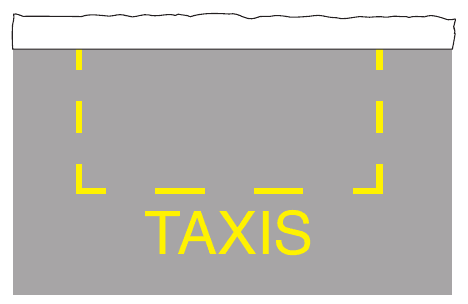
Taxi parking bay marking
A bay outlined in broken yellow lines with the word TAXIS is reserved for taxis. Other vehicles must not park or wait in it.
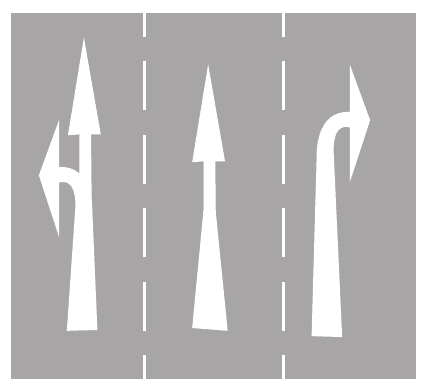
Traffic lanes indicated (arrows)
White arrows painted on the road show which lane to use for each direction at the junction ahead (here the left lane may go ahead or turn left, the centre lane goes ahead and the right lane turns right). Choose your lane early and do not change lanes at the last moment.
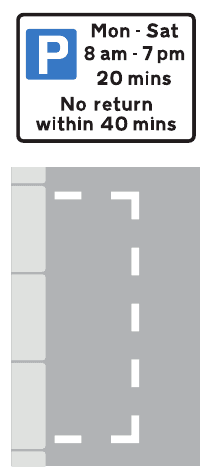
Waiting limited to times shown (broken white bay)
A parking bay outlined in broken white lines where waiting is limited to the times, duration and other restrictions shown on the plate (here Mon-Sat 8 am to 7 pm, 20 minutes, no return within 40 minutes).
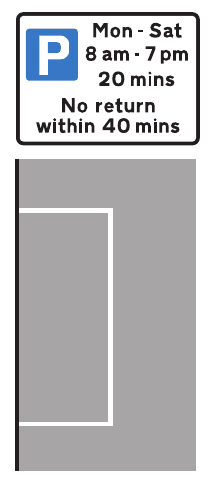
Waiting limited to times shown (solid white bay)
A parking bay outlined in solid white lines where waiting is limited to the times, duration and other restrictions shown on the plate (here Mon-Sat 8 am to 7 pm, 20 minutes, no return within 40 minutes).
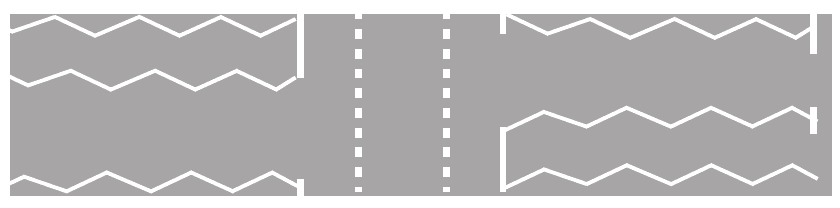
Zigzag lines at a pedestrian crossing
You MUST NOT park on a crossing or anywhere within its zigzag lines, and you MUST NOT overtake the moving vehicle nearest the crossing or a vehicle that has stopped to give way to pedestrians.