Transport Malta Theory Test 2026: Format, Booking, Centres and How to Pass
Pass the Malta theory test with confidence. Covers the 35-question format, 85% pass mark, multi-answer MARK questions, 14 topic categories, costs (EUR 108-125), study strategy, and step-by-step licensing process.
Malta driving theory test at a glance
The Malta driving theory test is a 35-question, computer-based exam you must pass before taking your practical test. You need 30 correct answers (about 85%) to pass, so only 5 mistakes are allowed.
| Detail | What to know |
|---|---|
| Questions | 35 multiple-choice, including multi-answer “MARK” questions |
| Pass mark | 30 out of 35 correct (about 85%) — only 5 mistakes allowed |
| Time limit | 45 minutes |
| Cost | €30.25 (theory test fee) |
| Topics | 14 official categories, from road signs to right of way |
| Language | English or Maltese |
| Booked through | Transport Malta (Theory Test Centre, Gwardamangia Hill) |
| Required before | The practical (on-road) driving test |
New to Maltese signs? Start with our Malta road signs guide, then practise with a free Malta practice test.
Key Takeaways:
- 35 questions, 85% pass mark (30/35 correct), 45-minute time limit.
- Multi-answer MARK questions are the biggest challenge — you must select ALL correct options or the entire question is marked wrong.
- Pass rate approximately 53-66%; around 2-4 in every 10 candidates fail.
- Test costs EUR 30.25; total licence process approximately EUR 108-125.
- Malta drives on the RIGHT despite British colonial history.
- Practice on ExamReady with real-format questions including multi-answer MARK questions.
What Is the Malta Driving Theory Test?
The Malta driving theory test is a compulsory computer-based examination administered by Transport Malta, the national authority responsible for all transport regulation on the island. Every aspiring driver must pass this test before being issued a learner's permit, which then allows supervised practical driving lessons on Malta's roads.
The test was introduced as part of Malta's alignment with European Union driving licence directives, ensuring all new drivers demonstrate baseline understanding of road safety, traffic laws, and vehicle operation. It is conducted at the Transport Malta offices in Lija, where candidates sit at individual computer terminals and work through a randomised set of questions drawn from the official question bank.
Unlike many countries where the theory test is a formality, Malta's version carries genuine difficulty. The combination of a high pass mark (85%), strict multi-answer question scoring, and a broad range of topics means that candidates who do not prepare adequately will almost certainly fail. According to MaltaToday, the theory test has historically been a significant barrier for new drivers, with failure rates sometimes exceeding 40%.
The test is available in both English and Maltese, reflecting Malta's two official languages. Candidates choose their preferred language when booking. There is no difference in content or difficulty between the two versions — the questions are direct translations of each other. For those who have recently moved to Malta, the English-language option makes the test accessible without needing to learn Maltese, which is a significant advantage compared to countries that only offer theory tests in their national language.
Passing the theory test is the critical first step in your journey to a full Malta driving licence. Without it, you cannot obtain a learner's permit, and without a learner's permit, you cannot legally practise driving on the island. For a comprehensive overview of the entire licensing process, see our step-by-step guide to getting your Malta driving licence.
Test Format: 35 Questions in 45 Minutes
The Malta theory test consists of exactly 35 multiple-choice questions that must be completed within a 45-minute time limit. To pass, you need a minimum of 30 correct answers — an 85% pass mark, allowing a maximum of only 5 mistakes. This is one of the highest pass thresholds in Europe.
What makes Malta's theory test truly distinctive is its use of multi-answer questions, known as MARK questions. While some questions follow the standard single-answer format, others require you to select multiple correct answers. These are labelled MARK 2, MARK 3, or MARK 4, indicating exactly how many correct options you must select.
- MARK 2: Select exactly 2 correct answers.
- MARK 3: Select exactly 3 correct answers.
- MARK 4: Select exactly 4 correct answers.
The critical detail: if you select even one wrong option, or miss even one correct option, the entire question is scored as incorrect. There is no partial credit. A MARK 3 question where you correctly identify 2 out of 3 correct answers still counts as wrong.
For example, a MARK 3 question asks: "Which situations require you to reduce speed?" If the correct answers are "approaching a school zone," "driving in heavy rain," and "entering a built-up area," but you select "approaching a school zone," "driving in heavy rain," and "driving on a motorway," you score zero — even though two of your selections were correct.
With 35 questions in 45 minutes, you get roughly 1 minute 17 seconds per question. MARK questions naturally take longer, so answer straightforward single-answer questions first, then return to MARK questions with remaining time. For deeper strategies, read our guide on Malta theory test multi-answer questions.
Questions are drawn randomly from the Transport Malta question bank covering 14 topic categories, so no two tests are identical.
What Is the Pass Rate?
Approximately 53-66% of candidates pass the Malta driving theory test, depending on the year. In 2016, The Malta Independent reported a pass rate of around 53%, meaning nearly half of all candidates failed. More recent figures suggest the rate has improved slightly to the low-to-mid 60% range.
Roughly 2 to 4 out of every 10 candidates fail. Many underestimate the test, assuming common sense will suffice. The multi-answer MARK questions catch unprepared candidates off guard consistently.
MaltaToday has reported on pass rate discrepancies across different testing periods, though the 85% pass mark remains constant and randomised question selection ensures a similar challenge for everyone.
How does Malta compare internationally?
- Malta: approximately 53-66%
- Cayman Islands: approximately 52.5%
- United Kingdom: approximately 47%
- Cyprus: approximately 80%
Malta sits in the middle — harder than Cyprus but easier than the UK. The MARK question format elevates the difficulty beyond what the raw question count suggests. One misread MARK 3 question uses up one of your five allowed mistakes.
There is no limit on retakes, though you pay EUR 30.25 each time. Most candidates who fail first time pass on the second attempt with proper study. For proven strategies, see our guide on how to pass the Malta driving theory test.
How Much Does the Malta Theory Test Cost?
The theory test costs EUR 30.25 per attempt, as set by Transport Malta. Compared to most European countries, this is remarkably affordable — Malta is one of the cheapest places on the continent to get a driving licence.
The full cost breakdown:
- Theory test fee: EUR 30.25
- Learner's permit: approximately EUR 23
- Medical certificate: approximately EUR 15-20
- Practical test fee: approximately EUR 23.25 (up to EUR 40 for weekend or other categories)
- Licence issuance: approximately EUR 31 (probationary licence)
Total official cost: approximately EUR 108-125, excluding professional driving lessons (typically EUR 15-25 per hour).
International comparison shows how affordable Malta is:
- Cayman Islands: approximately CI$735 (around EUR 800+)
- United Arab Emirates: approximately AED 5,500 (around EUR 1,400)
- Cyprus: approximately EUR 60 total
- United Kingdom: approximately GBP 73 (around EUR 85) total
Malta's total cost of EUR 108-125 puts it among the most budget-friendly options in Europe. The affordability is particularly noteworthy for expatriates and students living in Malta, as the low cost removes a significant financial barrier to obtaining legal driving credentials. However, the low cost also means some candidates treat the test casually, booking without adequate preparation — which partly explains the relatively low pass rates discussed above.
One practical tip: book your theory test well in advance through the Transport Malta online portal. Appointment slots can fill up quickly, especially during peak periods like the summer months when many young people turn 18 and begin the licensing process. If you fail and need to rebook, there may be a waiting period of several weeks before the next available slot.
The 14 Topic Categories Tested
According to Transport Malta, the question bank covers 14 categories to ensure comprehensive road safety knowledge:
- Traffic Signs and Signals: All standard European traffic signs. Malta uses Vienna Convention-standard signage consistent with most EU countries.
- Road Markings: White and yellow markings including centre lines, no-parking zones, pedestrian crossings, and box junctions.
- Right-of-Way Rules: Priority at intersections, T-junctions, roundabouts, and with emergency vehicles. Heavily tested, especially in MARK questions.
- Speed Limits: 50 km/h in urban areas, 80 km/h on dual carriageways. Critical fact: Malta has no motorways — 80 km/h is the absolute maximum anywhere on the island.
- Roundabouts: Lane positioning, signalling, and yielding. Malta has numerous roundabouts, including notoriously confusing multi-lane ones.
- Parking Rules: Legal and illegal zones, parking on hills, double parking, restricted zones. Parking in Valletta and Sliema is a constant challenge.
- Lane Discipline: Correct lane usage, overtaking, merging, and lane-change procedures.
- Motorway Driving: Despite having no motorways, the test covers dual carriageway rules — joining, exiting, and safe following distances at 80 km/h.
- Vehicle Safety: Pre-drive checks, tyre condition, lights, mirrors, braking systems, and basic maintenance.
- Seatbelts: Mandatory for all occupants, with specific child restraint rules based on age and height.
- Alcohol and Driving: Malta's BAC limit is 0.05%, not 0.08% as many assume. This is stricter than the UK and frequently tested.
- Mobile Phones: Hands-free only. Since May 2023, penalties increased to 6-9 penalty points — one of the most severely penalised offences on the island.
- Emergency Procedures: Accident response, warning triangle placement, hazard lights, and contacting emergency services.
- Pedestrians and Cyclists: Crossing rules, giving way, safe passing distances. Malta's narrow roads make this especially important.
Do not focus only on categories you find intuitive. Neglected topics like emergency procedures or alcohol limits can easily produce the 5 wrong answers that cause failure. Explore our Malta road signs practice and Malta theory test practice.
Understanding Multi-Answer MARK Questions
MARK questions are the defining feature of the Malta driving theory test and the primary reason candidates fail. According to data from TheoryTestMalta and feedback from test-takers, MARK questions account for a disproportionate share of incorrect answers. Understanding exactly how they work — and developing a reliable strategy for tackling them — can make the difference between passing and failing.
MARK 2 Questions: The question presents four or more options, and exactly two of them are correct. You must identify and select both correct options. If you select only one, or if you select one correct and one incorrect option, the question is scored as wrong. There is no partial credit whatsoever.
MARK 3 Questions: Three options out of the available choices are correct. You must find and select all three. Missing even one correct option, or including one incorrect option, results in zero marks for that question.
MARK 4 Questions: Four options are correct. This is the most challenging variant because you must correctly evaluate every single option — selecting all four correct ones while avoiding any incorrect ones. With so many correct answers to identify, the probability of making at least one error is naturally higher.
A systematic strategy for MARK questions:
- Read the question stem carefully. Many errors come from misunderstanding the question, not lacking knowledge.
- Note the MARK number. Know how many correct answers you need before evaluating options.
- Eliminate definitely-wrong options first. Narrowing the field makes correct selection easier.
- Watch for subtly different options. Pay attention to specific numbers (speed limits, BAC levels) and absolute language ("always," "never").
- Count selections before confirming. Ensure your selections match the MARK number exactly.
The most common mistake candidates make with MARK questions is rushing. Because the 45-minute time limit creates a sense of urgency, many candidates do not give MARK questions the careful analysis they require. A much better approach is to answer all straightforward single-answer questions first, which you can do quickly if you have studied, then dedicate your remaining time to the MARK questions where careful deliberation pays off.
MARK questions appear across all 14 topic categories, so there is no way to avoid them by specialising in certain subjects. You need comprehensive knowledge across all topics to handle multi-answer questions reliably. For detailed practice with MARK-format questions, see our complete guide on multi-answer questions on the Malta theory test, and practise extensively with real-format questions on ExamReady.
Step-by-Step: Getting Your Malta Driving Licence
The full process takes a minimum of 7-8 months, based on requirements from Transport Malta.
Step 1: Gather Your Documents and Apply to Transport Malta
Before you can book your theory test, you need to submit an application to Transport Malta with the following documents: a valid Malta identity card or residence permit, a recent medical certificate confirming your fitness to drive (obtained from any registered doctor in Malta), and two passport-style photographs. EU citizens residing in Malta can use their national ID card. The application can be submitted in person at the Transport Malta offices in Lija or, for some document types, through their online portal.
Step 2: Pass the Driving Theory Test
Once your application is approved, you can book a theory test appointment. The test costs EUR 30.25 and is conducted on a computer at the Transport Malta testing centre. You need 30 out of 35 correct answers to pass. Arrive at least 15 minutes early with your ID card. Results are given immediately upon completion — you will know whether you passed before you leave the testing centre. If you fail, you can rebook for another attempt after a short waiting period.
Step 3: Obtain Your Learner's Permit
After passing the theory test, you can apply for a learner's permit. The permit costs approximately EUR 23.25 and is valid for 3 years. With a learner's permit, you are legally allowed to drive on Malta's roads, but only under specific conditions: you must be accompanied by a fully licensed driver at all times, you must display "L" plates on the vehicle, and you must not drive on certain roads during peak hours as designated by Transport Malta.
Step 4: Complete Practical Driving Lessons
You must hold your learner's permit for a minimum of 6 months before you are eligible to take the practical driving test. During this period, most candidates take professional driving lessons from a certified instructor. While there is no legally mandated minimum number of lessons, most instructors recommend at least 20-30 hours of professional tuition, supplemented by additional practice with a licensed accompanying driver. Focus on Malta-specific challenges: narrow streets, roundabouts, hill starts, and parallel parking in tight spaces.
Step 5: Pass the Practical Driving Test
After your minimum 6-month learner's period, you can book the practical driving test (approximately EUR 23.25, or up to EUR 40 for weekend slots). The test includes a "show and tell" section where you answer questions about vehicle controls and safety checks, followed by an on-road driving assessment lasting approximately 30-40 minutes. You will drive through various road types including urban streets, main roads, and roundabouts. The examiner assesses your ability to drive safely, follow traffic rules, and handle Malta's specific road conditions.
Step 6: Receive Your Full Driving Licence
Upon passing the practical test, you can apply for your full Malta driving licence (approximately EUR 31 for the probationary licence). The licence is issued in EU standard credit-card format and is valid throughout the European Union. New drivers are subject to a probationary period during which accumulating penalty points can lead to licence suspension more quickly than for experienced drivers.
For the complete breakdown, see our guide to getting your driving licence in Malta.
How to Study for the Malta Theory Test
Candidates who study systematically pass at nearly double the rate of those relying on general knowledge, according to TheoryTestMalta. Dedicate 15-20 hours of preparation for the best chances.
Start with the official material. The Transport Malta handbook covers all 14 categories with authoritative answers. Do not rely on generic European driving theory material — Malta has unique rules (80 km/h maximum, specific roundabout regulations) that generic guides miss.
Focus on MARK questions. Dedicate at least a third of study time to multi-answer practice. Use ExamReady's Malta theory test practice, which replicates the exact MARK format you will face.
Master the road signs. Malta uses European/Vienna Convention signs, different from UK or US standards. Use our Malta road signs practice to build rapid recognition.
Memorise the key numbers:
- Speed limits: 50 km/h urban, 80 km/h dual carriageways (no motorways)
- BAC limit: 0.05% (not 0.08%)
- Mobile phone penalty: 6-9 points since May 2023
- Minimum learner's period: 6 months
- Learner's permit validity: 3 years
- Pass mark: 30/35 (85%)
Take timed practice tests. Set a 45-minute timer for full 35-question tests to build time management skills and realistic test rhythm.
Study what you think you know. The 0.05% BAC limit, absence of motorways, and mobile phone penalty points all trip up experienced drivers. For more strategies, see our guide on how to pass the Malta driving theory test.
Essential Malta Driving Rules
Malta drives on the RIGHT side of the road — a fact that surprises many visitors and new residents, given that Malta was a British colony until 1964 and many other former British territories (such as Cyprus, the Cayman Islands, and Jamaica) drive on the left. Malta switched from left-hand to right-hand traffic on 2nd March 1965, just one year after independence, aligning itself with continental European practice.
Speed limits:
- Urban/built-up areas: 50 km/h
- Open roads and dual carriageways: 80 km/h
There is no higher limit because Malta has no motorways. The 80 km/h on dual carriageways is the maximum anywhere on the island.
BAC limit: 0.05%, stricter than the UK and US (both 0.08%). This is one of the most commonly tested facts and a frequent source of wrong answers. Remember: 0.05%, not 0.08%.
Seatbelts: Mandatory for the driver and all passengers. Children require appropriate restraint systems based on age and height per EU regulations.
Mobile phones: Hands-free only. Since May 2023, using a handheld phone carries 6-9 penalty points — one of Malta's most severely penalised offences.
Limestone road hazards: Malta's limestone road surfaces become extremely slippery when wet. The first rain after a dry spell is particularly dangerous as oil and dust mix with water. Braking distances increase dramatically. For a complete overview, see our guide on driving in Malta: essential rules and tips for new drivers.
The Practical Driving Test
The practical test has a failure rate of approximately 54% — actually higher than the theory test, according to Transport Malta. Passing the theory is only half the battle.
You are eligible to take the practical test after holding your learner's permit for a minimum of 6 months. The test consists of two parts: a "show and tell" section where you are asked to demonstrate knowledge of the vehicle's controls and safety features (such as how to check oil levels, tyre pressure, or how to operate the demister), followed by an on-road driving assessment lasting approximately 30-40 minutes.
During the on-road section, the examiner will assess your ability to perform a range of manoeuvres including starting on a hill, parallel parking, reversing around a corner, and navigating roundabouts. You will drive through various road types and traffic conditions. The examiner is looking for safe, confident driving that demonstrates awareness of other road users, correct use of mirrors and signals, and compliance with all traffic rules.
Common reasons for failing the practical test include poor observation at junctions, incorrect positioning on roundabouts, inadequate mirror checks before changing lanes, and hesitant driving that creates confusion for other road users. The examiner wants to see that you are a safe, decisive driver — not a perfect one, but one who can handle real Malta road conditions competently.
For detailed test-day information, read our Malta driving test: what to expect guide.
Malta-Specific Driving Challenges
Malta's roads present unique challenges beyond any textbook. Understanding these is essential for both the test and real-world safety.
Narrow village streets: Built centuries before cars, some streets barely fit one vehicle yet carry two-way traffic. Corner-mounted mirrors help with oncoming traffic. Tight manoeuvring and yielding judgment are daily necessities.
Limestone roads: Dangerously slippery when wet. The first rain after a dry spell is worst — oil, rubber, and dust create a near-frictionless surface.
Aggressive driving culture: Tailgating, sudden lane changes, and creative rule interpretation are common. Be prepared to react safely to unpredictable drivers.
The Msida roundabout: One of Europe's most confusing road layouts. Understanding complex roundabout lane positioning is both a test topic and survival skill.
Limited parking in Valletta: The capital has extremely restricted parking. Understanding parking signs and regulations is tested in the exam and a daily reality.
No motorways: Maximum 80 km/h on dual carriageways, no hard shoulders on most roads. Driving in Malta means constantly sharing limited space.
Frequently Asked Questions
How many questions are on the Malta theory test?
The test has 35 multiple-choice questions. You need at least 30 correct (85% pass mark), allowing a maximum of 5 mistakes. Questions mix single-answer and multi-answer MARK formats, drawn randomly from the Transport Malta question bank, with a 45-minute time limit.
What are MARK questions?
MARK questions are multi-answer questions unique to Malta. Labelled MARK 2, 3, or 4, they indicate how many correct answers you must select. There is no partial credit — select all correct answers and no wrong ones, or the entire question scores zero. They are widely considered the hardest aspect of the test. Learn more in our MARK questions guide.
Is the Malta theory test in English?
Yes, the Malta driving theory test is available in both English and Maltese, reflecting Malta's two official languages. You choose your preferred language when booking the test through Transport Malta. The content and difficulty are identical in both versions — the questions are direct translations. This makes Malta's theory test accessible to the large expatriate and international community living on the island, as there is no requirement to take the test in Maltese.
How much does the full licence process cost?
Approximately EUR 108-125 total, including theory test (EUR 30.25), learner's permit (EUR 23), medical certificate (EUR 15-20), practical test (EUR 23.25), and licence issuance (EUR 31). This excludes driving lessons. Malta is one of Europe's most affordable countries for getting a licence.
What is Malta's BAC limit?
Malta's legal blood alcohol concentration limit is 0.05%, stricter than the UK and US (both 0.08%). This aligns with most EU member states. It is one of the most frequently tested facts on the theory exam, and many candidates get it wrong by assuming the higher 0.08% limit applies.
How long is the learner's permit valid?
The learner's permit is valid for 3 years. You must hold it for a minimum of 6 months before taking the practical test. If it expires before you pass the practical, you will need a new permit and potentially a theory retest. Most candidates aim to take the practical within 8-12 months.
What side of the road does Malta drive on?
Malta drives on the RIGHT side of the road. This surprises many people because Malta was a British colony until 1964, and many former British territories drive on the left. Malta made the switch from left-hand to right-hand traffic on 2nd March 1965, aligning with continental European practice. All vehicles in Malta are therefore left-hand drive, with the steering wheel on the left side. If you are coming from a left-hand traffic country like the UK, Cyprus, or Japan, you will need time to adjust to driving on the right.
Can I exchange my EU licence for a Malta licence?
Yes, holders of valid driving licences issued by EU or EEA member states can exchange their licence for a Malta driving licence without taking any tests. You will need to submit an application to Transport Malta along with your current licence, proof of residence in Malta, a medical certificate, and passport-style photographs. The exchange process typically takes several weeks. Non-EU licence holders generally cannot exchange directly and must go through the full testing process (theory and practical tests) to obtain a Malta driving licence, though some bilateral agreements exist for specific countries.
Ready to Pass Your Malta Driving Theory Test?
The Malta driving theory test is challenging but entirely passable with proper preparation. The 85% pass mark, multi-answer MARK questions, and broad topic range all demand serious study — but thousands of candidates pass every year.
Do not become one of the 34-47% who fail. Start today with ExamReady's Malta driving theory test practice, featuring real-format questions including MARK questions, detailed explanations, and performance tracking. Every question is based on the current Transport Malta question bank, updated for 2026.
Your Malta driving licence journey starts with the theory test. With the right preparation, you can pass on your first attempt.
Related Guides
Continue learning with these related articles

How to Book the Malta Driving Theory Test 2026: Centre, Fees, What to Bring
Book the Malta driving theory test at the Pieta Theory Test Centre: phone numbers, online booking, the €30.25 fee, what to bring, and the 35-question format.
Malta Theory Test Questions: What to Expect & How to Practise (2026)
See what Malta theory test questions are really like — the 35-question format, the 14 topic categories, and the all-or-nothing multi-answer MARK questions — with sample questions and free practice.
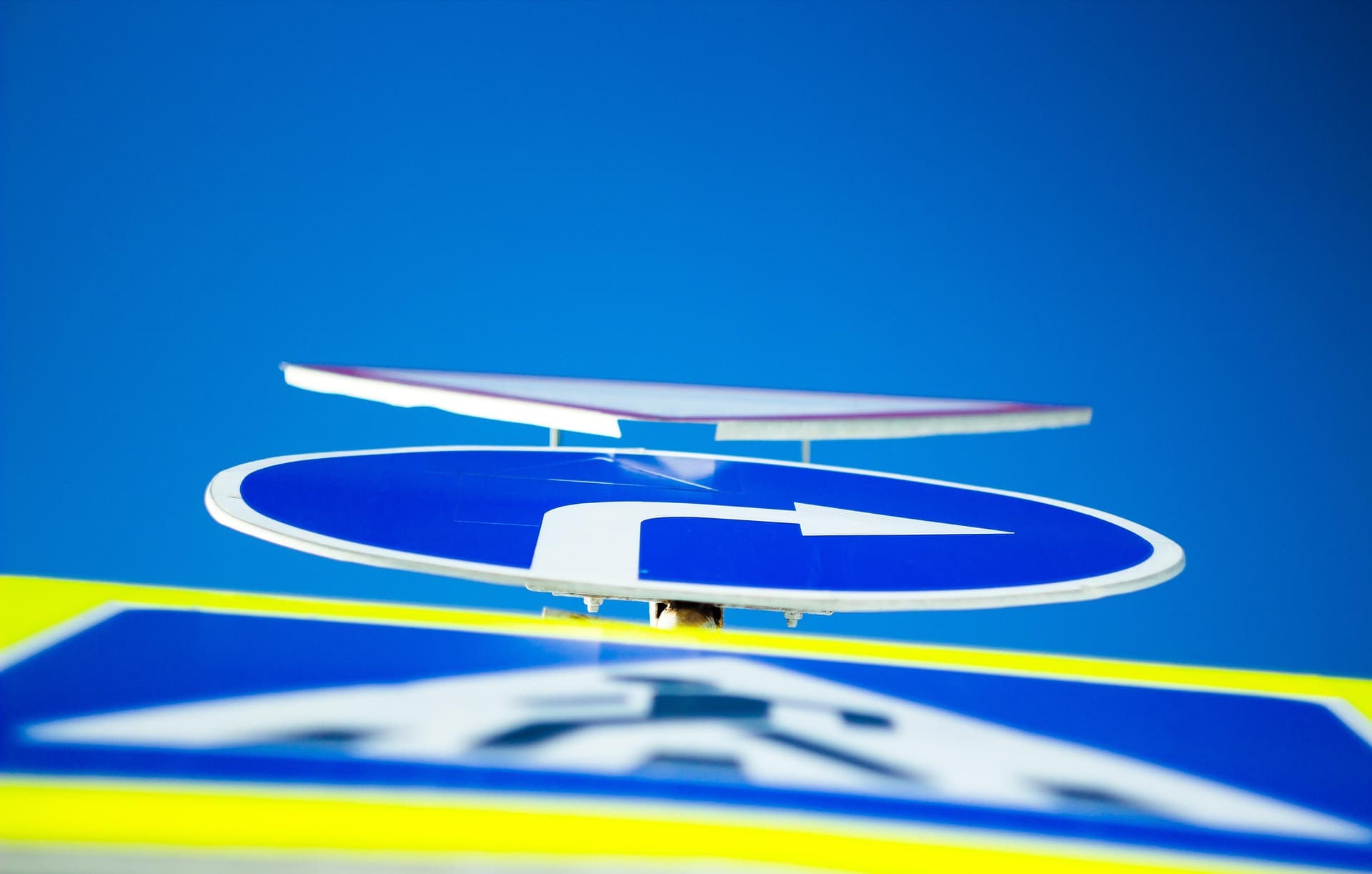
Malta Road Signs Explained: A Complete Guide for the Theory Test (2026)
Learn every Malta road sign category — warning, prohibitory, mandatory, information, priority, and road markings — using a shape-and-colour system that lets you decode any sign on the theory test.
Malta Driving Test: What to Expect on Test Day
What to expect on Malta driving test day. The practical test structure, show-and-tell questions, assessed skills, common fail reasons (54% failure rate in 2024), and tips to pass on your first attempt.
Ready to test your knowledge?
Put what you've learned into practice with our free driving theory practice tests.
Start Practicing