Malta Driving Test: What to Expect on Test Day
What to expect on Malta driving test day. The practical test structure, show-and-tell questions, assessed skills, common fail reasons (54% failure rate in 2024), and tips to pass on your first attempt.
Key Takeaways
- Malta's driving test failure rate hit 54% in 2024, a three-point increase from 2023. Only 55% of those who passed did so on their first attempt (MaltaToday, 2024).
- The test starts with "show and tell" safety questions before you even start driving.
- The most common fail reasons: poor observation at junctions, failure to use indicators at roundabouts, and incorrect lane positioning.
- The practical test costs €23.25 on weekdays or €40.00 on weekends. Expect a 4-6 week wait after booking.
What Is the Malta Practical Driving Test?
The practical test is the final step between you and your probationary driving licence. It's conducted by a Transport Malta examiner who sits in the passenger seat and assesses whether you can drive safely and independently on real roads. The test takes approximately 30-40 minutes and covers vehicle control, road observation, manoeuvres, and general driving competence (Transport Malta).
The objective isn't to drive perfectly. It's to demonstrate that you're "well grounded in basic principles of safe driving and sufficiently practiced to be a competent and considerate driver," according to Transport Malta's examiner guidelines. Small errors won't fail you. Dangerous habits will.
What Do You Need to Bring?
Arrive at least 15 minutes before your appointment. You'll need:
- Valid learner's permit (not expired)
- Malta ID card or passport
- A roadworthy vehicle with valid insurance, working lights, indicators, mirrors, horn, and seatbelts
- L plates displayed on the front and rear of the vehicle
- Your driving instructor (if using their vehicle) or a supervising driver
If any document is missing or the vehicle fails the basic roadworthiness check, the test is cancelled on the spot. You lose your fee and have to rebook. Double-check everything the night before.
What Happens at the Start of the Test?
Before you drive anywhere, the examiner conducts two "show and tell" safety questions. These are asked while you're standing beside the car or sitting in the driver's seat.
"Tell Me" Questions
The examiner asks you to explain how you'd perform a vehicle check. Examples:
- "Tell me how you'd check the brake lights are working"
- "Tell me how you'd check the tyre pressure is correct"
- "Tell me how you'd check the power steering is working"
- "Tell me how you'd know if there was a problem with your anti-lock braking system"
"Show Me" Questions
The examiner asks you to physically demonstrate a check while driving or before moving off:
- "Show me how you'd use the rear windscreen wiper and washer"
- "Show me how you'd switch on the dipped headlights"
- "Show me how you'd demist the rear windscreen"
- "Show me how you'd set the air conditioning"
Getting a show-and-tell question wrong isn't an automatic fail, but it adds a minor fault to your score. Getting both wrong sets a negative tone. Practise all the common questions with your instructor before test day.
What Skills Are Assessed During the Drive?
The examiner marks you across multiple categories throughout the driving portion. Here's what they're watching:
Observation and Awareness
- Mirror use: Checking interior and wing mirrors before every manoeuvre, lane change, speed change, and signal
- Blind spot checks: Looking over your shoulder before moving off, changing lanes, or turning
- Anticipation: Reading the road ahead and reacting to hazards before they become emergencies
Vehicle Control
- Steering: Smooth, controlled movements. No hand-over-hand crossing or one-handed driving.
- Gear changes: Selecting the right gear for the speed and situation (manual cars). Smooth transitions without grinding.
- Speed control: Maintaining appropriate speed for the road type and conditions. Not too fast, not too slow.
Road Positioning and Lane Discipline
- Roundabouts: Correct lane choice on approach, proper signalling, smooth entry and exit. Failure to use indicators and incorrect lane positioning at roundabouts are among the most common examiner complaints (Life in Malta).
- Junctions: Proper positioning, observation in both directions, safe gap selection
- Following distance: The 2-second rule in dry conditions, 4 seconds in wet
Manoeuvres
You'll be asked to perform 1-2 manoeuvres from this list:
- Reverse around a corner
- Parallel parking
- Three-point turn (turn in the road)
- Emergency stop (the examiner will warn you this may come)
- Hill start (if the route includes a slope)
You don't know which ones you'll get until the examiner tells you. Practise all of them.
Signalling
- Signal in good time before turning, changing lanes, or exiting a roundabout
- Cancel signals after completing the manoeuvre
- Don't signal unnecessarily (confuses other drivers)
What Are the Most Common Reasons People Fail?
With a 54% failure rate in 2024, more people fail than pass. The data from Transport Malta examiners and driving schools points to consistent patterns (MaltaToday):
- Poor observation at junctions (most common): Not looking both ways, or looking but not seeing. The examiner watches your head movement, not just your eyes. Make it obvious you're checking.
- Incorrect roundabout lane positioning: Approaching in the wrong lane for your intended exit, or changing lanes mid-roundabout. This is dangerous and an immediate serious fault.
- Failure to check mirrors: The examiner expects mirror checks before every speed change, direction change, signal, and manoeuvre. Not checking is the single most frequent minor fault.
- Missing blind spot checks: Forgetting to look over your shoulder before moving off, changing lanes, or turning. This is especially important on Malta's narrow streets where motorcycles and cyclists are close.
- Speed control: Going too fast for the road conditions, or driving so slowly you obstruct traffic. Both are faults.
- Stalling: One stall is a minor fault. Repeated stalling, or stalling in a dangerous position (middle of a junction), can be a serious fault.
Notice what's NOT on the list: perfection. You don't need to drive flawlessly. The examiner allows several minor faults. What fails you is a serious fault (something dangerous) or an accumulation of the same minor fault (showing you haven't learned the habit).
What Are the Examiner Pass Rate Discrepancies?
Something worth knowing: examiner pass rates in Malta vary significantly. Recent data shows some examiners fail up to 87% of candidates while others fail just 16% (Lovin Malta). This has raised concerns about fairness and consistency.
You can't choose your examiner, so the best approach is to be so well-prepared that you'd pass with any examiner. Focus on what you can control: your driving standard, your preparation, and your composure on the day.
How Should You Prepare?
- Take enough lessons. Most successful first-time passers have 20-30 hours of professional instruction. Don't rush to book the test after 10 lessons.
- Practise the MSM routine until it's automatic. Mirror, Signal, Manoeuvre. Every single time. If you have to think about it, you haven't practised enough.
- Drive the test routes. Ask your instructor which areas the examiners use. Practise roundabouts, junctions, and narrow streets in those zones specifically.
- Master all manoeuvres. You'll only be tested on 1-2, but you don't know which ones. Practise all five until you can do them without thinking.
- Do a mock test. Have your instructor conduct a full mock test under test conditions (no help, no hints). If you pass the mock, you're ready.
- Learn the show-and-tell questions. These are free marks. Study the list, practise demonstrating each check, and don't lose points on the easy part.
Test Day Tips
- Sleep well the night before. Fatigue makes your reactions slower and your nerves worse.
- Eat a proper meal. Low blood sugar impairs concentration. Don't test on an empty stomach.
- Arrive early. 15 minutes minimum. Rushing creates anxiety.
- Exaggerate your mirror checks. Move your head visibly when checking mirrors. The examiner can't see your eyes; they're watching your head movements.
- Drive normally, not cautiously. Driving too slowly or hesitating at every junction is as much a fault as driving too fast. Drive the way you've been taught.
- If you make a mistake, move on. One mistake rarely fails anyone. Dwelling on it causes more mistakes. Reset mentally and focus on the next instruction.
- Listen to the examiner's instructions. They'll give directions clearly and in advance. If you don't understand, ask them to repeat. That's fine.
- At the end, ask for feedback. Whether you pass or fail, the examiner can tell you what you did well and what needs work.
What Happens After the Test?
If you pass: The examiner tells you immediately. You can then apply for your probationary driving licence (€31.00) through the Driving Licence Portal. Your probationary licence is valid for 3 years, with a stricter 0.02% BAC limit and a 12-point disqualification threshold.
If you fail: The examiner explains why. You can rebook and retake the test (€23.25 weekday / €40.00 weekend). There's no mandatory waiting period, but use the time to address the specific faults. Most people who fail on observation or roundabout positioning need 5-10 more hours of focused practice before retaking.
For a complete guide to the licensing process from start to finish, see our Getting Your Drivers Licence in Malta: Step-by-Step.
Related Guides
Explore more Malta driving resources:
- Complete Guide to the Malta Driving Theory Test 2026 — everything in one place
- Pass Rate & Statistics — why 53-66% of candidates fail
- Speed Limits, Fines & Penalty Points — essential rules and penalties
- Study Strategy — 3-week plan to pass first time
Frequently Asked Questions
How long is the Malta practical driving test?
Approximately 30-40 minutes including the show-and-tell safety questions at the start. The driving portion covers real roads with junctions, roundabouts, and 1-2 manoeuvres. The examiner gives clear directions throughout.
How much does the practical test cost?
€23.25 on weekdays or €40.00 on weekends. If you fail, you pay the same fee to rebook. There's no mandatory waiting period between attempts, but typical rebooking takes 4-6 weeks depending on demand (Transport Malta).
What is the pass rate for the Malta driving test?
The overall failure rate was 54% in 2024. For Category B (cars) specifically, 48% failed. Only 55% of those who eventually passed did so on their first attempt, with 26% passing on their second try (MaltaToday).
Can one mistake fail you?
A single minor fault won't fail you. What fails you is one serious fault (something dangerous, like pulling into oncoming traffic) or an accumulation of the same minor fault (like repeatedly failing to check mirrors, showing it's not a habit). You can accumulate several different minor faults and still pass.
Do I need to use my instructor's car?
No. You can use any roadworthy vehicle that's properly insured and has L plates displayed. However, most candidates use their instructor's car because they're familiar with its controls. If you use a different vehicle, practise in it extensively before the test.
Related Guides
Continue learning with these related articles
How to Book the Malta Driving Theory Test 2026: Centre, Fees, What to Bring
Book the Malta driving theory test at the Pieta Theory Test Centre: phone numbers, online booking, the €30.25 fee, what to bring, and the 35-question format.
Malta Theory Test Questions: What to Expect & How to Practise (2026)
See what Malta theory test questions are really like — the 35-question format, the 14 topic categories, and the all-or-nothing multi-answer MARK questions — with sample questions and free practice.
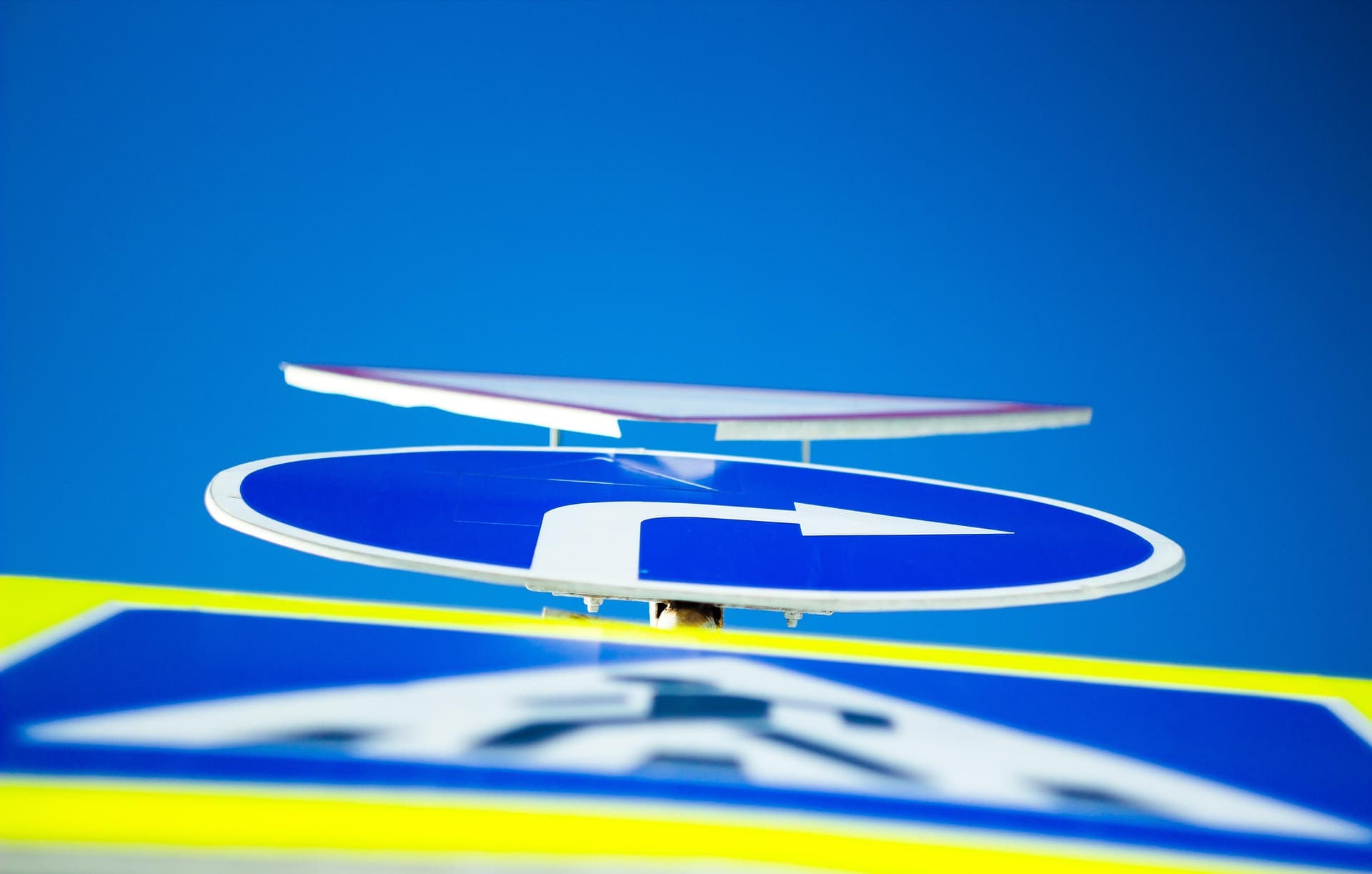
Malta Road Signs Explained: A Complete Guide for the Theory Test (2026)
Learn every Malta road sign category — warning, prohibitory, mandatory, information, priority, and road markings — using a shape-and-colour system that lets you decode any sign on the theory test.
Transport Malta Theory Test 2026: Format, Booking, Centres and How to Pass
Pass the Malta theory test with confidence. Covers the 35-question format, 85% pass mark, multi-answer MARK questions, 14 topic categories, costs (EUR 108-125), study strategy, and step-by-step licensing process.
Ready to test your knowledge?
Put what you've learned into practice with our free driving theory practice tests.
Start Practicing