Malta Warning Signs
Alert drivers to potential hazards ahead
31 signs in this category
Warning signs alert you to hazards or changing conditions ahead on Malta roads, such as bends, junctions, pedestrian crossings and slippery surfaces, giving you time to slow down and react safely. They are typically triangular with a red border and a black symbol on a white or yellow background.
Study tip: Focus on the symbol inside the triangle: it tells you exactly what hazard to expect. On the theory test you are often asked to identify the hazard from the symbol alone.
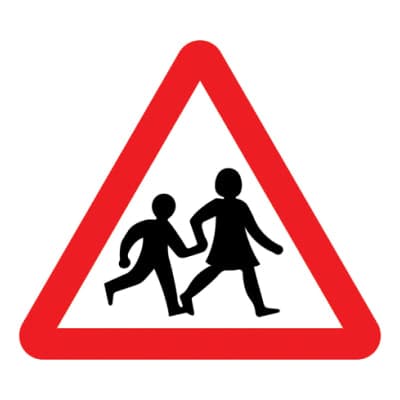
Children
Children are likely to be crossing or playing near the road ahead, typically by a school. Slow down and be ready to stop with no warning at all.
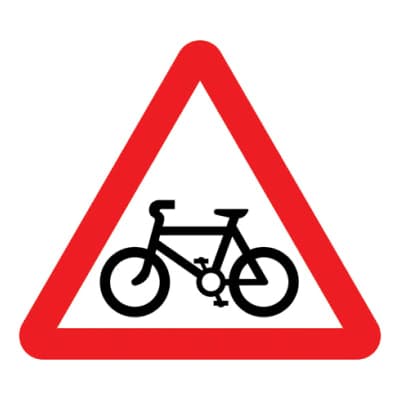
Cycle Route Crossing
A cycle route crosses or joins the road ahead. Look for cyclists coming from either side and let them clear the crossing before you continue.
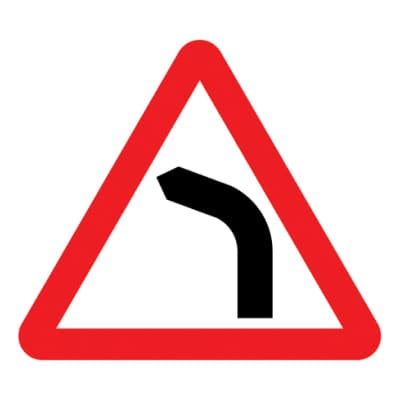
Dangerous Bend
A sharp bend ahead in the direction the arrow shows. Brake before the bend, not in it, keep to your side of the road and do not overtake.
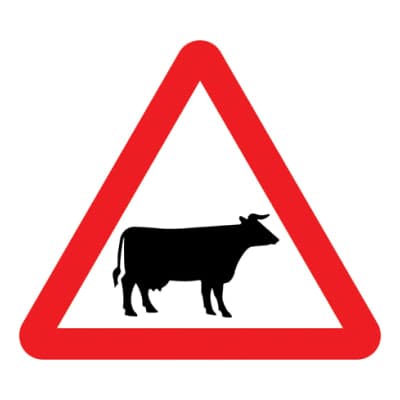
Domestic Animals
Farm or domestic animals may be on the road ahead. Slow down, pass wide and gently, and never sound the horn next to an animal.
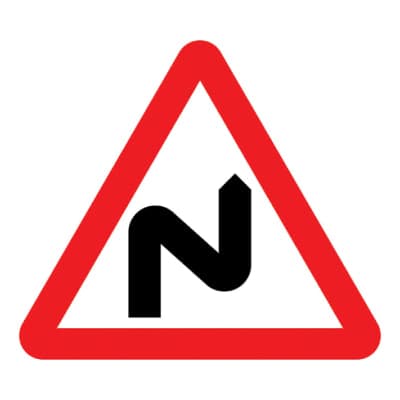
Double Dangerous Bend
Two or more bends follow each other, the first in the direction the arrow shows. Slow down before the first bend and hold a steady course through the whole series.
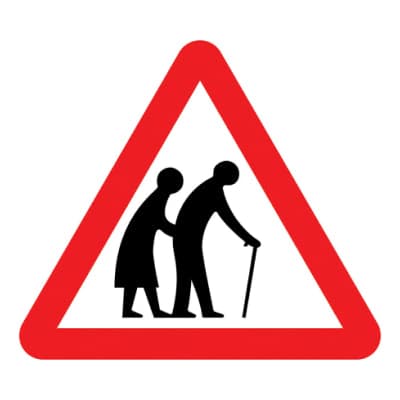
Elderly or Disabled Pedestrians
Elderly or disabled people may be crossing ahead. Give them time: they may move slowly, and they may not have seen or heard you coming.
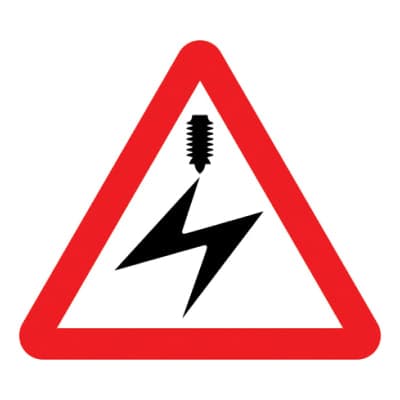
Electrified Overhead Cable
Live electric cables cross above the road ahead, with the safe headroom usually shown on a plate. Drivers of high vehicles must check their height before continuing.
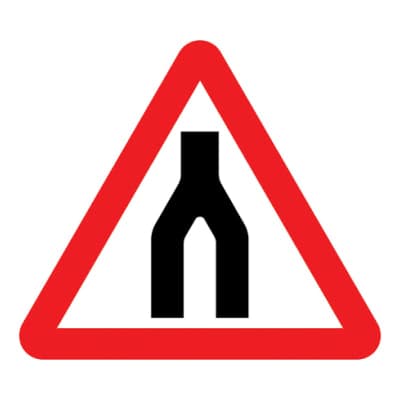
End of Dual Carriageway
The dual carriageway ends ahead and the road becomes a single two-way carriageway. Adjust your speed and remember that oncoming traffic will now be directly ahead of you.
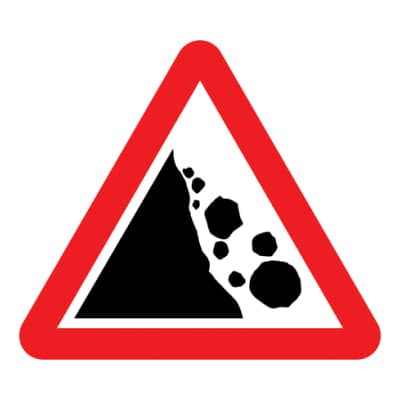
Falling Rocks
Rocks or debris can fall onto the road ahead, usually below cliffs and cuttings. Watch the surface for fallen stones and avoid stopping under the slope.
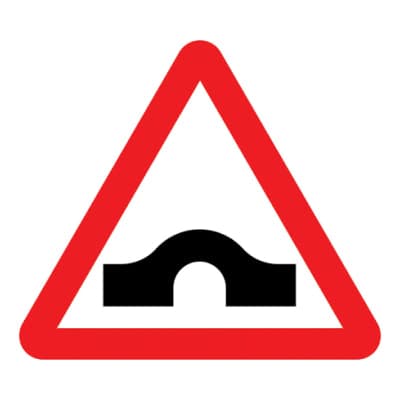
Hump Bridge
Warns of a humpback bridge ahead. Slow down before the crest: it can hide oncoming traffic, and taking it fast can lift the car and cost you steering control.
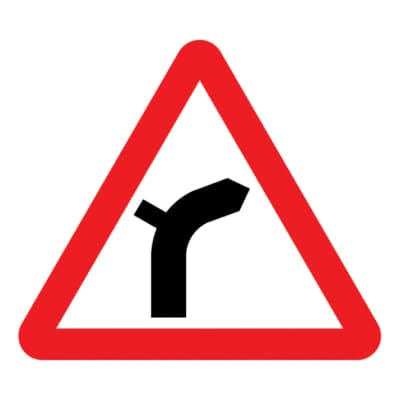
Junction on a Bend
A side road joins on a bend ahead. Take it slower than a normal junction: you must manage the bend and joining traffic at the same time, with less view of both.
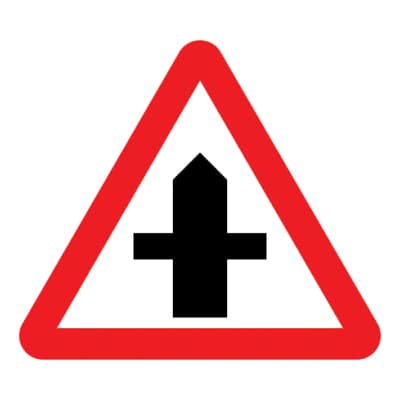
Junction with Secondary Road
A minor road joins the main road you are on. You have priority over joining traffic, but watch for vehicles nosing out from the side road.
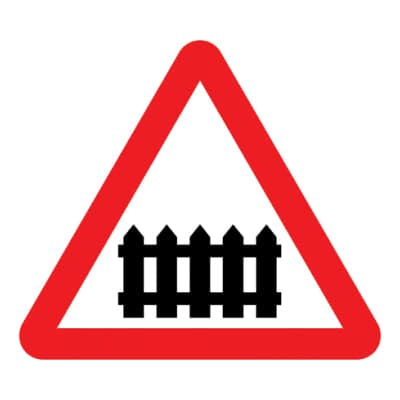
Level Crossing with Barriers
A level crossing controlled by gates or barriers ahead. Slow down and be ready to stop; never zigzag around a lowered barrier or stop on the crossing itself.
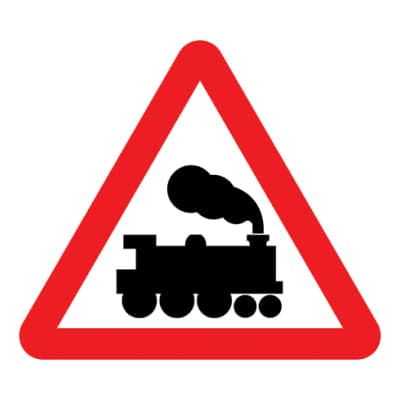
Level Crossing without Barriers
A level crossing with no gates or barriers ahead. Approach slowly, look and listen both ways along the track, and cross only when it is clearly safe.
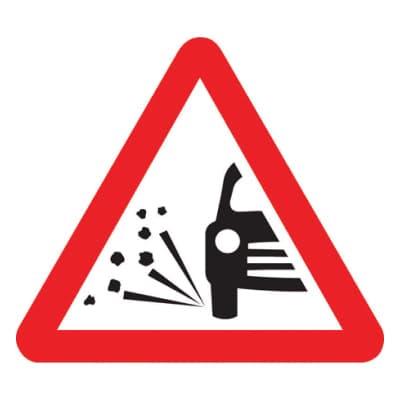
Loose Road Surface
Loose chippings or gravel ahead. Slow down and drop well back from the vehicle in front: thrown stones crack windscreens, and your braking distance grows on a loose surface.
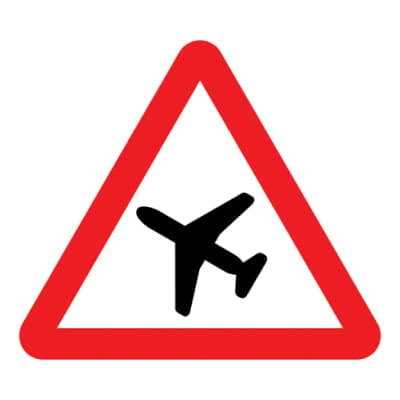
Low Flying Aircraft
Aircraft pass low over this road, close to a runway. The sudden noise and shadow can startle you; keep your eyes and attention on the road.
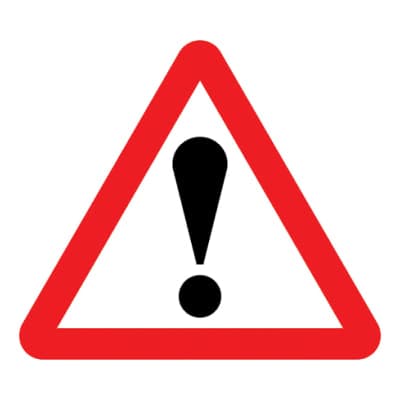
Other Danger
A hazard that has no sign of its own; a plate underneath usually names it. Slow down until you can see exactly what the danger is.
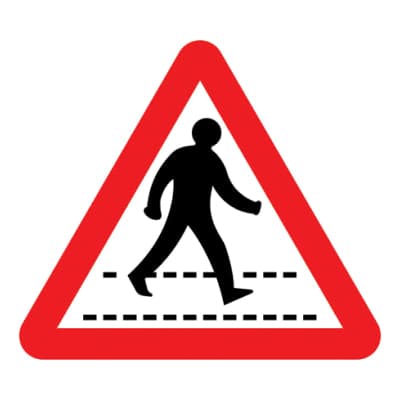
Pedestrian Crossing Ahead
You are approaching a pedestrian crossing. Slow down on the approach and be ready to stop for anyone on the crossing or clearly waiting to step onto it.
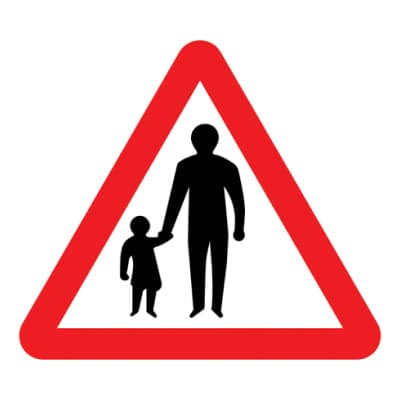
Pedestrians Likely
People may be walking in or along the road ahead, often where there is no footpath. Slow down and pass them with plenty of clearance.
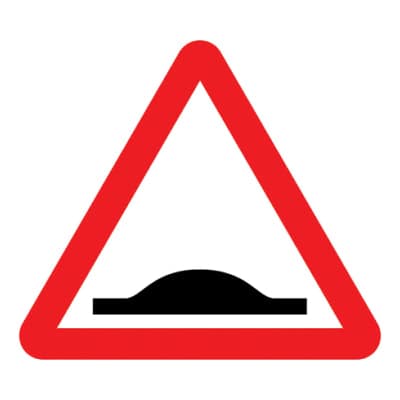
Road Hump
A speed hump or raised section of road ahead. Slow right down before you reach it; crossing a hump at speed can damage the car and throw it off line.
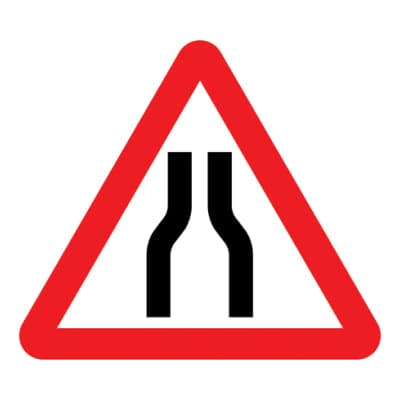
Road Narrows Both Sides
The road ahead gets narrower from both sides. Ease off, keep to the middle of your lane and be ready to give way where two vehicles cannot pass at once.
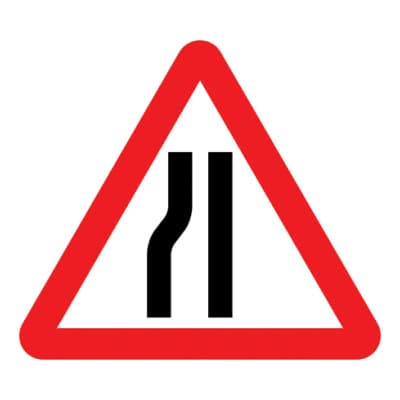
Road Narrows One Side
The road ahead gets narrower from the side shown on the sign. Slow down, hold your line and expect oncoming vehicles to move towards the centre.
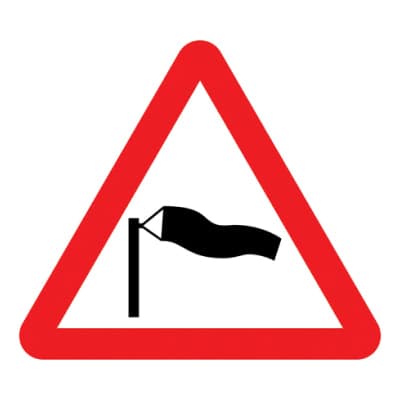
Side Winds
Strong crosswinds strike this stretch, usually where the road is open or elevated. Grip the wheel with both hands and expect a sudden sideways push, especially on two wheels or when passing high vehicles.
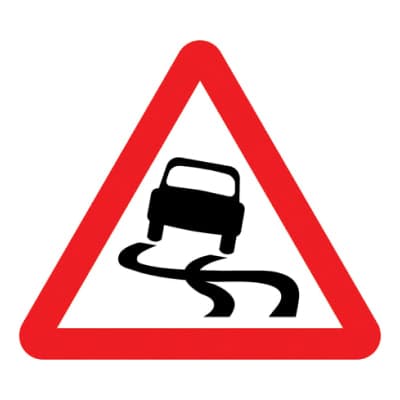
Slippery Road
The surface ahead can be slippery, especially in rain or where oil and dust have built up. Slow down, avoid sudden braking or steering, and leave extra room to the vehicle in front.
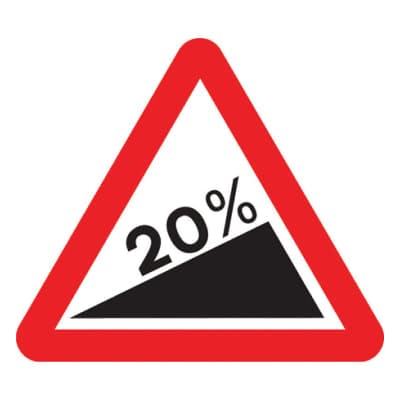
Steep Ascent
A steep climb ahead, with the gradient shown as a percentage. Change down early to keep a steady speed and expect slow vehicles in front of you.
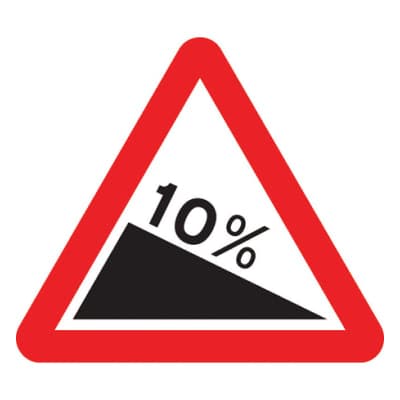
Steep Descent
A steep downhill stretch ahead, with the gradient shown as a percentage. Slow down and engage a low gear so the engine holds the car back instead of the brakes overheating.
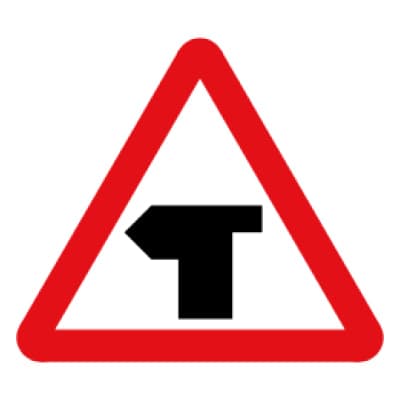
T-Junction Ahead
The road you are on ends at a T-junction ahead. Slow down in good time and prepare to give way before turning left or right onto the crossing road.

Traffic Signals Ahead
Traffic lights ahead. Be ready to slow and stop: the sign is often used where the lights arrive unexpectedly after a stretch of open road.
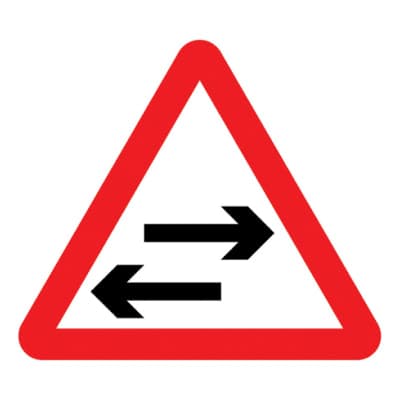
Two-Way Traffic Crosses One-Way
A road carrying two-way traffic crosses the one-way road you are on. At the junction, look both ways: vehicles will arrive from both directions even though your road is one way.
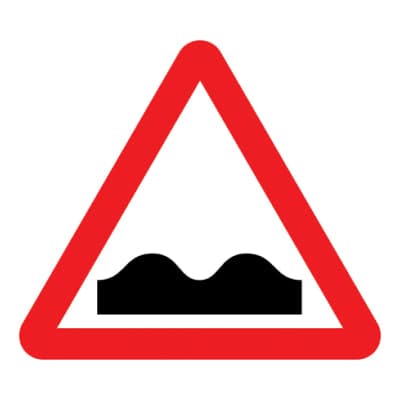
Uneven Road Surface
A stretch of broken, patched or bumpy surface ahead. Reduce speed to keep the car stable and protect your tyres and suspension.
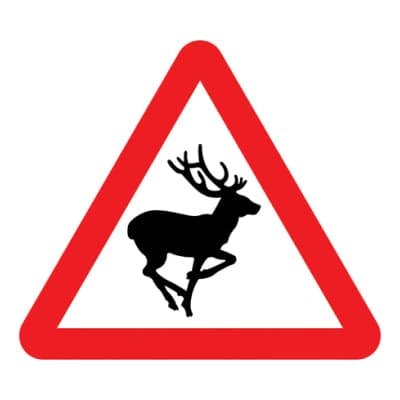
Wild Animals
Wild animals may run onto the road ahead without warning. Reduce speed and stay especially alert around dawn and dusk, when animals move most.