Cayman Islands Warning Signs
Alert drivers to potential hazards ahead
34 signs in this category
Warning signs alert you to hazards or changing conditions ahead on Cayman Islands roads, such as bends, junctions, pedestrian crossings and slippery surfaces, giving you time to slow down and react safely. They are typically triangular with a red border and a black symbol on a white or yellow background.
Study tip: Focus on the symbol inside the triangle: it tells you exactly what hazard to expect. On the theory test you are often asked to identify the hazard from the symbol alone.
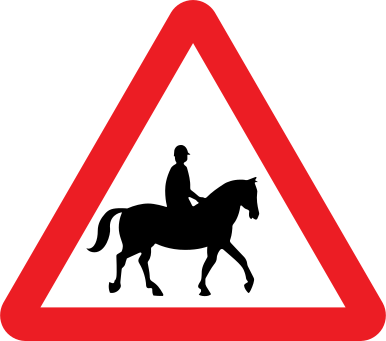
Animals in road
Warning that animals may be on or crossing the road ahead; slow down and be prepared to stop.
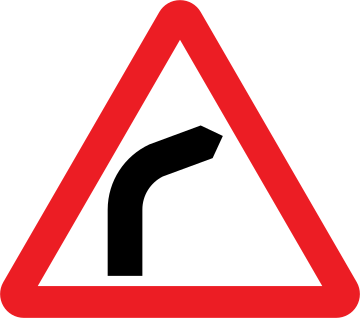
Bend to right
Warning of a bend to the left ahead. Reduce speed and be prepared for the road to curve.
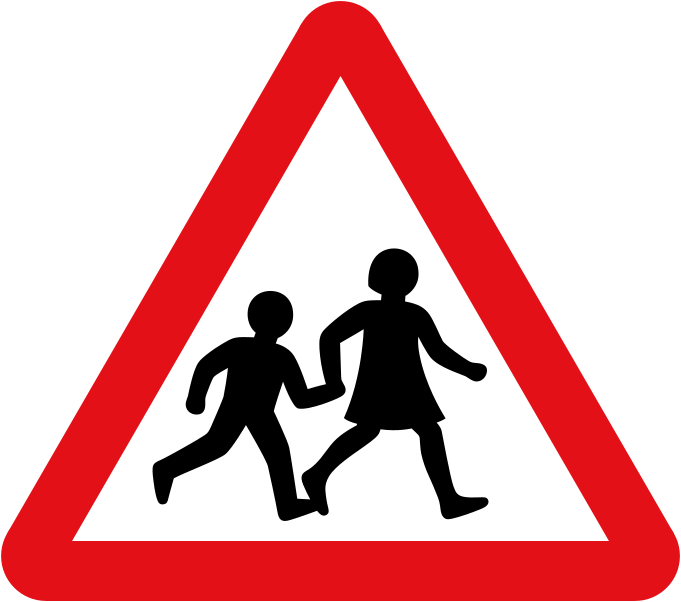
Children crossing
Warning that children may be crossing the road ahead; slow down and be prepared to stop.
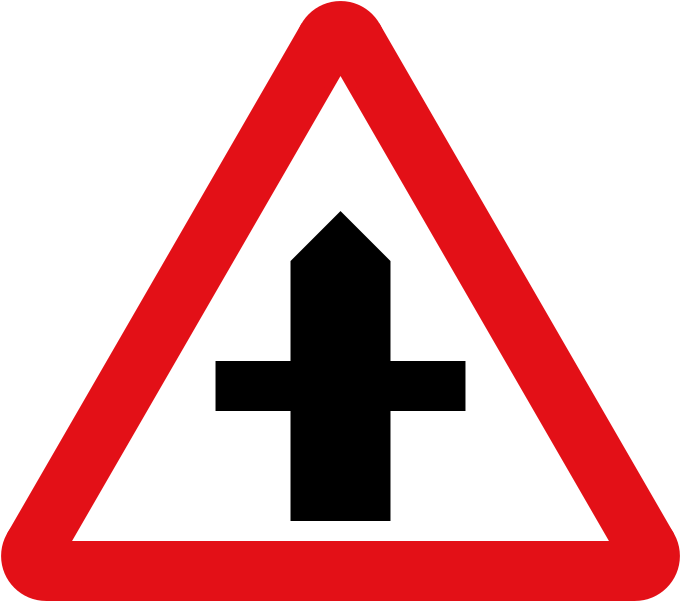
Crossroads
Warning that you are approaching a crossroads/junction; slow down and watch for traffic from both sides.
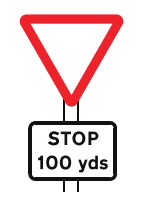
Distance to "STOP" line ahead
Warns that a STOP sign is ahead, at the distance given on the plate, here 100 yards. Start slowing now so you arrive ready to come to a complete stop at the line.
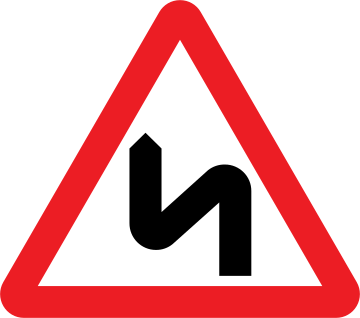
Double bend
Warning of a double bend ahead, first to the left. Reduce speed and navigate carefully.
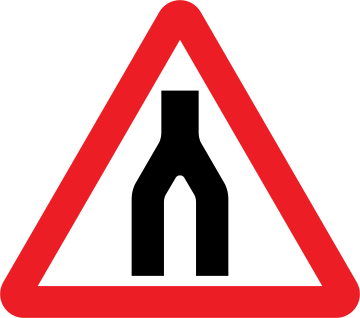
Dual Carriageway Ends
Warning that the dual carriageway (divided road) is ending and traffic will merge into a single carriageway.
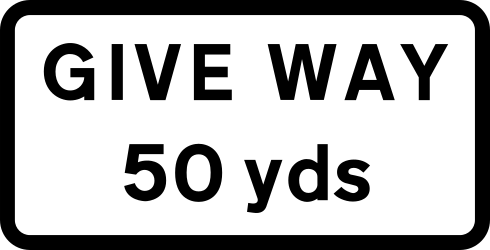
Give way ahead (50 yds)
You will reach a “Give Way” line in 50 yards; prepare to slow down and be ready to yield.
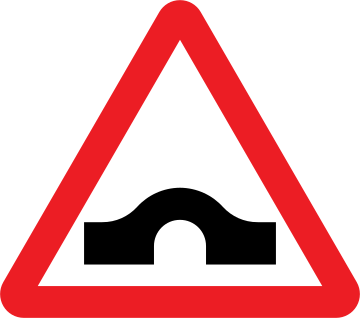
Hump bridge
Warning of a hump bridge ahead. Reduce speed as visibility may be limited over the bridge.
Hump Bridge
Warning of a hump bridge ahead. Reduce speed as visibility may be limited over the bridge.
Junction on bend ahead
A side road joins on a bend ahead. Slow down more than for a plain bend: you must manage the curve and joining traffic at the same time, with less view of both.
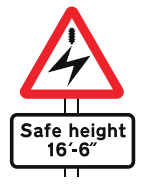
Overhead electric cable
Live electric cables cross above the road; the plate gives the safe height beneath them, here 16 feet 6 inches. Drivers of tall vehicles must check their height, load included, before passing under.
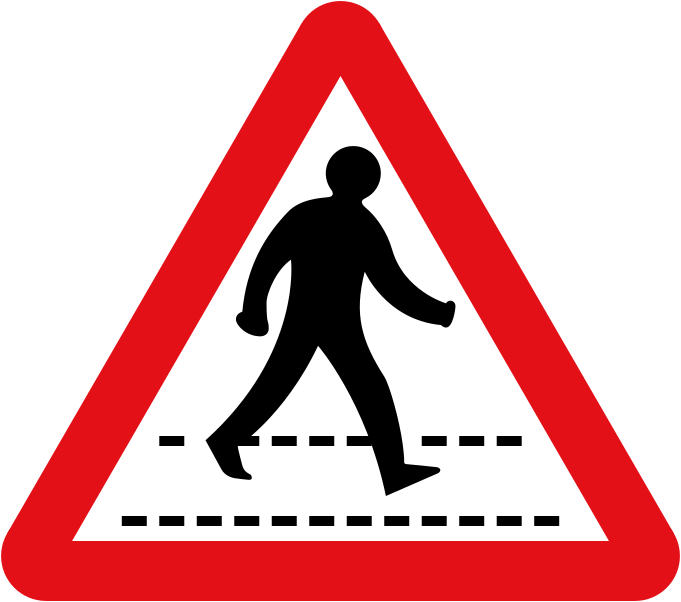
Pedestrian crossing
Warning that pedestrians may be crossing the road ahead; slow down and be prepared to stop.
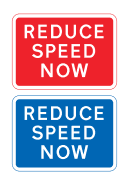
Reduce Speed Now plate
A plate fitted below a warning sign telling you to cut your speed at once, used where the hazard ahead needs more than ordinary caution. Slow down as soon as you read it.
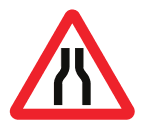
Road narrows on both sides
The road ahead becomes narrower from both sides. Ease off, keep to the middle of your lane and be ready to give way where two vehicles cannot pass at once.
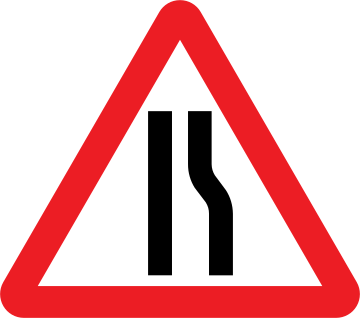
Road Narrows on Right
Warning that the road narrows on the right side ahead. Drivers should be prepared to merge left.
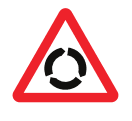
Roundabout
A roundabout ahead. Slow down on the approach and give way to traffic already on the roundabout, which comes from your right.
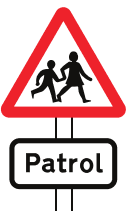
School crossing patrol ahead
A school crossing patrol operates ahead; some installations add amber lights that flash while children cross. Be ready to stop the moment the warden steps out with the STOP sign.

Sharp deviation of route to left (or right if chevrons reversed)
A chevron board marking a sharp change of direction; the road goes the way the chevrons point, here to the left. Slow right down before the board and follow it round.
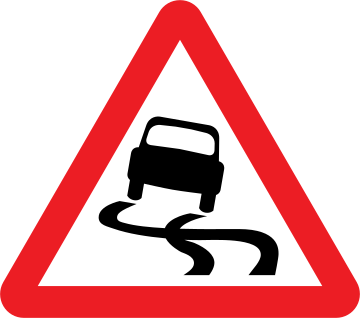
Slippery road
Warning that the road ahead may be slippery; reduce speed and avoid sudden braking or steering.
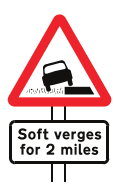
Soft verges
The road edges are soft ahead, for the distance shown on any plate. Keep your wheels off the verge: a tyre that drops onto soft ground can sink or drag the car off line.
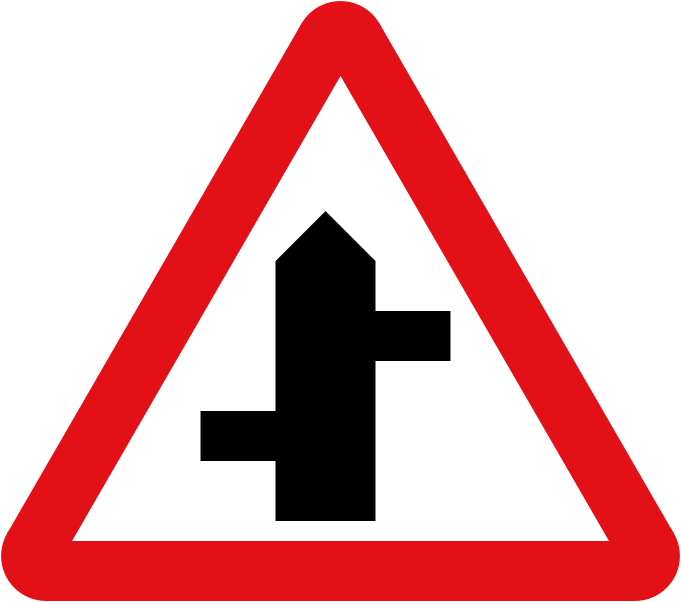
Staggered junction
Two side roads join ahead from opposite sides, offset rather than facing each other. Expect turning traffic at both mouths in quick succession.
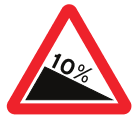
Steep hill downwards
A steep descent ahead, with the gradient shown as a percentage. Slow down and use a low gear so the engine holds the vehicle back instead of the brakes overheating.
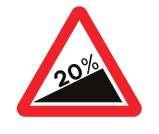
Steep hill upwards
A steep climb ahead, with the gradient shown as a percentage. Change down early to keep a steady speed and expect slow vehicles in front of you.
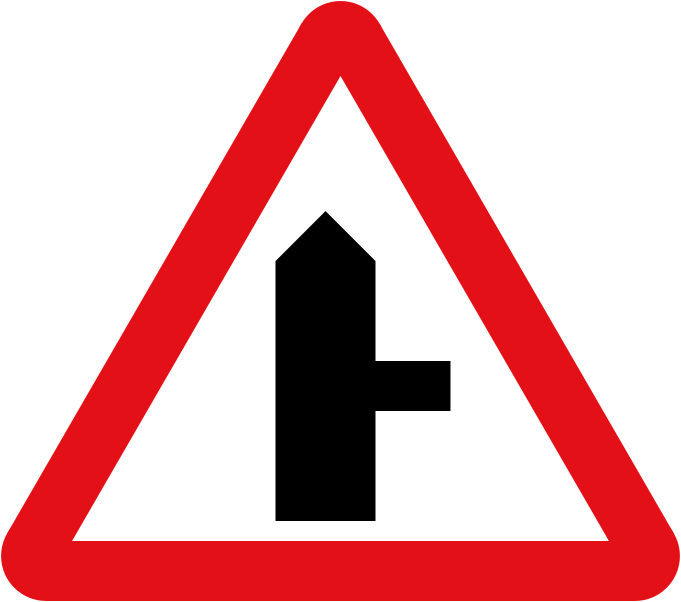
T-junction
Warning that the road ahead ends at a T-junction; you must turn left or right-slow down and be ready to give way or stop.
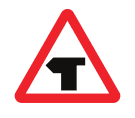
T-junction with priority over vehicles from the right
The road ahead ends at a T-junction where you have priority over traffic approaching from the right. Priority never guarantees the other driver has seen their sign, so arrive ready to react.
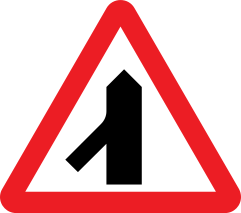
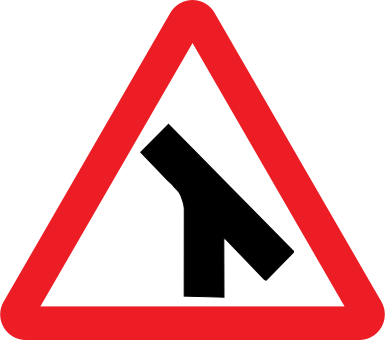
Traffic merging from left ahead
Warning that a side road joins the main road from the left ahead; watch for emerging traffic.
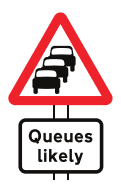
Traffic queues likely ahead
Queues of slow or stopped traffic are likely ahead. Drop your speed early, keep a safe gap and watch for brake lights at the back of the queue.
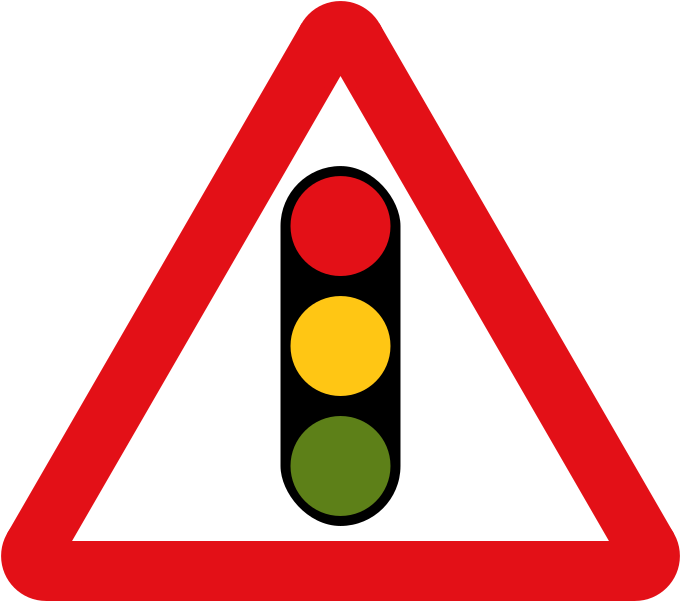
Traffic Signals Ahead
Warning that traffic signals are ahead. Be prepared to stop if the signals are red.
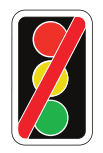
Traffic signals not in use
The traffic lights ahead are switched off or out of order. Treat the junction as uncontrolled: slow down, look all ways and be ready to give way.
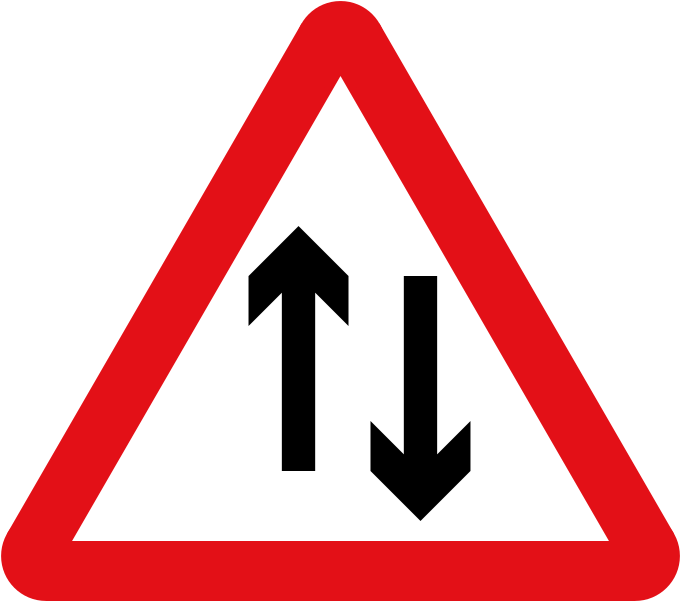
Two-way traffic
Warning that two-way traffic is ahead. Be aware of vehicles coming from the opposite direction.
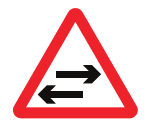
Two-way traffic crosses one-way road
A road carrying two-way traffic crosses the one-way road you are on. Look both ways at the junction even though your own road runs one way.
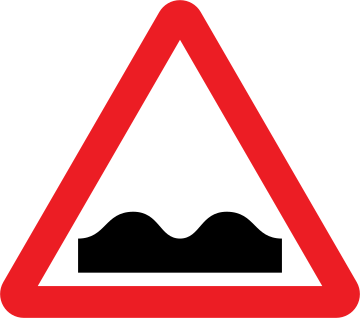
Uneven road
Warning of an uneven road surface ahead; slow down and be prepared for bumps.
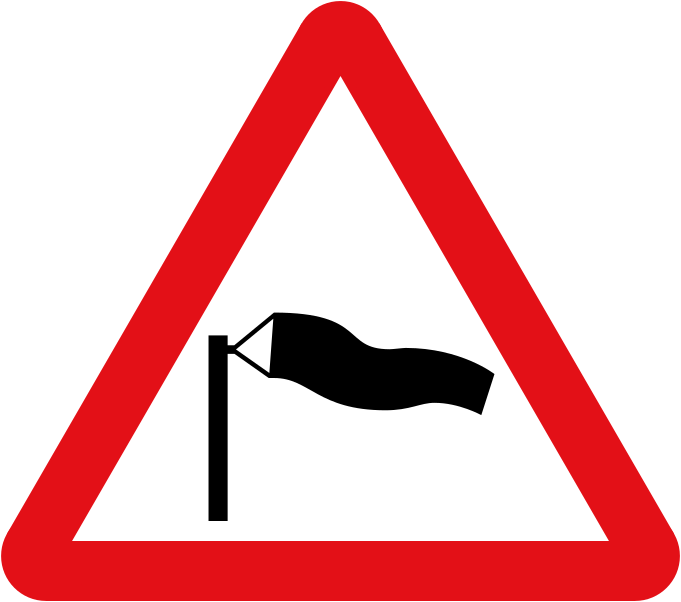
Windsock (Crosswinds)
Warning of strong side winds; take extra care, especially with high-sided vehicles and motorcycles.