Cayman Islands Information Signs
Provide useful information about routes and services
36 signs in this category
Information signs give you helpful guidance about routes, services and facilities across Cayman Islands, such as parking, hospitals, one-way streets and destinations. They do not impose rules; they help you navigate and plan ahead.
Study tip: These are usually rectangular. Learn to tell them apart from mandatory signs (circular, giving orders) so you never confuse guidance with a legal requirement.
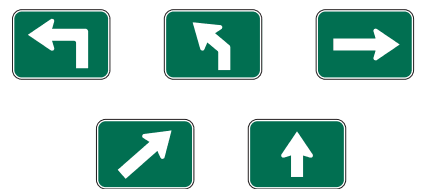
Advance turn and directional arrow signs
Small green arrow panels used with direction signs to show where and how to turn for the route: ahead, left, right or at an angle. They are read together with the sign they accompany.
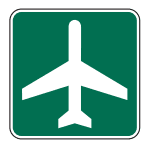
Airport
Directs you towards the airport. Purely informational: it changes nothing about priority or speed.
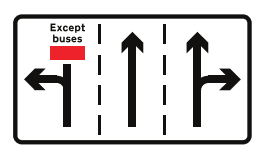
Appropriate traffic lanes at junction ahead
Shows which lane to use for each destination at the junction ahead, including any lane reserved for buses. Read it early and get into the correct lane in good time.
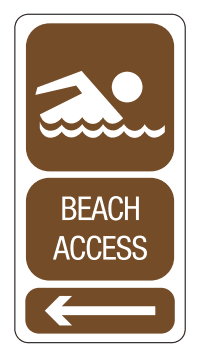
Beach Access
A brown pointer to a public beach access in the direction of the arrow. Informational only, but expect pedestrians and turning vehicles near the access itself.
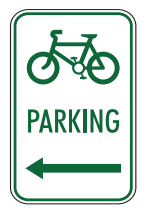
Bicycle Parking
Marks a designated bicycle parking area. It places no requirement on drivers beyond watching for cyclists arriving and leaving around it.
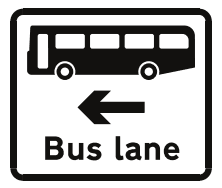
Bus lane on road at junction ahead
Warns that the road you are joining at the junction ahead carries a bus lane, positioned as the arrow shows. Do not drive or park in the bus lane while it operates.
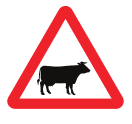
Cattle
Cattle may be on the road ahead, often near farms and grazing land. Slow down, pass wide and gently, and never sound the horn beside livestock.
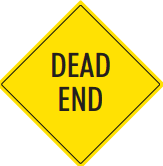
Dead End
The road ahead is a dead end with no through route for vehicles. Enter it only to reach somewhere inside it.

Direction of travel
A pointer giving the direction and distance to the place it names, here 150 yards away. Follow the arrow; it changes nothing about priority or speed.
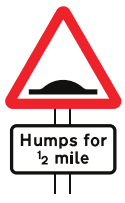
Distance over which road humps extend
Road humps continue for the distance shown on the plate, here half a mile. Keep your speed down for the whole stretch, not just the first hump.
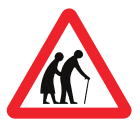
Elderly
Elderly or infirm people are likely to be crossing the road ahead. Give them time and be ready to stop; they may move slowly or not notice your approach.
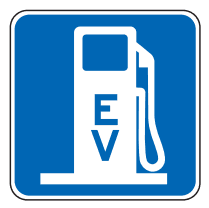
Electric Vehicle Charging
The symbol version of the electric vehicle charging sign: a charging point is available here or in the direction shown. Park in the bays only while charging.
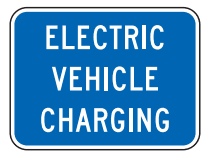
Electric Vehicle Charging
The worded panel marking an electric vehicle charging site. Expect vehicles slowing and turning in, and do not occupy the bays unless you are charging.
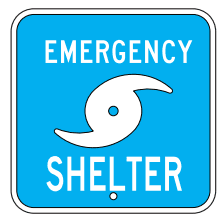
Emergency Shelter
Points to a designated emergency shelter, used in the Cayman Islands ahead of hurricanes and other emergencies. Worth knowing on your regular routes before storm season.
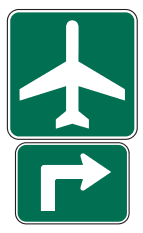
Example of directional assembly
Shows how separate panels stack into one directional assembly, such as an airport symbol with a turn arrow beneath it. The parts are read together as a single instruction.
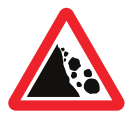
Falling Rocks
Rocks or debris can fall onto the road ahead. Watch the surface for fallen stones and avoid stopping below the slope.
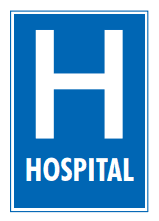
Hospital
Marks a hospital or hospital zone. Expect ambulances joining and leaving at speed, give way to any on a call, and keep noise down in the area.
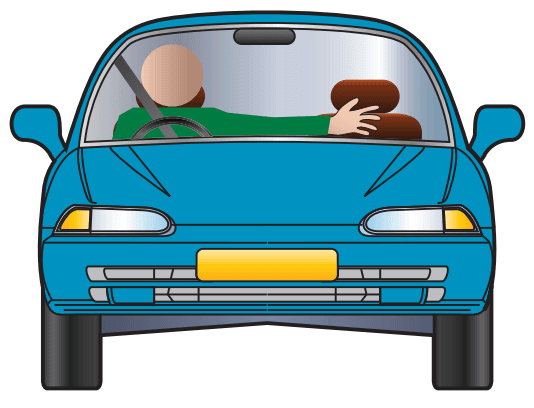
I intend to move into the left or turn left
Seen from the front: the driver's arm extended from the window and rotated anticlockwise signals an intention to move in to the left or turn left. Watch for arm signals where indicators have failed or need reinforcing.
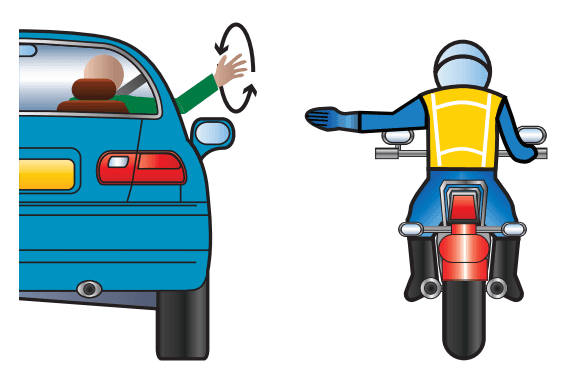
I intend to move into the left or turn left
The same signal seen from behind: the driver's arm rotated anticlockwise means the vehicle is about to move in to the left or turn left. A motorcyclist gives it with the left arm extended.
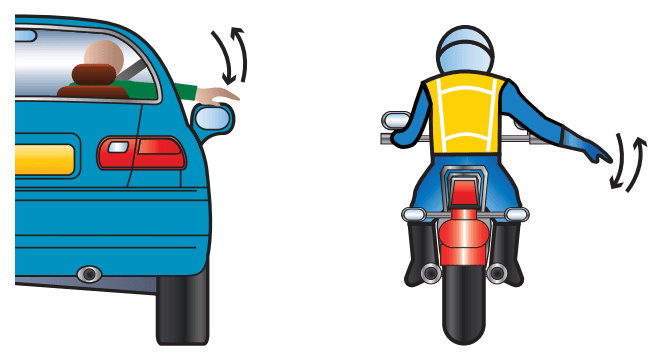
I intend to slow down or stop
The extended arm moved slowly up and down tells traffic ahead and behind that the driver intends to slow down or stop. Give the vehicle the room to do it.
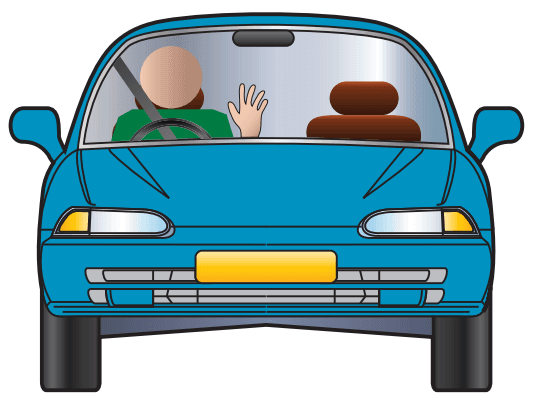
I want to go straight on
The signal to a person controlling traffic: the raised hand, shown to the officer, says the driver wants to go straight on. Wait for the officer's direction before moving.
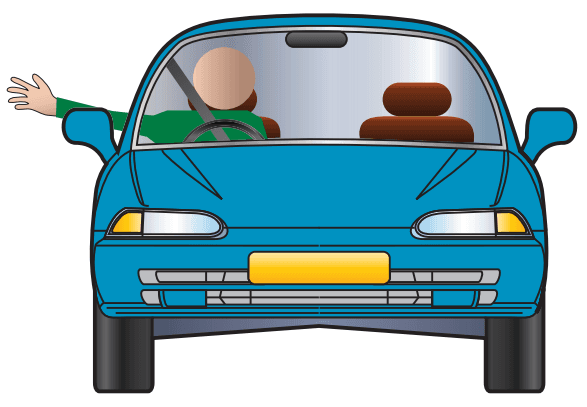
I want to turn right
The signal to a person controlling traffic: the arm extended out of the window towards the officer says the driver wants to turn right. Move only when the officer beckons.
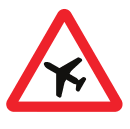
Low-flying aircraft or sudden aircraft noise
Aircraft pass very low over this road, or sudden aircraft noise is likely, close to the airport. The noise and shadow can startle; keep your attention on the road.
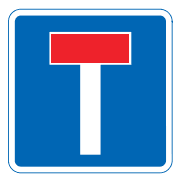
No through road for vehicles
The road ahead is a no through road: it ends with no exit for vehicles. Enter it only to reach premises inside it.
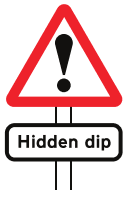
Other danger; plate indicates nature of danger
Warns of a danger that has no sign of its own; the plate below names it, here a hidden dip. Slow down until you can see exactly what the hazard is.
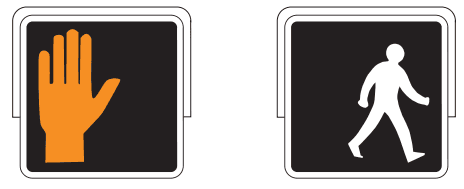
Pedestrian crossing signal
The signal heads that control people on foot at a crossing: the walking figure means cross with care, the raised orange hand means do not start to cross. Drivers should expect pedestrians moving while the walk aspect shows.
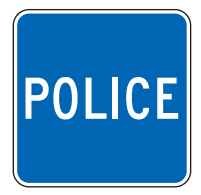
Police
Points to a police station in the direction shown. Informational only: it places no requirement on passing drivers.
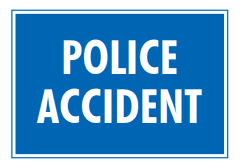
Police accident
A temporary police panel warning of an accident scene ahead. Slow right down, expect officers, debris and stopped vehicles, and follow any directions given at the scene.
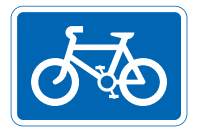
Recommended route for pedal cycles
Marks a route recommended for pedal cycles. Drivers should expect bikes joining and leaving it; cyclists are not obliged to use it.
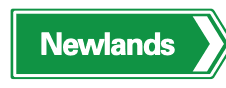
Route Confirmatory Sign
Confirms you are on the route to the place named, sometimes with the distance. If the name is wrong for your journey, carry on and turn where it is safe.
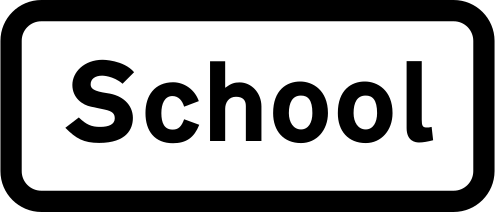
School
Indicates a school in the area; be prepared for children and reduce speed.
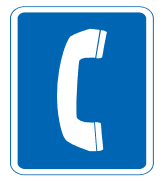
Telephone
Points to a telephone available for calls, including emergencies. Informational only; it changes nothing about priority or speed.
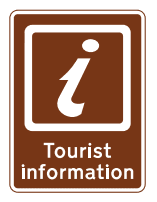
Tourist information point
A brown sign pointing to a tourist information point. Follow the arrow if you need it; it places no requirement on traffic.
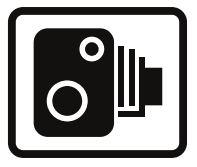
Traffic enforcement cameras
Cameras enforce traffic regulations in this area, typically speed and junction rules. The sign marks the area, not a single camera site, so drive within the rules throughout it.
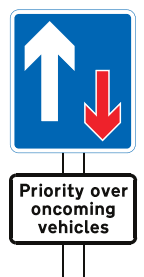
Traffic has priority over oncoming vehicles
Where the road narrows ahead, you have priority over traffic from the other direction; the large white arrow is your side. Confirm oncoming drivers are actually waiting before you commit.
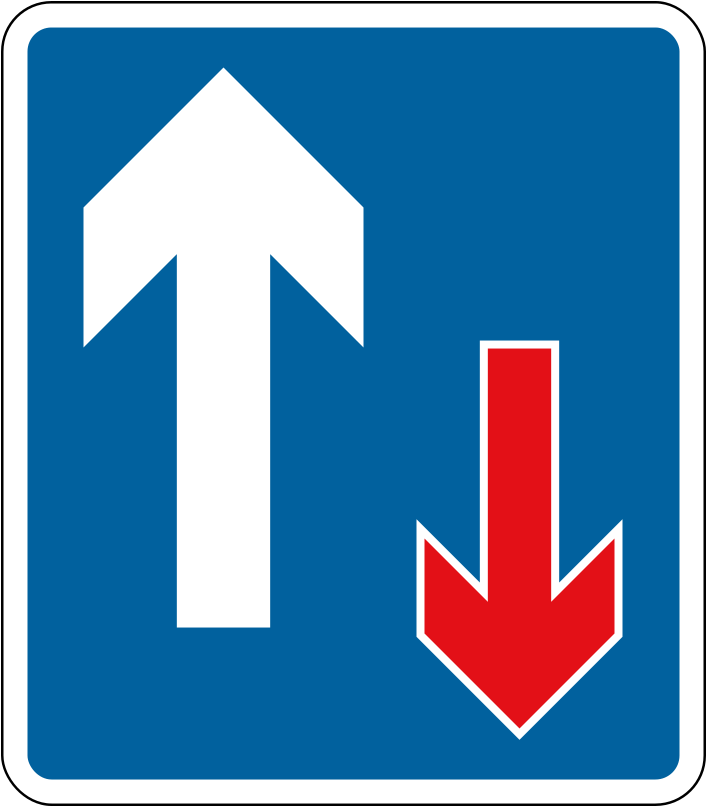
Traffic has priority over oncoming vehicles
Traffic has right of way on the narrow section ahead - oncoming vehicles must give way to you.