UAE Warning Signs
Alert drivers to potential hazards ahead
70 signs in this category
Warning signs alert you to hazards or changing conditions ahead on UAE roads, such as bends, junctions, pedestrian crossings and slippery surfaces, giving you time to slow down and react safely. They are typically triangular with a red border and a black symbol on a white or yellow background.
Study tip: Focus on the symbol inside the triangle: it tells you exactly what hazard to expect. On the theory test you are often asked to identify the hazard from the symbol alone.

Additional Lane Added
An extra lane is added to the road ahead, for example where a slip road continues as a new lane. Traffic in the new lane does not need to merge.

Beginning of Median
A central median begins ahead and the road becomes divided. Keep to the right of the median.
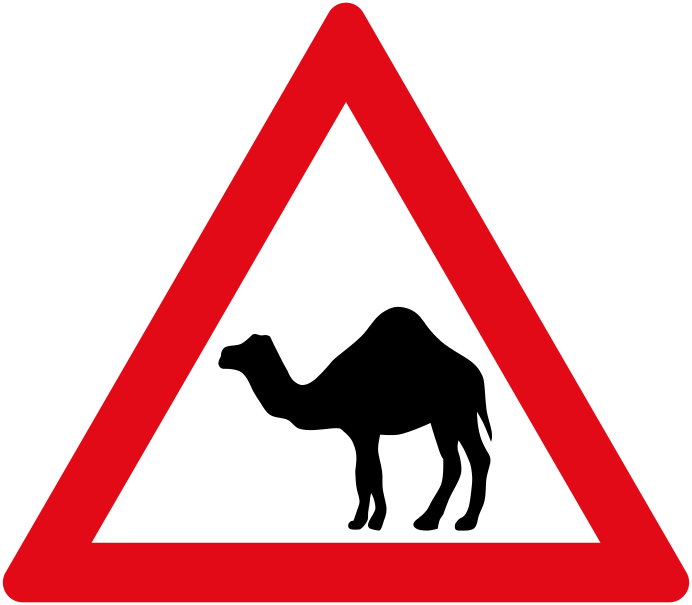
Camel Crossing
Warning of camels or other animals that may cross the road, particularly common in desert and rural areas of the UAE. Reduce speed especially at dawn and dusk when animals are most active.
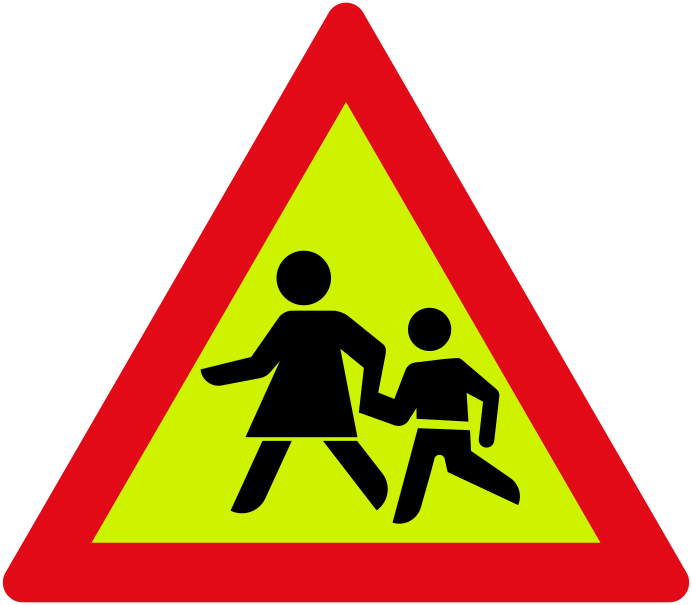
Children
Warning of a school zone or area where children may be present. Drive slowly and watch carefully for children who may run onto the road.
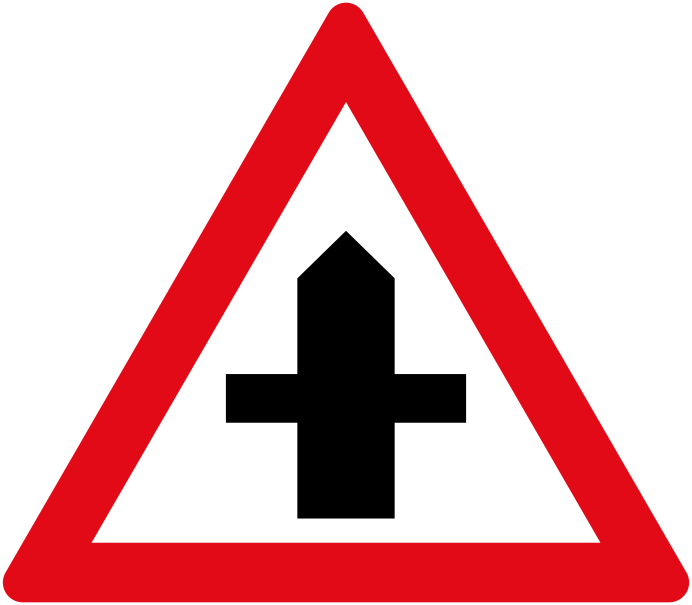
Crossroads
Warning of a crossroads ahead. Be prepared for traffic entering from side roads. Slow down and check both directions before proceeding.
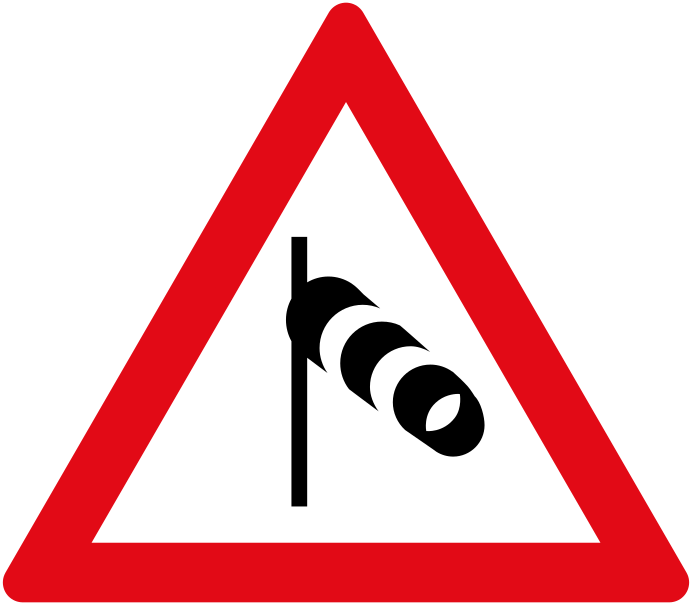
Crosswind
Warning of strong crosswinds ahead, common on exposed highways and desert roads in the UAE. Grip the steering wheel firmly and reduce speed. Particularly dangerous for high-sided vehicles.
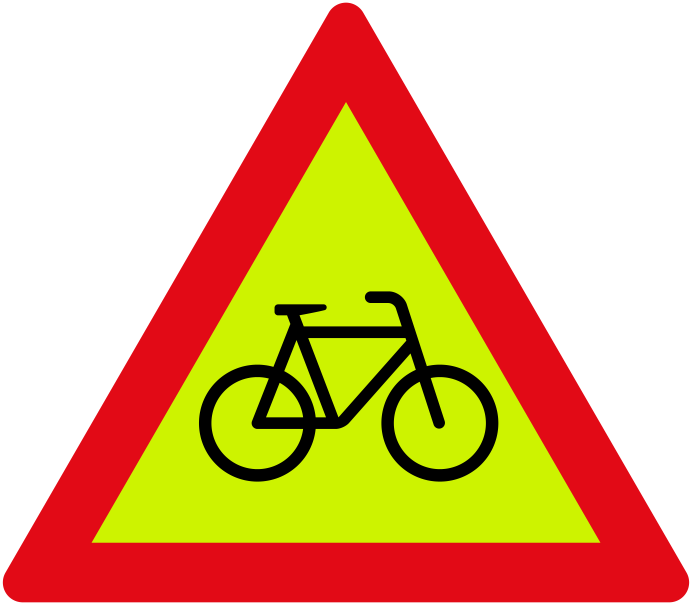
Cyclists
Warning that cyclists may be on the road ahead. Give cyclists adequate space when overtaking and check mirrors before turning.
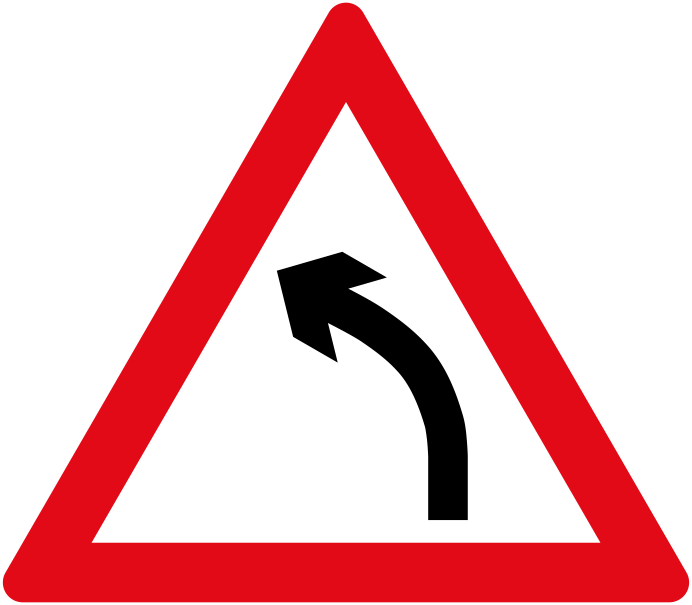
Dangerous Bend to Left
Warning of a sharp bend to the left ahead. Reduce speed before entering the bend, not while in it.
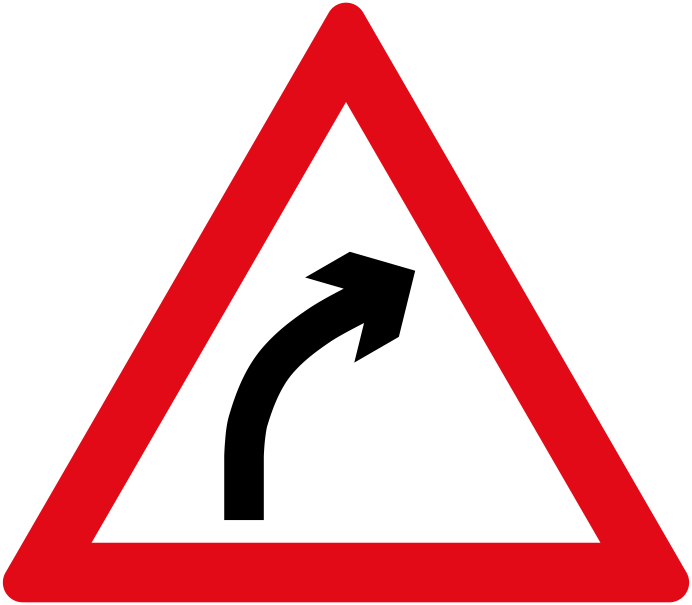
Dangerous Bend to Right
Warning of a sharp bend to the right ahead. Reduce speed before entering the bend and stay in your lane.

Diversion to Opposite Carriageway
Traffic is diverted onto the opposite carriageway ahead, usually because of road works. Slow down, follow the temporary markings and expect oncoming traffic close by.
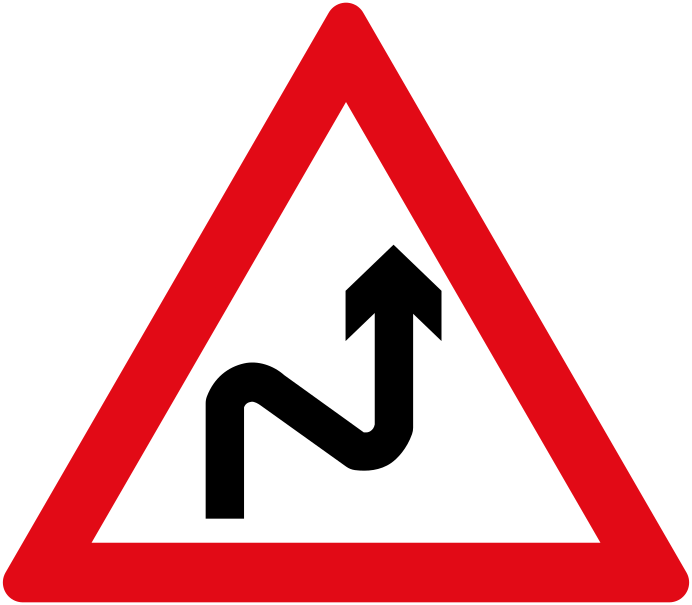
Double Bend
Warning of a double bend ahead: two bends in quick succession, the first in the direction shown on the sign. Reduce speed before the first bend.
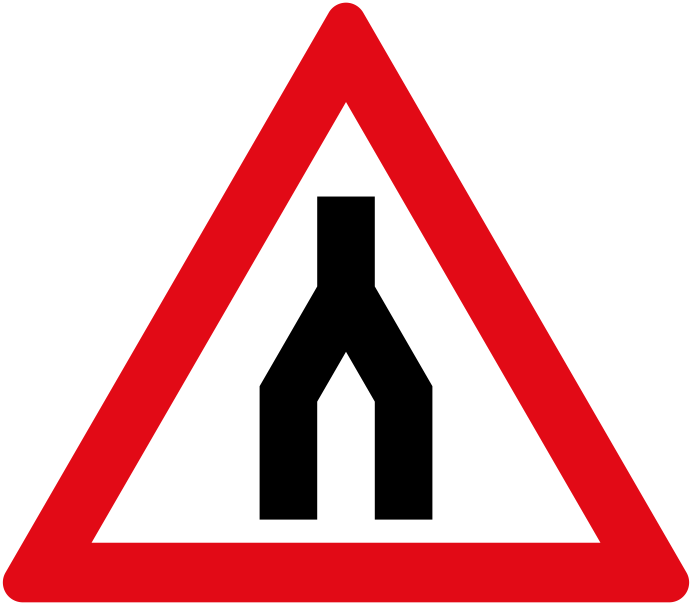
Dual Carriageway Ends
Warning that a divided road is about to become an undivided road. Be prepared for oncoming traffic on the same carriageway. Reduce speed and keep right.

End of Median
The central median ends ahead and the road becomes undivided. Expect oncoming traffic on the same carriageway and keep right.
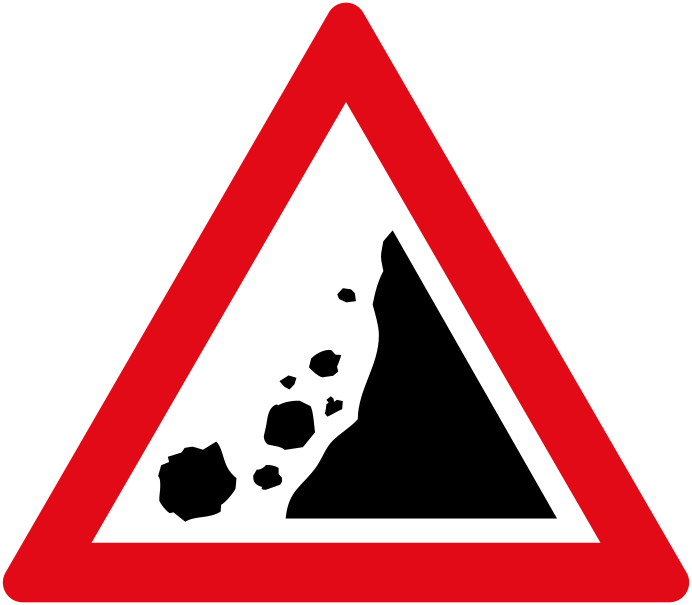
Falling Rocks
Warning of an area where falling rocks may be a hazard, common in mountainous regions like Ras Al Khaimah and Fujairah. Do not stop in the danger zone.

Five Lanes Merging to Four
The number of lanes reduces from five to four ahead. Merge safely in good time as shown on the sign.

Hazard Marker
Marks an obstruction such as the start of a traffic island or median. Slow down and keep clear of it.

Hazard Plates
Pairs of red and white plates mark a hazard at the side of the road, such as a narrow bridge or culvert. Slow down and keep within the plates.

Joining Lane
A lane joins the main road ahead. Watch for traffic entering and allow vehicles to merge safely.

Joining Lane Diagonal Arrows
A lane joins the main carriageway ahead, as shown by the arrows. Watch for merging traffic and adjust your speed.
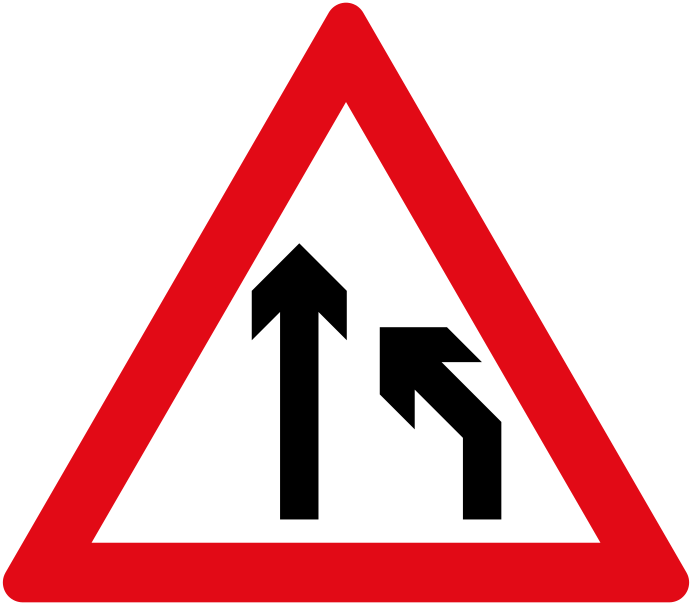
Lane Ends
Warning that a lane is ending ahead. Merge safely into the adjacent lane before the lane terminates. Check mirrors and give way to traffic already in the continuing lane.

Lane Use Control Directional Restriction
Lane use sign showing which directions each lane may be used for at the junction ahead. Choose the correct lane early.

Lane Use Controlled Trucks Not Left
Lane use sign: trucks over the weight shown must not use the lanes marked with the no-trucks symbol. Heavy vehicles must keep to the lanes with plain arrows.

Left-Hand Lane Closed Ahead
The left-hand lane is closed ahead. Move to the right in good time and merge safely.
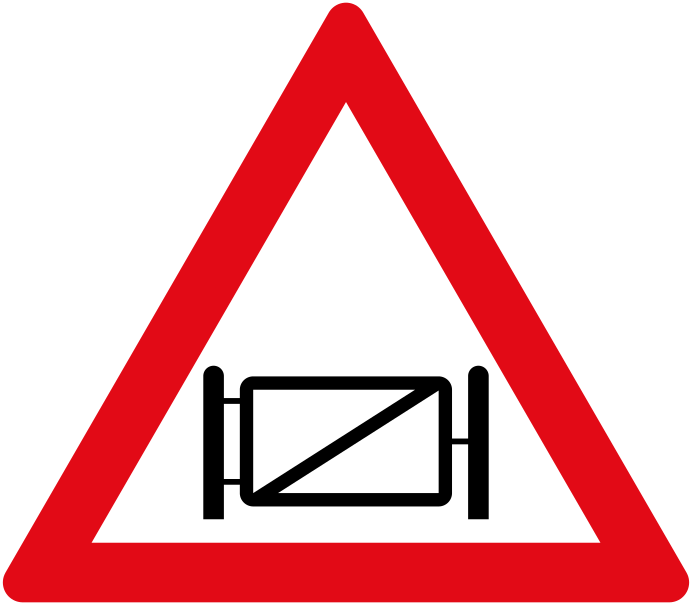
Level Crossing with Barriers
Warning of a railway level crossing with barriers or gates ahead. Be prepared to stop when barriers are lowered.
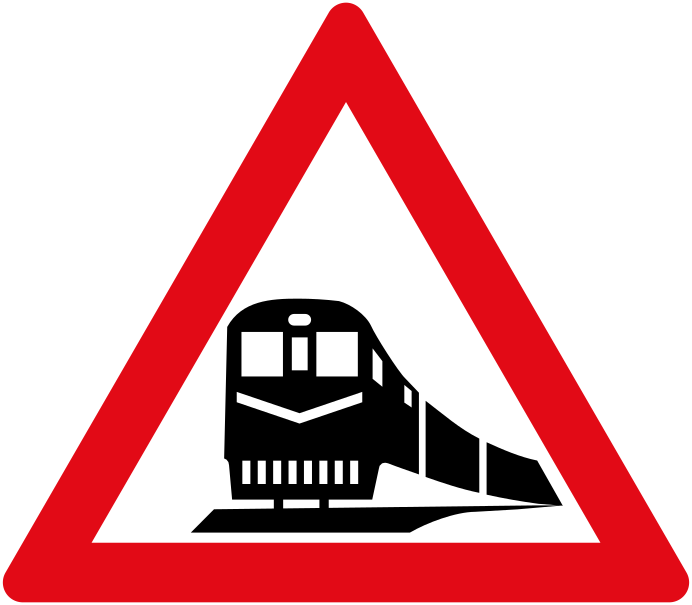
Level Crossing without Barriers
Warning of a railway level crossing without barriers ahead. Look both ways for approaching trains before crossing.

Loose Gravel
Warning of loose gravel or chippings on the road surface. Reduce speed to avoid windscreen damage and maintain safe following distance from other vehicles.
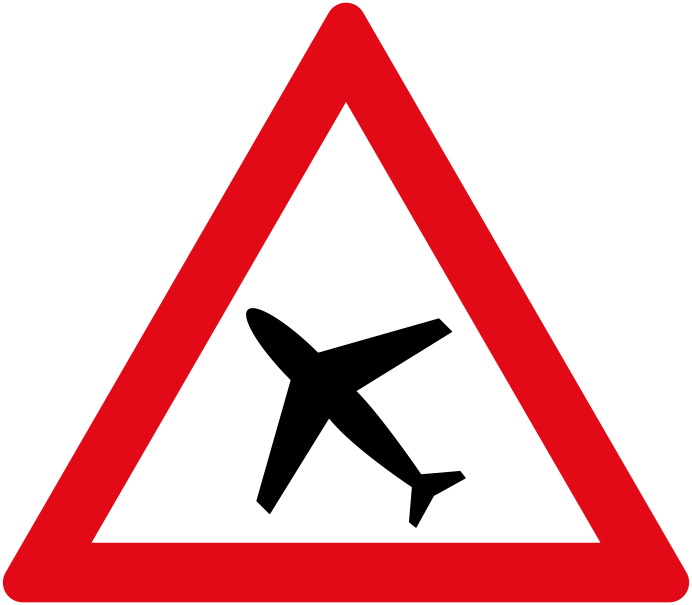
Low-Flying Aircraft
Warning of low-flying aircraft, typically near airports. Do not stop on the road to watch aircraft.
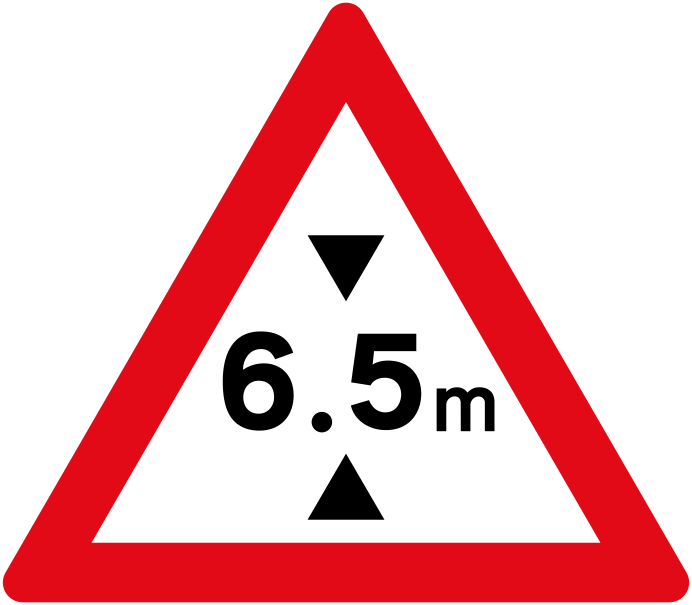
Maximum Headroom at Hazard
Limited headroom at a bridge or structure ahead. Vehicles taller than the height shown must not continue.
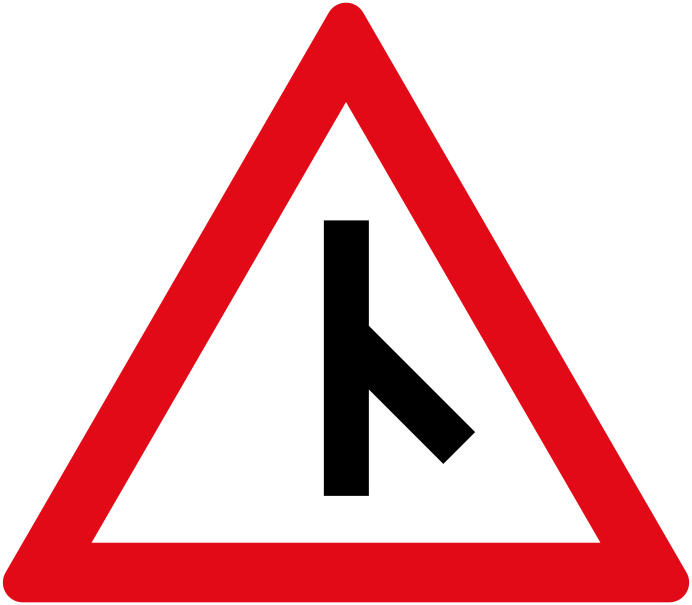
Merging Traffic
Warning of merging traffic ahead. Vehicles may be entering from a slip road or side road. Adjust speed and be prepared to share your lane.

Multiple Chevrons (Bend to the Left)
Marks a sharp bend to the left. Slow down before the bend and follow the direction of the chevrons.
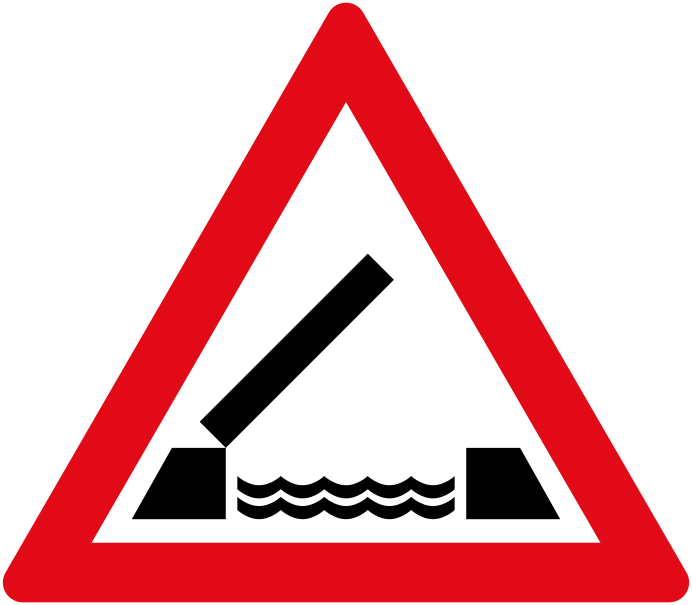
Opening Bridge Ahead
A bridge ahead may open to let boats pass. Be prepared to stop when the signals or barriers show that it is opening.
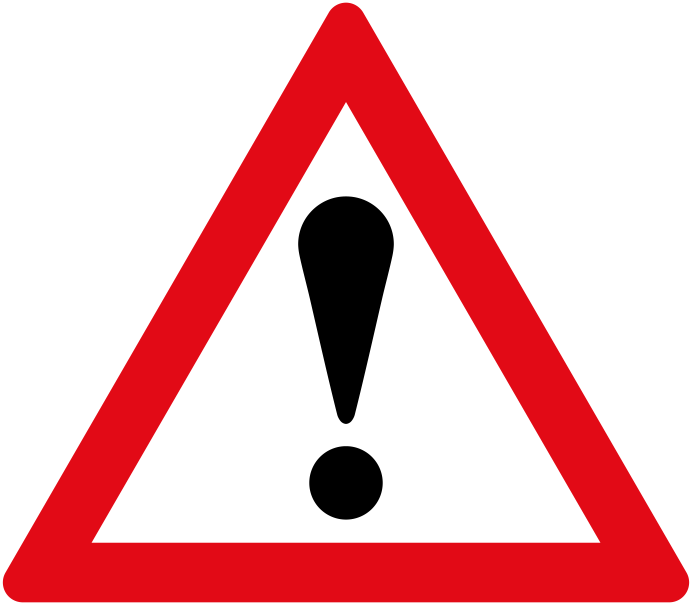
Other Danger
Warning of a danger for which no specific symbol exists. It is often accompanied by a supplementary plate describing the hazard. Slow down and proceed with caution.
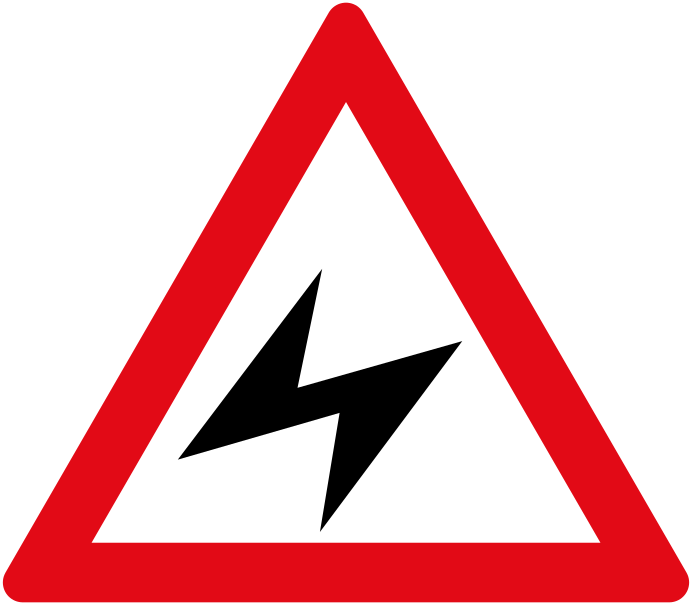
Overhead High-Voltage Cables
Warning of overhead high-voltage power lines crossing the road. Drivers of tall vehicles and crane operators must exercise extreme caution.
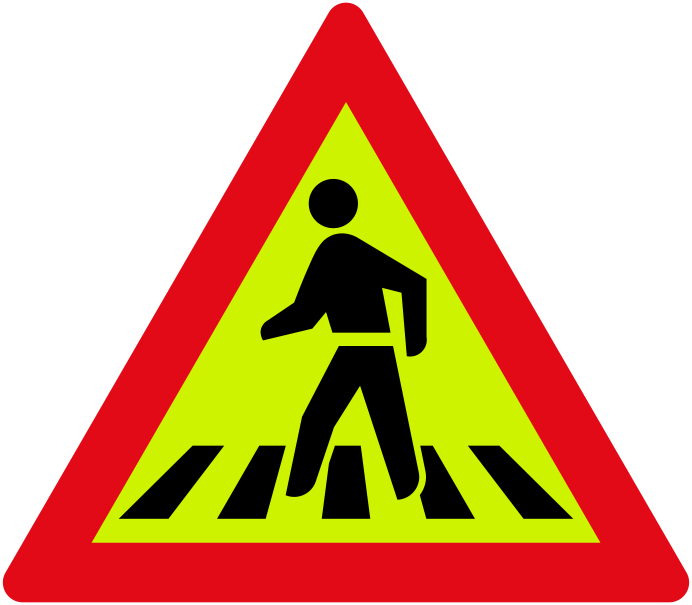
Pedestrians
Warning that pedestrians may be crossing or walking near the road ahead. Reduce speed and be prepared to stop.
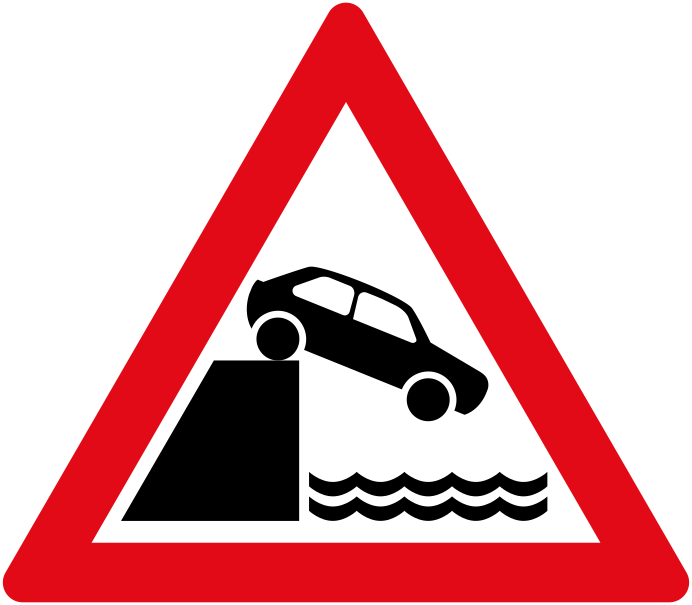
Quayside or River Bank
Warning of an unprotected quayside, waterfront, or river bank ahead. Risk of vehicles leaving the road and entering water. Drive with extreme care.

Reduce Speed Now
You must slow down straight away, usually because of a hazard, road works or a lower speed limit ahead.

Right-Hand Lane Closed Ahead
The right-hand lane is closed ahead. Move to the left in good time and merge safely.

Right Lane Closure Ahead
Diagram sign showing that the right lane is closed ahead. Traffic in that lane must move left in good time and merge safely.
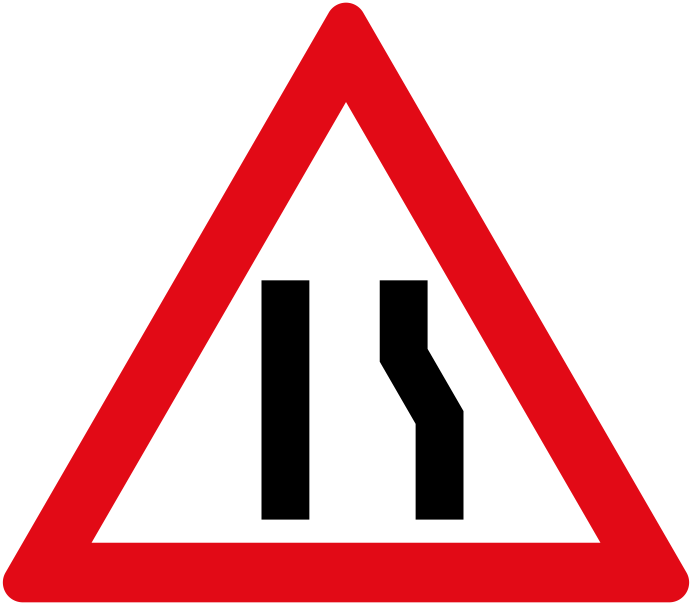
Road Narrows
Warning that the road narrows ahead. Reduce speed and be prepared for limited space. Give way to oncoming traffic if necessary.

Road Narrows on Both Sides
The road narrows from both sides ahead. Reduce speed and take care with oncoming and passing traffic.

Road Narrows on the Left
The road narrows from the left ahead. Reduce speed and be ready to merge with traffic.

Road Works
Warning of road works ahead. Workers and machinery may be present on or near the road. Reduce speed and be prepared for lane changes or temporary detours.
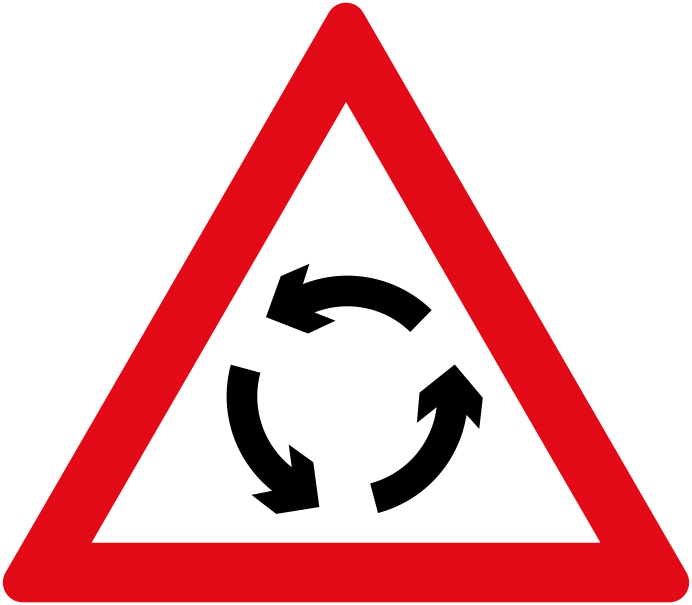
Roundabout Ahead
Warning of a roundabout ahead. Reduce speed and give way to traffic already on the roundabout. In the UAE, traffic moves counter-clockwise.
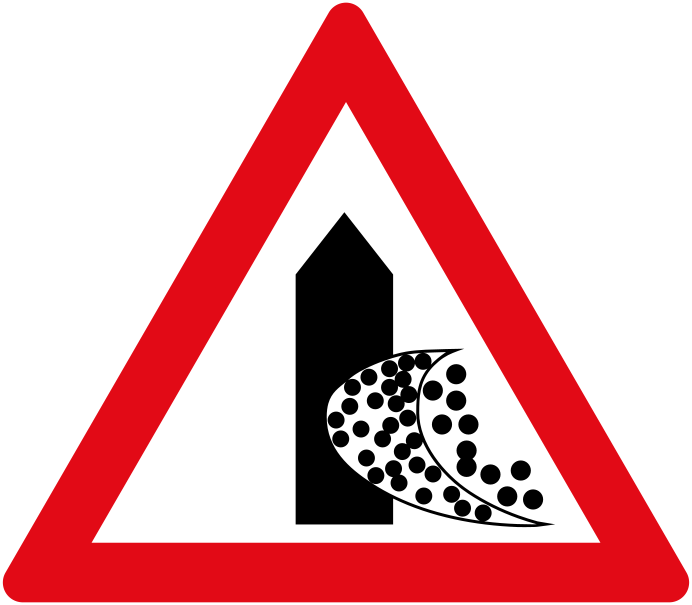
Sand Dunes
Warning of sand drifts or sand dunes that may encroach on the road, particularly common on desert highways in the UAE. Reduce speed and be prepared for reduced visibility and slippery surfaces.

Sharp Curve Lanes Ahead
Sharp curve ahead on a multi-lane road. Reduce speed before the curve and stay in your lane.

Sharp Curve Single Carriageway
Sharp curve ahead on a single carriageway with traffic in both directions. Reduce speed, keep right and do not overtake.

Sharp Curve Three Lanes
Sharp curve ahead on a three-lane road. Reduce speed before the curve and stay in your lane.
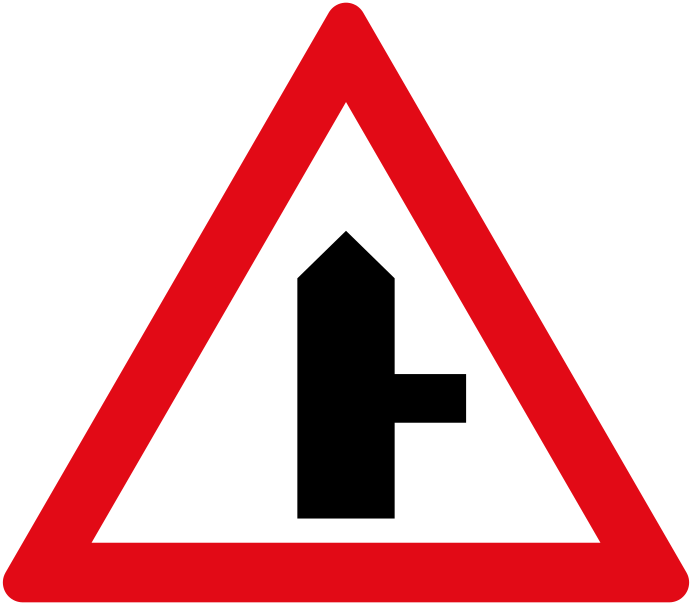
Side Road Ahead
Warning of a side road junction ahead. Be prepared for vehicles entering or leaving the main road from the side.

Single Chevron (Bend to the Right)
Marks a sharp bend. The chevron points the way the road turns; slow down and follow it.

Single Tram or Railway Line Crossing
Level crossing without barriers ahead, with a single track. Slow down, look both ways and never stop on the tracks.
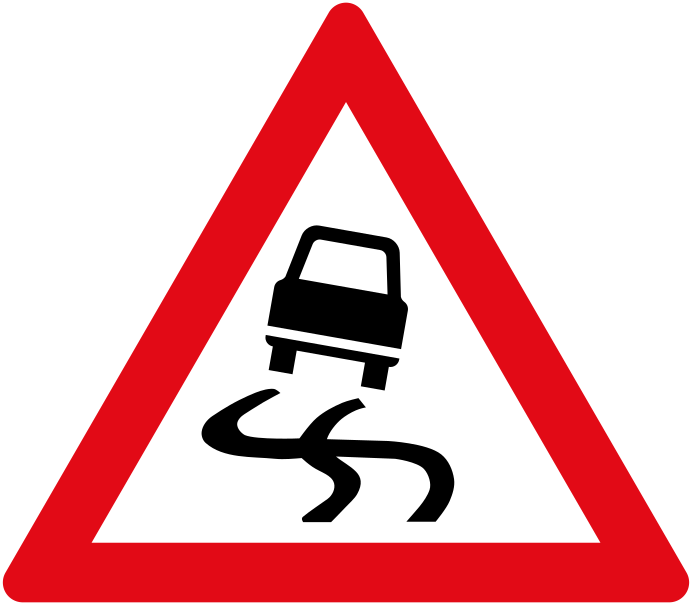
Slippery Road
Warning of a slippery road surface ahead. Reduce speed and avoid sudden braking or sharp steering movements.

Soft Verges
The edge of the road ahead is soft. Keep off the edge, as your wheels could sink or lose grip.
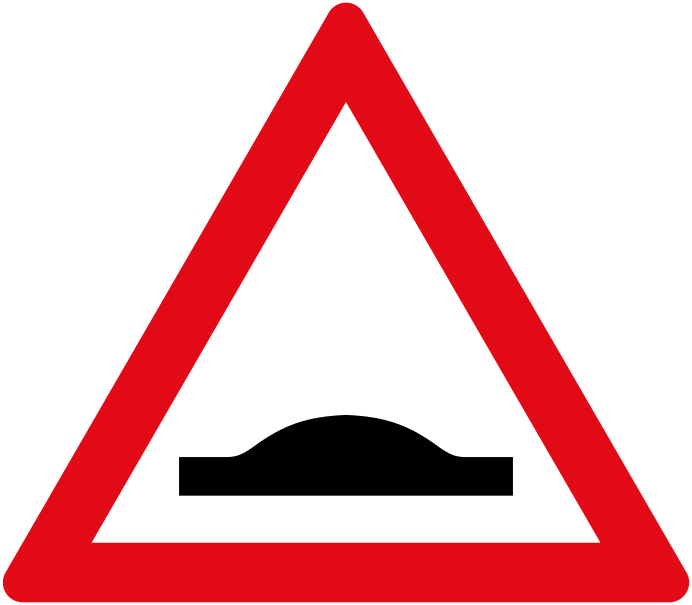
Speed Hump
Warning of a speed hump (speed bump) ahead. Reduce speed significantly before reaching the hump to avoid vehicle damage and loss of control.
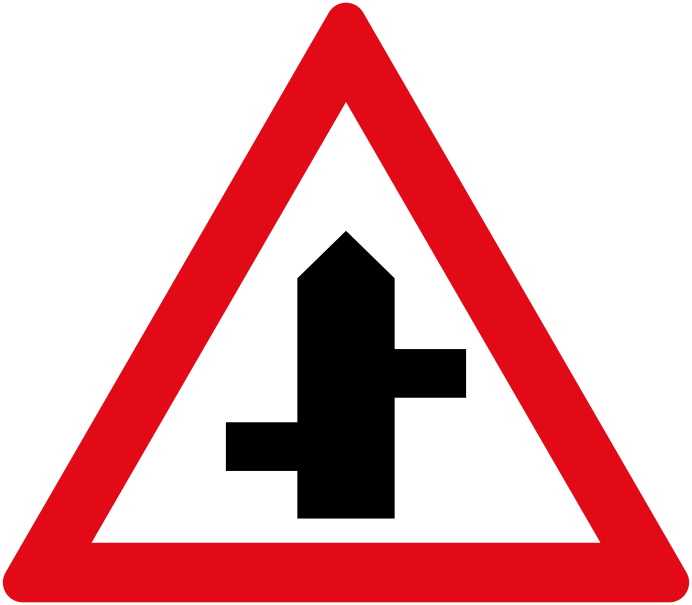
Staggered Side Roads
Warning of staggered side road junctions ahead. Roads join from alternate sides in quick succession. Watch for turning vehicles from both directions.
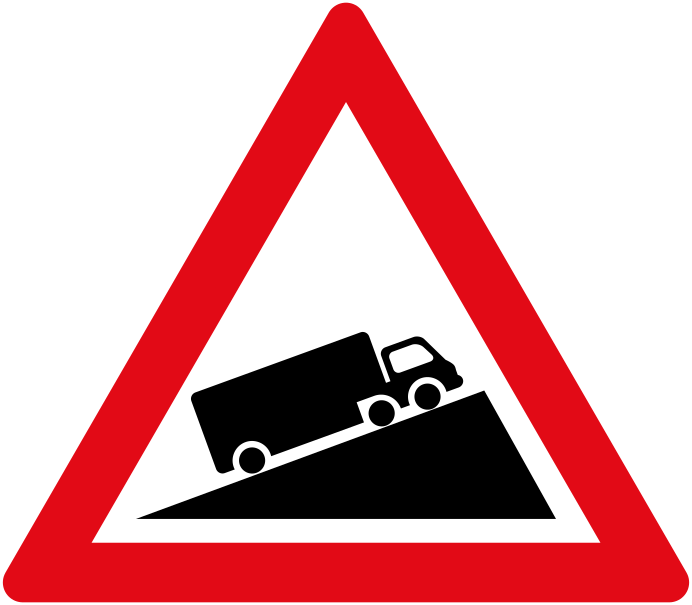
Steep Ascent
Warning of a steep uphill gradient ahead. Use a lower gear to maintain power and be prepared for slower vehicles.
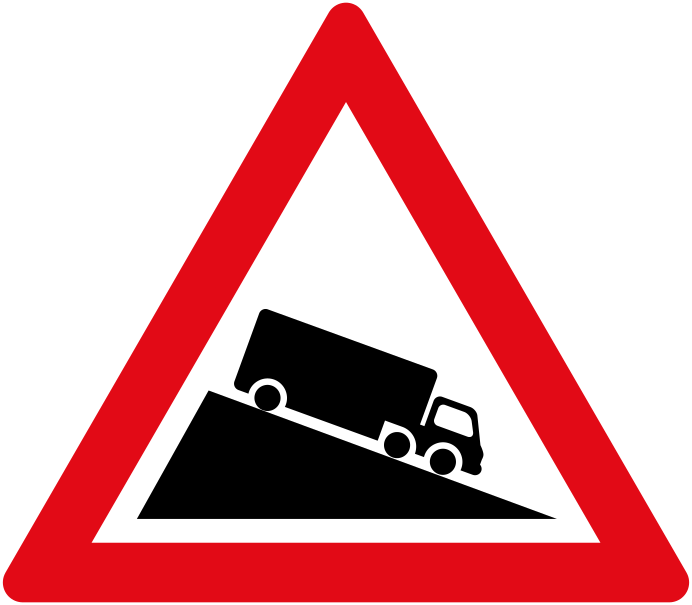
Steep Descent
Warning of a steep downhill gradient ahead. Use a lower gear to control speed and avoid overheating your brakes.
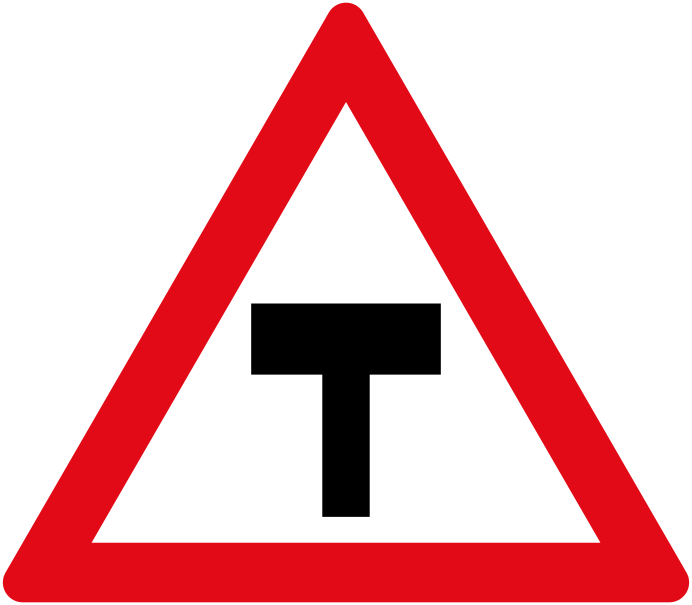
T-Junction
Warning of a T-junction ahead. The road you are on ends at an intersection. Be prepared to give way or stop.

T-Junction Chevron Board
Placed facing you at the end of a T-junction. The road ends, so slow down and turn left or right.
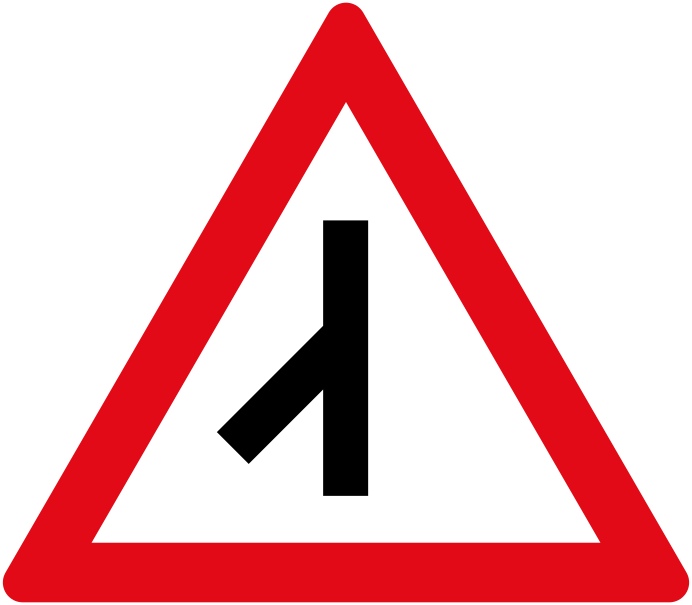
Traffic Merges From Left
Traffic will join your road from the left ahead. Be ready to adjust your speed so vehicles can merge safely.
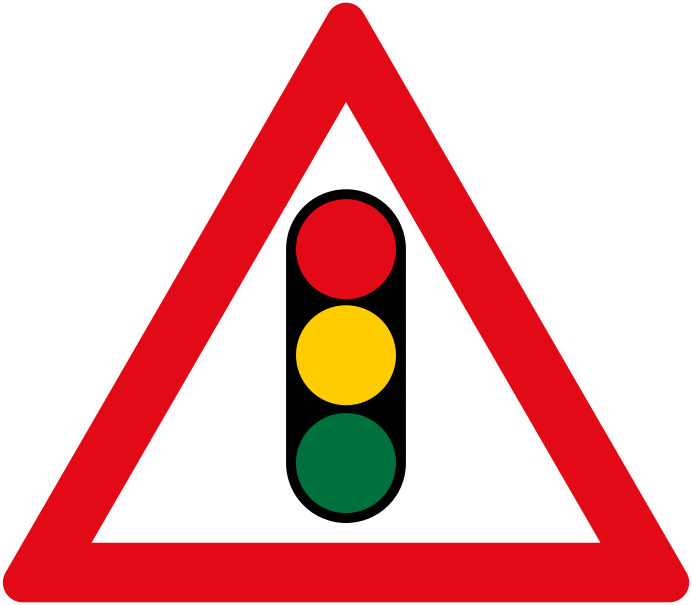
Traffic Signals Ahead
Warning of traffic signals ahead. Be prepared to stop if the signal is red. Approach at a speed that allows you to stop safely.

Tram or Railway Crossing Ahead (50 m)
A tram or railway crossing is 50 m ahead. Slow down, look both ways and be ready to stop.

Tram or Railway Crossing to the Left
A side road on the left ahead crosses a tram or railway line. Take care if you turn left and watch for trams.

Tram or Railway Crossing to the Right
A side road on the right ahead crosses a tram or railway line. Take care if you turn right and watch for trams.
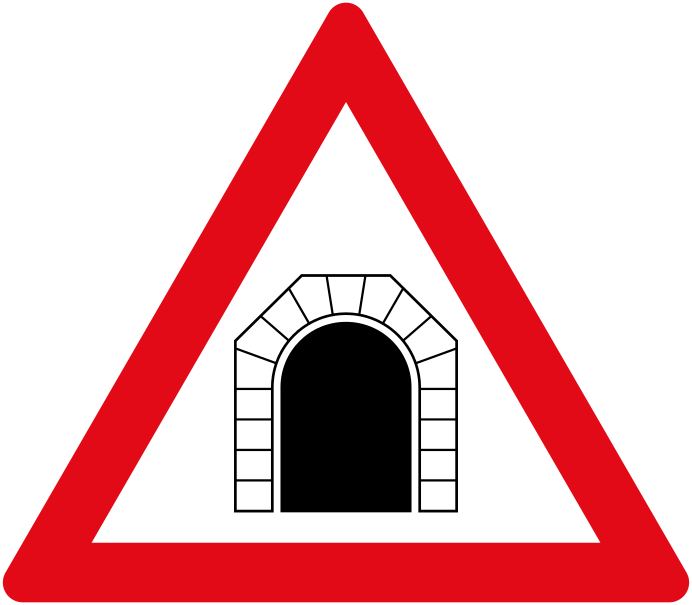
Tunnel Ahead
Warning of a tunnel ahead. Switch on headlights, remove sunglasses, and maintain a safe following distance. Do not stop inside the tunnel unless absolutely necessary.

Two or More Tram or Railway Lines Crossing
Two or more tram or railway lines cross the road here. Look both ways, more than one tram or train may come.

Two Right-Hand Lanes Closed Ahead
The two right-hand lanes are closed ahead. Move into the open lanes on the left in good time.
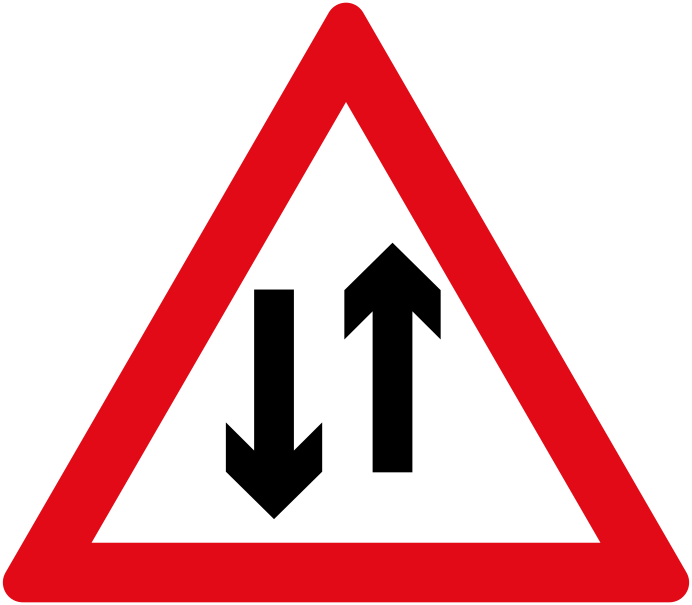
Two-Way Traffic
Warning that the road ahead carries traffic in both directions. Stay on the right side of the road and be aware of oncoming vehicles.

Two-Way Traffic Crosses One-Way Road
You are on a one-way road and a two-way road crosses it ahead. Expect traffic from both directions on the crossing road.
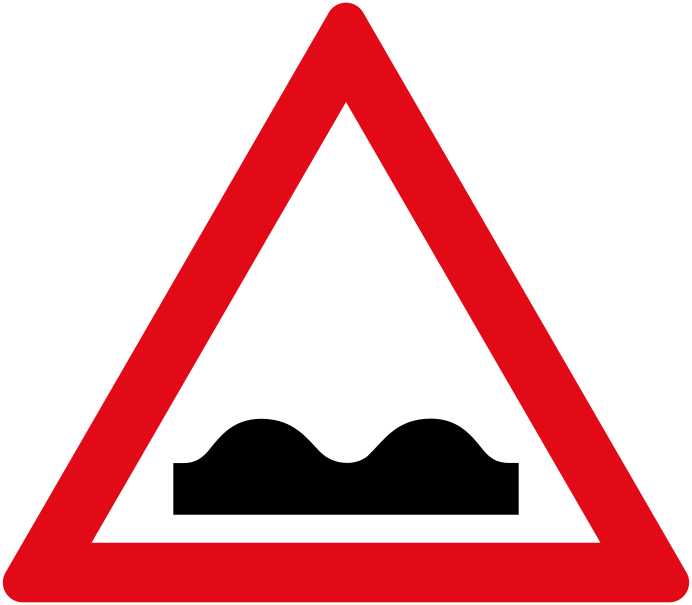
Uneven Road
Warning of an uneven road surface ahead. Reduce speed to maintain control and avoid vehicle damage.

U-Turn Ahead
There is a U-turn point ahead. Expect vehicles to slow down or move across lanes to turn.