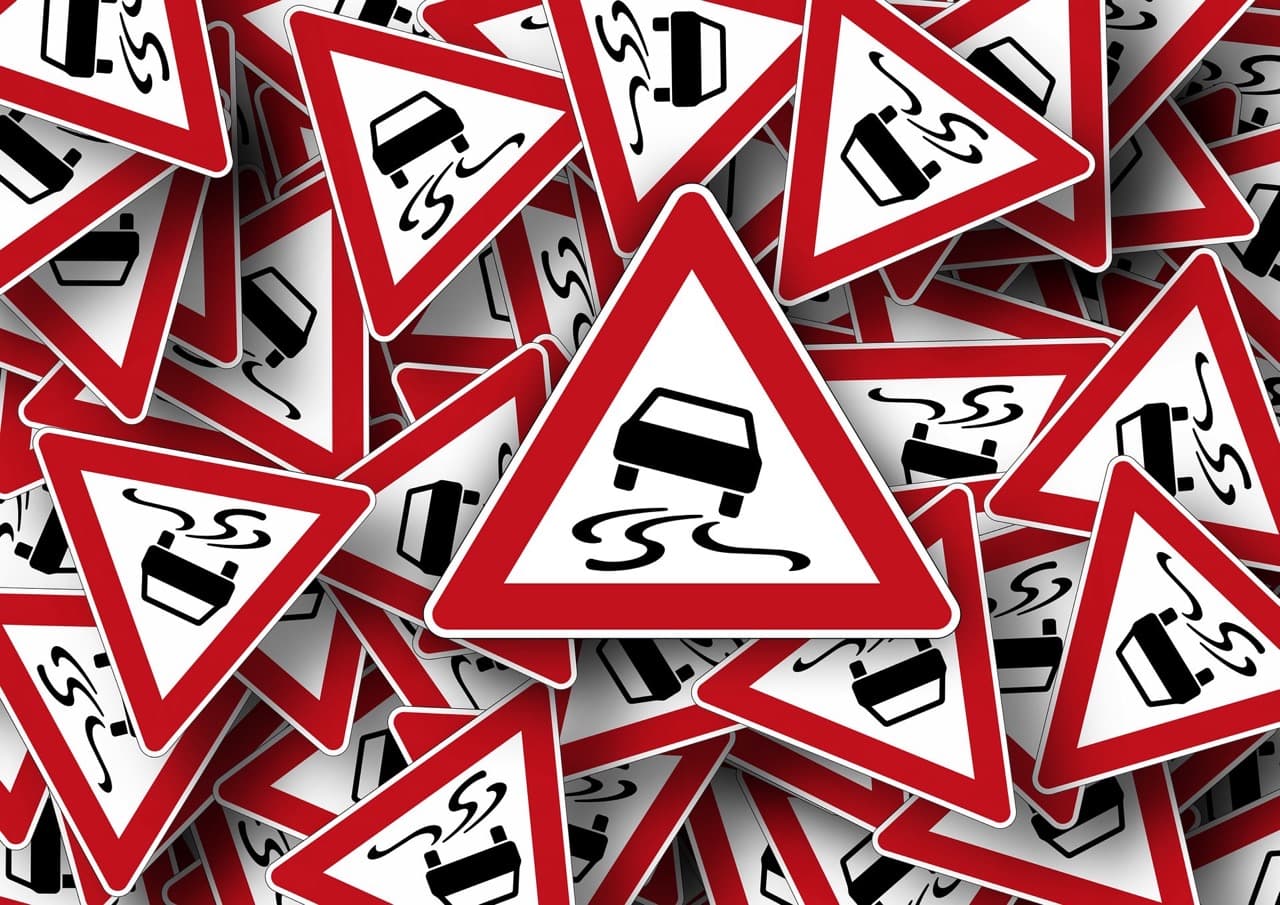
Cyprus Road Signs Explained: Complete Guide for Learner Drivers
Master Cyprus road signs for your theory and practical tests. Vienna Convention sign system explained — warning, regulatory, information, and priority signs with shapes, colours, and common test traps.
Key Takeaways
- Cyprus follows the Vienna Convention on Road Signs, so signs match standard European patterns — if you know EU signs, you'll recognise most Cypriot ones.
- Shape is your fastest clue: triangles warn, circles give orders, rectangles inform, octagons mean stop.
- Road sign questions dominate both the oral exam (for learner's permit) and the practical test sign identification section.
- Over 60% of road deaths in Cyprus occur on urban roads — knowing signs in city driving contexts is especially important (CyprusDriving.net).
How Are Road Signs Organised in Cyprus?
Cyprus follows the Vienna Convention on Road Signs and Signals, which means its signs align with the European standard used across the EU. If you've driven in Greece, Germany, or France, most signs will look familiar. The system communicates through three visual cues: shape, colour, and symbol.
Four main categories:
- Warning signs — Triangular, red border. Alert you to hazards ahead.
- Regulatory signs — Circular. Tell you what you must or must not do.
- Information signs — Rectangular. Provide guidance without orders.
- Priority signs — Special shapes. Determine right of way.
What Do Warning Signs Look Like?
Warning signs are triangular with a red border and white background. They don't give orders — they tell you what's ahead so you can prepare.
- Curve Ahead — Sharp bend coming; reduce speed before the curve, not during it
- Road Narrows — Carriageway gets narrower; may need to yield to oncoming traffic
- Junction/Crossroads — An intersection is approaching
- Pedestrian Crossing — Watch for people crossing; you must stop if someone is on the crossing
- Roadworks — Construction zone ahead; expect reduced speeds and lane changes
- Slippery Road — Common during Cyprus's rainy season (November to March)
- Roundabout Ahead — Prepare to give way to traffic from the right (clockwise flow in Cyprus)
- Steep Descent/Ascent — Especially common in the Troodos Mountains; use low gears
One thing test-takers often miss: warning signs don't just ask you to identify them. The examiner may ask what action you should take. "Curve ahead" doesn't just mean "there's a curve" — it means "slow down before the curve."
What Are Regulatory Signs?
Regulatory signs are circular and carry legal force. Ignoring them means fines, penalty points, or worse.
Prohibitory Signs (Red Circle Border)
Red circle = "you must not":
- No Entry — White bar on red; you cannot enter from this direction
- Speed Limit — Number inside red circle. Cyprus uses km/h: 50 urban, 80 rural, 100 motorway
- No Overtaking — Two cars side by side in red circle
- No Parking — Red circle with blue background and red diagonal cross
- No U-Turn — U-turn arrow with red strike-through
- No Vehicles — Empty red circle (different from No Entry!)
Mandatory Signs (Blue Circle)
Blue circle = "you must":
- Keep Left/Right — White arrow showing required direction
- Roundabout — Arrows showing clockwise traffic flow
- Minimum Speed — Number on blue background (e.g., 65 km/h on motorways)
- Compulsory Cycle Lane — Bicycle symbol on blue
The most confused pair on exams: No Entry (white horizontal bar on red) vs. No Vehicles (empty red circle). No Entry means no traffic from this direction. No Vehicles means no motor vehicles at all. Different situations entirely.
What Do Information Signs Tell You?
Information signs are rectangular and colour-coded by purpose:
- Blue background — General information: parking, hospital, petrol station, one-way street
- Green background — Direction signs on motorways pointing to cities with distances
- Brown background — Tourist attractions: archaeological sites, beaches, wineries
- White background — Supplementary information plates (below other signs)
Cyprus-specific: you'll see bilingual signs in Greek and English throughout the island, especially direction signs. In the north, you may encounter signs in Turkish. In tourist areas like Ayia Napa and Paphos, signs are well-marked in English.
How Do Priority Signs Work?
Priority signs use unique shapes so you can recognise them instantly, even from behind or at a distance:
- Stop — Red octagon. Come to a complete stop, even if the road looks clear.
- Give Way (Yield) — Inverted triangle, red border. Slow down, yield to traffic with priority. Stop if necessary.
- Priority Road — Yellow diamond, white border. You have right of way; side road traffic must yield.
- End of Priority — Same diamond with diagonal black line. You no longer have automatic priority.
At roundabouts: give way to traffic from your right (already on the roundabout). This is the single most important priority rule in Cyprus — and the one tourists violate most often.
What Road Markings Should You Know?
- Solid white centre line — Do not cross. No overtaking.
- Broken white centre line — May cross when safe to overtake
- Double yellow edge lines — No parking or waiting at any time
- Single yellow edge line — Restricted parking (check nearby signs for times)
- Zebra crossing — Black and white stripes; pedestrians have absolute priority
- Box junction (yellow cross-hatching) — Do not enter unless your exit is clear
How to Study Road Signs Effectively
- Learn by category — Master all warning signs first, then regulatory, then information. Don't mix until you're solid on each.
- Use shape as a shortcut — If you know "triangle = warning" and "red circle = prohibition," you can eliminate wrong answers instantly
- Focus on confusable pairs — No Entry vs. No Vehicles, speed limit vs. minimum speed, Give Way vs. Stop
- Practice with real signs — Walk or ride around town and identify every sign you pass
- Use ExamReady Cyprus Road Signs to quiz yourself on all categories
Temporary and Construction Signs
Cyprus has been investing heavily in road infrastructure, especially on the Nicosia-Limassol motorway corridor. This means you'll frequently encounter temporary construction signs. These typically have a yellow or orange background and override permanent signs for the duration of the works.
- Temporary speed limit — Yellow background with red border; overrides the permanent speed limit in the construction zone
- Lane closure — Arrows directing you to merge; follow them even if the permanent markings suggest otherwise
- Temporary traffic lights — Used at single-lane construction zones; treat them exactly like permanent traffic lights
- End of temporary restriction — Yellow background with diagonal strike-through; permanent limits resume
During the practical driving test, examiners may take you through an area with temporary signs to see if you follow them correctly. The rule is simple: temporary signs always override permanent ones.
Night Driving and Sign Visibility
Cyprus road signs use retroreflective materials, meaning they reflect your headlights back at you. However, not all signs are equally visible at night, especially on rural roads where vegetation may obscure them. Key night-driving sign awareness tips:
- Rely on shape recognition at night — you can identify a triangle (warning), circle (regulatory), or octagon (stop) even before you can read the symbol
- Diamond-shaped priority road signs have reflective elements that are visible from further away than other signs
- Blue mandatory signs can appear darker at night — slow down if you see a blue circle you can't immediately read
- Junction warning signs on unlit rural roads are your most important visual cue — they tell you to slow down before you see the actual junction
Digital and Variable Message Signs
On the Nicosia-Limassol and Limassol-Paphos motorways, Cyprus has installed electronic variable message signs (VMS). These overhead LED displays show real-time information: current speed limits (which may be reduced due to weather or incidents), lane closure warnings, and traffic congestion alerts. When a VMS shows a temporary speed limit, it is legally binding — treat it as you would any other speed limit sign.
Sign knowledge builds over time. Don't try to cram all signs in one session — study 15-20 per day over two weeks and you'll retain far more than a single marathon session the night before your exam.
Related Guides
Explore more Cyprus driving resources:
- Complete Guide to the Cyprus Driving Test 2026 — everything in one place
- Cyprus Oral Exam Guide — what the examiner asks
- Pass Rate & Statistics — why 80% of candidates pass
- Speed Limits, Fines & Penalty Points — updated 16-point system
- Expat Driving Guide — EU exchange vs full test
Frequently Asked Questions
Does Cyprus use the same road signs as other EU countries?
Yes. Cyprus follows the Vienna Convention on Road Signs and Signals, so signs match the standard European system. If you know EU road signs from Greece, Germany, or France, you'll recognise most Cypriot signs. Signs are bilingual (Greek and English) throughout the island.
What sign questions appear on the oral exam?
The provisional oral exam (about 20 questions, 85% pass mark) focuses on sign recognition, road markings, and police hand signals. The examiner shows you sign images and asks what they mean. Road signs are the primary topic — typically 12-15 of the 20 questions.
Are there any Cyprus-specific signs?
Most signs are standard European. However, you'll notice bilingual Greek/English text on direction signs, brown tourist signs pointing to archaeological sites (common near Paphos and Kourion), and mountain road signs in the Troodos with gradient warnings.
What's the most commonly failed sign question?
Roundabout priority and give-way rules. Many candidates don't realise that at roundabouts in Cyprus (left-hand traffic, clockwise flow), you must yield to traffic from your right. This is also the leading real-world cause of roundabout accidents on the island.
Where can I practice road sign recognition?
The ExamReady Cyprus Road Signs section has all signs organised by category with descriptions. You can also buy the official road sign book from any kiosk in Cyprus for €5-7.
Related Guides
Continue learning with these related articles
Cyprus Motorcycle Licence 2026: AM, A1, A2 and A Categories, Ages, Lessons, Learner Rules and Fees
Cyprus motorcycle licence explained: AM, A1, A2 and A ages, the 1 July 2026 learner rule, mandatory lessons, €20 learner's licence and €40 issue fee.
Cyprus Driving Licence 2026: How to Get One, Cost, Categories, Renewal and Exchange
Cyprus driving licence guide: RTD ages and categories, the €40 licence fee, learner rules, mandatory lessons, renewal and foreign licence exchange.
Cyprus Driving Licence Reform 2026: New EU Rules, Digital Licences and Driving at 17
Cyprus is drafting legislation for the new EU driving licence directive: digital licences in the EU wallet, accompanied driving at 17, a two-year probation for new drivers, and EU-wide bans. What changes, and when.
Why We Built Sign Blitz: Flash-Card Training for the Cyprus Learner's Licence Sign Test
The Cyprus examiner shows you a sign and asks what it means - no multiple choice. Sign Blitz trains exactly that: recall first, reveal after, and every sign you miss comes back until you know it.
Ready to test your knowledge?
Put what you've learned into practice with our free driving theory practice tests.
Start Practicing