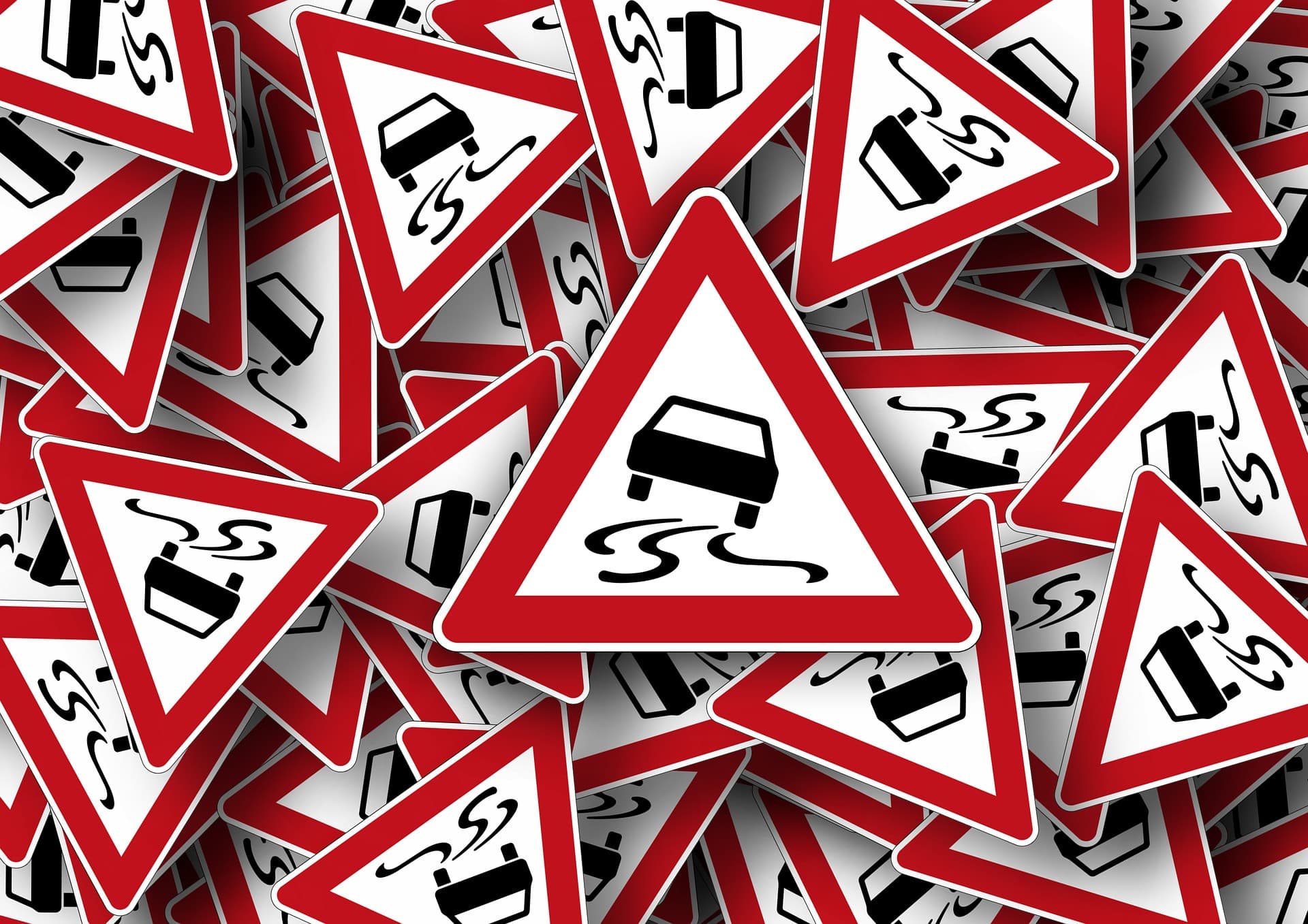
Cyprus Learner's Oral Test: What to Study
Pass the Cyprus provisional learner oral exam on your first try. Covers the 20-question format, 85% pass mark, road signs tested, police signals, and a focused 30-minute revision plan.
Key Takeaways
- The Cyprus oral exam has approximately 20 verbal questions — you need at least 17 correct (85%) to pass.
- Questions focus on road signs, road markings, and police signals — not general driving theory.
- The exam is available in Greek or English and takes only a few minutes. No appointment needed — walk in during office hours.
- Cost: €10 for the test, plus €20 for the learner's licence if you pass (Limassol Driving School).
What Is the Cyprus Provisional Oral Exam?
Before you can get behind the wheel with a learner's permit in Cyprus, you must pass a short oral (verbal) exam at the Department of Road Transport (T.O.M.). This isn't a written test — an examiner asks you questions face-to-face, and you answer verbally. It tests whether you can identify road signs, understand road markings, and recognise police hand signals.
The exam details:
- Questions: Approximately 20 verbal questions
- Pass mark: 17 out of 20 (85%)
- Duration: 5-10 minutes
- Languages: Greek or English
- Fee: €10
- Location: Department of Road Transport offices (main one at Latsia, near Nicosia General Hospital)
- Booking: No appointment required — walk in during office hours
Before the oral exam, you'll also take a quick eyesight test: reading a car number plate from about 20 metres away. If you need glasses or contacts, wear them.
What Topics Are Tested?
The oral exam covers three specific areas. It does not test general driving theory, highway code scenarios, or mechanical knowledge. The focus is narrow:
1. Road Signs (Primary Focus)
The examiner will show you road sign images and ask what they mean. Cyprus follows the Vienna Convention on Road Signs, so signs follow standard European patterns. You need to know:
- Warning signs (triangular, red border) — curves, junctions, pedestrian crossings, roadworks
- Prohibitory signs (circular, red border) — no entry, speed limits, no overtaking, no parking
- Mandatory signs (circular, blue) — keep left/right, roundabout direction, minimum speed
- Information signs (rectangular, blue/green) — directions, parking, facilities
- Priority signs — stop (octagon), give way (inverted triangle), priority road (diamond)
2. Road Markings
You'll be asked what different painted road markings mean:
- Solid white centre line — Do not cross or overtake
- Broken white centre line — You may cross when safe
- Double yellow edge lines — No parking at any time
- Zebra crossing markings — Pedestrians have priority
- Hatched areas — Do not enter unless safe and necessary
3. Police Hand Signals
This catches many candidates off guard. You need to recognise what a police officer's hand signals mean when directing traffic. The main signals are:
- Arm raised vertically — Stop (all traffic from all directions)
- Arm extended horizontally — Stop for traffic approaching from front and behind; traffic from the sides may proceed
- Beckoning motion — Come forward / proceed
Don't skip the police signals. They appear in almost every oral exam, and getting them wrong is one of the most common reasons for failing.
How Should You Prepare?
The good news: the exam is narrow in scope. You don't need to memorise the entire highway code. Here's a focused study plan:
Quick 30-Minute Revision Plan
- Minutes 1-15: Review all road sign categories. Focus on signs you're least sure about. Use the ExamReady Cyprus Road Signs page for visual reference.
- Minutes 15-22: Review road markings — solid vs. broken lines, yellow lines, zebra crossings
- Minutes 22-30: Memorise the three main police hand signals. This is the area most people neglect and most often causes failure.
Study Resources
- Official road sign book: Available at kiosks (peripteros) across Cyprus for €5-7 in English or Greek
- Online practice: ExamReady Cyprus practice tests include sign recognition questions
- Physical signs: Walk or drive around your neighbourhood and identify every sign you see. Real-world recognition is faster than book learning.
What Happens on Exam Day?
- Go to the Department of Road Transport — Main office at Latsia (near Nicosia General Hospital). No appointment needed.
- Bring your documents: Passport or Cyprus ID card, proof of address, and €10 for the exam fee
- Eye test first: Read a number plate from ~20 metres. Wear your glasses/contacts if you need them.
- Oral exam: The examiner shows you sign images and asks questions verbally. Answer in Greek or English.
- Result is immediate: You'll know if you passed right away.
- If you pass: Pay €20 for your provisional licence (valid 1 year). You can then start driving lessons.
What Are the Most Common Mistakes?
- Skipping police signals — Almost everyone studies signs but forgets police hand signals. They appear on nearly every exam.
- Confusing similar signs — No Entry (white bar on red circle) vs. No Vehicles (empty red circle); speed limit (red circle with number) vs. minimum speed (blue circle with number)
- Ignoring road markings — Candidates focus entirely on signs and can't answer marking questions
- Not knowing what shapes mean — If you know triangles warn, circles order, and rectangles inform, you can narrow down answers even for unfamiliar signs
What If You Fail?
You can retake the exam — pay the €10 fee again and walk in on another day. There's no mandatory waiting period. Use the time between attempts to focus specifically on the questions you got wrong. Most people who fail do so because of police signals or a few confusing sign pairs, not because they don't know most signs.
What Comes After the Oral Exam?
Passing the oral exam gets you a provisional (learner's) licence valid for 1 year. With it, you can:
- Take driving lessons with a registered instructor
- Practice on public roads when accompanied by a fully licensed driver
- Prepare for the practical driving test
The practical test has three parts: sign identification (10 minutes), manoeuvres like reversing and parallel parking (10 minutes), and an on-road driving assessment (20 minutes). Total time: about 35 minutes (Limassol Driving School).
Understanding the Exam Environment
The atmosphere at the Department of Road Transport can feel intimidating if you've never been. The offices vary by district — the main one at Latsia is the busiest, while district offices in Limassol, Larnaca, and Paphos tend to have shorter queues. Arrive during mid-morning (10:00-11:00) to avoid the peak early-morning rush.
The examiner sits across from you and shows sign cards or images. They may hold up a physical card or point to a screen. Speak clearly — if your English has an accent, that's fine, but mumbling or whispering makes it hard for them to mark your answer. If you don't understand a question, ask the examiner to repeat it. They won't penalise you for asking once.
The entire exam is surprisingly quick — most candidates finish in under 5 minutes. The speed can work against you if you rush. Take a breath before answering each question. You have plenty of time even though it feels fast.
Signs That Trip Up English Speakers
If you're taking the exam in English, some signs have translations that aren't intuitive. For example:
- The "No Vehicles" sign (empty red circle) is often confused with "No Entry" (white bar). No Entry means no traffic from this direction; No Vehicles means the road is closed to all motor vehicles entirely.
- "End of Restriction" signs (diagonal black stripes through the original sign) — candidates forget that a speed limit sign with a strike-through means the limit has ended, not that there's a new limit.
- Priority signs at narrow bridges — A red arrow (your direction) and a black arrow (oncoming) means the other direction has priority. Many candidates get confused about which colour means "you must yield."
Make flashcards for these confusable pairs and test yourself until the answers are automatic.
Remember: the oral exam is a gateway, not the final hurdle. Passing it gives you access to driving lessons and real road experience. Invest the preparation time — failing and rebooking wastes more time than studying properly the first time around. Most candidates who prepare using a combination of the official sign book and online practice questions pass on their first attempt.
Related Guides
Explore more Cyprus driving resources:
- Complete Guide to the Cyprus Driving Test 2026 — everything in one place
- Cyprus Oral Exam Guide — what the examiner asks
- Pass Rate & Statistics — why 80% of candidates pass
- Speed Limits, Fines & Penalty Points — updated 16-point system
- Expat Driving Guide — EU exchange vs full test
Frequently Asked Questions
How many questions are on the Cyprus oral exam?
Approximately 20 verbal questions. You need at least 17 correct (85%) to pass. The exam takes 5-10 minutes and covers road signs, road markings, and police hand signals. It's available in Greek or English.
Do I need to book the oral exam in advance?
No. The Cyprus provisional exam is walk-in during Department of Road Transport office hours. Bring your ID, proof of address, and €10. No appointment is necessary.
What age do I need to be?
You must be at least 17 years and 6 months old to take the provisional oral exam in Cyprus. The full driving licence requires you to be 18.
Is the exam only about road signs?
Mostly, but not entirely. Road signs are the primary focus, but questions also cover road markings (line types, zebra crossings) and police hand signals for directing traffic. Don't skip the markings and signals — they cause most failures.
How much does the whole process cost?
The oral exam costs €10. If you pass, the provisional licence costs €20 (valid 1 year). Later, the practical driving test costs additional fees. Budget at least €30 for the learner's permit stage alone.
Related Guides
Continue learning with these related articles
Why We Built Sign Blitz: Flash-Card Training for the Cyprus Learner's Licence Sign Test
The Cyprus examiner shows you a sign and asks what it means - no multiple choice. Sign Blitz trains exactly that: recall first, reveal after, and every sign you miss comes back until you know it.
Cyprus Driving Test: Booking, Cost & Documents
How to book your Cyprus driving test, what each stage costs, and exactly which documents you need — the oral theory test, practical test, fees, and the step-by-step licensing process.
Cyprus Practical Test Oral Questions & Answers
Cyprus is the only EU country with a verbal driving theory exam. Learn exactly what the examiner asks, how scoring works, tips for the oral format, and common mistakes candidates make.
Complete Guide to the Cyprus Driving Test 2026
Cyprus is the only EU country with an oral driving theory exam. Guide covers the 30-question verbal format, 75% pass mark, left-hand driving rules, updated 16-point penalty system, EU licence exchange, and costs (EUR 60-80).
Ready to test your knowledge?
Put what you've learned into practice with our free driving theory practice tests.
Start Practicing